China leads 7 science breakthroughs: space fertility to Fields Medal
Synopsis
Chinese scientists have found that human reproduction in space faces serious biological obstacles — a finding that could reshape the timeline for permanent off-planet settlements — while China simultaneously claims its first Fields Medal winners, marking a historic leap in theoretical mathematics.
Key Takeaways
Chinese scientists have published findings indicating that human reproduction in space is biologically problematic, threatening long-term settlement plans.
China has produced its first Fields Medal winners, a milestone in pure mathematics awarded every four years to researchers under 40 .
The broader cohort of Fields Medal recipients reportedly includes mathematicians John Pardon and Jacob Tsimerman .
Researchers including Artem Oganov , Wang Hong , Sun Fanglin , and Deng Yu feature across the seven science highlights from the past two weeks .
Topics span bamboo , the Great Green Wall , plastic waste , and space biology, reflecting China 's broad-based research expansion.
NASA is among the global institutions whose deep-space mission planning is directly affected by the space reproduction findings.
From the biological barriers to human reproduction in space to China producing its first Fields Medal winners, a sweeping set of scientific developments over the past two weeks underscores the country's accelerating ambitions across disciplines — and the hard limits nature imposes on them.
Bad News for Babies Beyond Earth
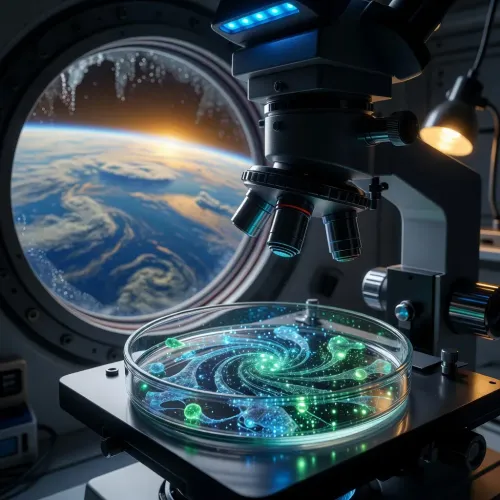
A team of Chinese scientists has delivered sobering findings on one of space exploration's most fundamental questions: can humans reproduce beyond Earth? Their research suggests the outlook is far from encouraging, raising urgent questions about the long-term viability of off-planet human settlements.
The findings add scientific weight to concerns that microgravity, radiation, and other extraterrestrial conditions may pose serious threats to human reproductive biology — a challenge that space agencies including NASA will need to confront as deep-space mission timelines extend.
China's First Fields Medal Winners
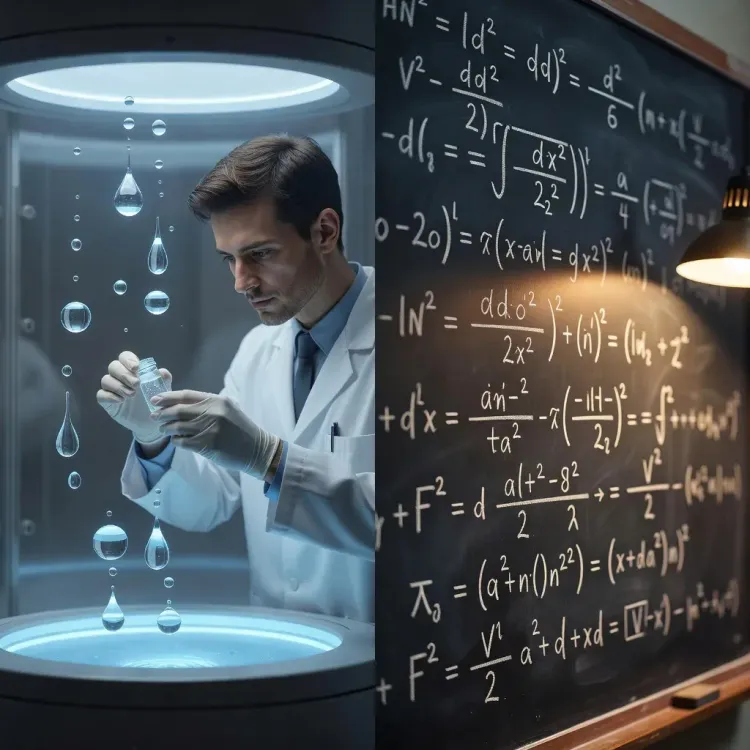
China reached a historic milestone in mathematics, with researchers connected to the country claiming Fields Medal recognition — widely regarded as the Nobel Prize of mathematics. The achievement signals the maturation of China's scientific ecosystem beyond engineering and applied technology into fundamental theoretical disciplines.
The Fields Medal is awarded every four years to mathematicians under 40, making each cohort's recognition a generational marker. Alongside Chinese recipients, the broader 2026 cohort reportedly includes John Pardon and Jacob Tsimerman, according to reports.
Why It Matters
These developments arrive as China pushes to cement its status as the world's leading science power, a goal embedded in national policy. Progress across such varied fronts — from space biology to pure mathematics — reflects a diversified research investment strategy rather than narrow, application-driven funding.
Scientists including Artem Oganov, Wang Hong, Sun Fanglin, and Deng Yu are among the researchers cited across the broader cluster of findings, spanning topics from bamboo and the Great Green Wall initiative to plastic waste solutions.
The Competitive Backdrop
The science highlights collectively paint a picture of a research landscape where China is competing — and in some cases leading — on problems that carry both geopolitical and civilisational stakes. Space reproduction research directly informs the feasibility of crewed missions to Mars and beyond, a domain where NASA and commercial players are also racing.
Meanwhile, Fields Medal recognition historically correlates with long-term breakthroughs in cryptography, physics, and computer science, meaning today's theoretical wins can translate into tomorrow's technological edge.
What's Next
The space reproduction findings are expected to intensify calls for dedicated biological research modules on future orbital stations, while China's mathematics milestone is likely to attract global academic attention to its university pipeline. Watch for follow-on policy announcements linking these research outcomes to China's broader science and technology roadmap.
Point of View
From applied engineering to theoretical abstraction. The space reproduction finding is particularly consequential: it hands policymakers a hard biological constraint that no amount of rocket engineering can immediately solve, potentially slowing the commercial space colonisation narrative. Mainstream coverage tends to silo these stories — 'China math win' here, 'space baby problem' there — missing the unified strategic logic of a state systematically closing gaps in every scientific domain at once. The Fields Medal milestone, in particular, suggests China's university pipeline is now producing world-frontier theoretical talent, which historically precedes breakthroughs in cryptography and computing that carry direct national-security implications.
NationPress
28 Oct 2026
Frequently Asked Questions
What did Chinese scientists discover about having babies in space?
Chinese scientists found that human reproduction in space faces serious biological challenges, with the research suggesting the outlook for perpetuating the species beyond Earth is not positive. The study raises concerns about how microgravity and radiation affect reproductive biology, which has direct implications for long-duration missions and potential off-planet settlements.
Who are China's first Fields Medal winners?
China has produced its first Fields Medal recipients, marking a historic milestone in mathematics. The Fields Medal is awarded every four years to mathematicians under the age of 40 and is considered the highest honour in the discipline.
Who else won the Fields Medal in the 2026 cohort?
The broader Fields Medal cohort reportedly includes mathematicians John Pardon and Jacob Tsimerman , according to reports. The full list of recipients represents a generational snapshot of the world's leading mathematical talent.
Why does the space reproduction research matter for NASA and space agencies?
The findings matter because long-duration missions to destinations like Mars require confidence that humans can survive and reproduce in extraterrestrial environments. NASA and commercial space companies will need to address these biological barriers before permanent off-planet colonies become feasible.
What other science topics were covered in these highlights?
The seven highlights span a wide range of fields, including the Great Green Wall environmental initiative, bamboo research, plastic waste solutions, and contributions from scientists including Artem Oganov , Wang Hong , Sun Fanglin , and Deng Yu . Together, they reflect China's ambition to lead across both applied and fundamental sciences.