BJP accuses Rahul Gandhi of 'politics of anarchy' over Delhi police sit-in
Synopsis
Rahul Gandhi's sit-in at a Delhi police station over an alleged pellet-gun FIR refusal has handed the BJP a fresh attack line — 'politics of anarchy' — while the party simultaneously links the protest to the Congress's Vande Mataram controversy. With a Supreme Court committee already examining the student protests, the opposition's street theatre risks being undercut by its own judicial strategy.
Key Takeaways
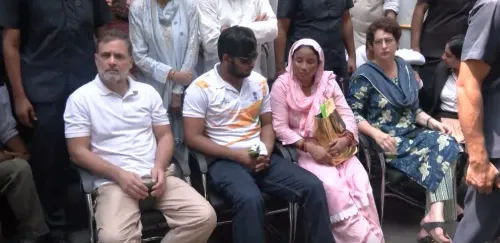
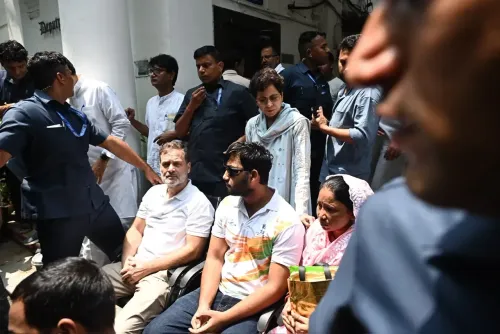
Rahul Gandhi staged a sit-in outside the DCP's office at Parliament Street Police Station, New Delhi on 21 August .
Congress MP Priyanka Gandhi Vadra later joined the protest, which was held without prior notice or permission.
The sit-in was over the alleged refusal of police to register an FIR for a student who reportedly suffered pellet-gun injuries during Jantar Mantar protests last month.
BJP MP Ravi Shankar Prasad said a complaint had already been registered and the Supreme Court had constituted a high-powered committee to investigate the incident.
Prasad alleged the protest was intended to distract from the Congress Working Committee's controversy over the Vande Mataram resolution.
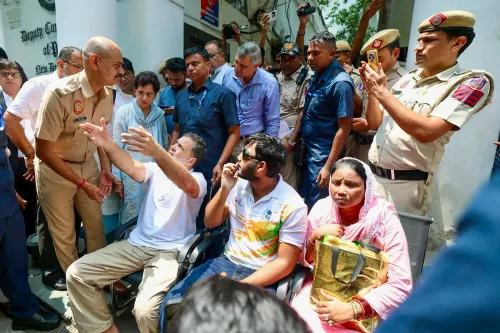
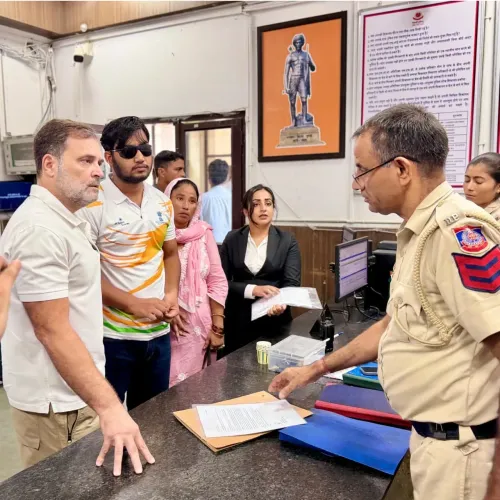
Congress leader and Leader of Opposition in the Lok Sabha, Rahul Gandhi, staged a sit-in outside the office of the Deputy Commissioner of Police (DCP) at Parliament Street Police Station in New Delhi on Friday, 21 August, protesting the alleged refusal of police to register an FIR linked to a student who, Congress claims, sustained pellet-gun injuries during last month's student demonstrations at Jantar Mantar. The protest drew sharp condemnation from the Bharatiya Janata Party (BJP), which accused Gandhi of engaging in what it called 'politics of anarchy'.
What Triggered the Sit-In
According to the Congress, a student who allegedly suffered pellet-gun injuries during protests demanding education reforms at Jantar Mantar last month approached the police to register a complaint, but was turned away. Rahul Gandhi arrived at the Parliament Street Police Station to press the case, and was subsequently joined by Congress MP Priyanka Gandhi Vadra. The protest was conducted without prior notice or permission, according to the BJP.
What the BJP Said
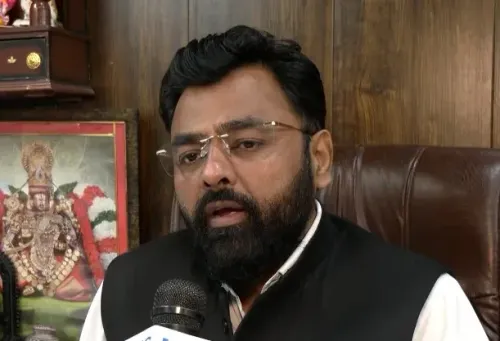
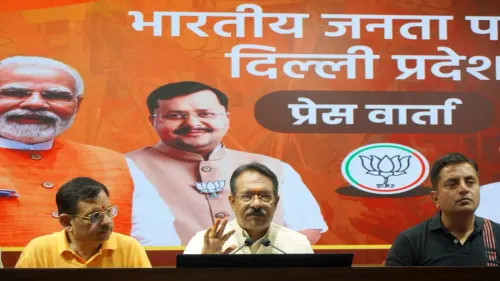
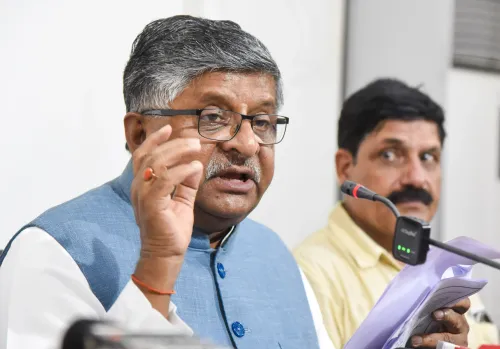
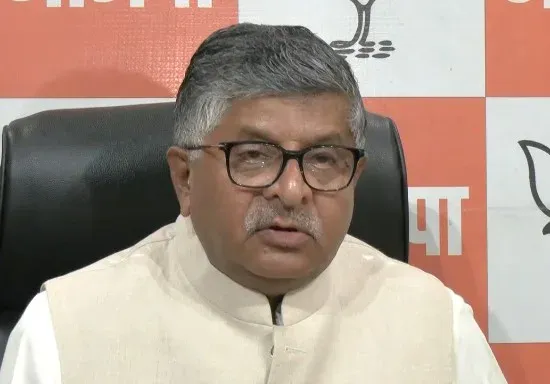
Addressing a press conference, BJP MP Ravi Shankar Prasad said: 'It is very unfortunate that Rahul Gandhi is the Leader of the Opposition, and now, instead of democratic politics, he engages in the politics of anarchy. He is sitting on a dharna at the Parliament Street Police Station in Delhi, without permission, without any prior notice.'
Prasad drew a parallel to Gandhi's earlier sit-in near Prime Minister Narendra Modi's official residence during the students' protest in the capital, arguing that Gandhi 'goes and sits on dharna wherever he feels like and starts spreading anarchy.'
BJP's Counter on the FIR Claim
Prasad stated that, according to police sources, a complaint related to the incident Gandhi cited had already been registered and was under investigation. He further noted that the affected individuals had approached the Supreme Court, which had constituted a high-powered committee headed by a retired Supreme Court judge, comprising two other judges, a former Director of the Central Bureau of Investigation (CBI), and another senior official to examine whether firing had taken place.
'Whether firing took place or not, will also be a matter of investigation for the committee,' Prasad remarked, suggesting the protest lacked justification given the existing judicial process.
The Vande Mataram Angle
Prasad also alleged that Gandhi's protest may be an attempt to 'distract' public attention from the controversy surrounding the Congress Working Committee's (CWC) resolution on the singing of the national song Vande Mataram. 'A message has been delivered to the people that the Congress's condition in 2026 is similar to its situation when it was under pressure from the Muslim League in 1937,' he said, adding that the Congress had at that time decided to sing only the first two stanzas of the national song. Prasad argued that the party, 'stuck with its own resolve,' was now attempting to divert attention.
What Comes Next
The BJP has condemned the sit-in, with Prasad calling it 'politics of competition' over a month-old case. The Supreme Court-appointed committee's findings on the student protests are awaited, and its conclusions are expected to determine the factual basis of the FIR dispute at the centre of Friday's demonstration. The standoff adds to a pattern of street-level confrontations between the opposition and the ruling party ahead of what analysts describe as an increasingly combative political season.
Point of View
But it carries tactical risk: the Supreme Court has already set up a committee to examine the very incident at the heart of the protest, which gives the BJP a credible counter-narrative. Prasad's pivot to the Vande Mataram controversy is opportunistic, but it signals that the ruling party sees the CWC resolution as a genuine liability for Congress. The deeper question is whether opposition street protests — increasingly frequent and increasingly confrontational — are building public pressure or simply generating news cycles that the BJP is well-equipped to absorb and redirect.
NationPress
5 Oct 2026
Frequently Asked Questions
Why did Rahul Gandhi stage a sit-in at Parliament Street Police Station?
Rahul Gandhi staged the sit-in on 21 August to protest the alleged refusal of Delhi Police to register an FIR on a complaint by a student who, according to Congress, sustained pellet-gun injuries during student protests at Jantar Mantar last month. Gandhi was later joined by Congress MP Priyanka Gandhi Vadra.
What did the BJP say about Rahul Gandhi's protest?
BJP MP Ravi Shankar Prasad accused Rahul Gandhi of engaging in 'politics of anarchy,' saying the sit-in was held without permission or prior notice. He argued that Gandhi was bypassing democratic norms and attempting to distract from the Congress Working Committee's controversy over the Vande Mataram resolution.
Has a complaint already been registered regarding the pellet-gun incident?
According to Ravi Shankar Prasad, citing police sources, a complaint related to the incident had already been registered and was under investigation. He also noted that the affected individuals had approached the Supreme Court, which constituted a high-powered committee to investigate whether firing had taken place.
What is the Supreme Court committee examining?
The Supreme Court constituted a high-powered committee headed by a retired Supreme Court judge, comprising two other judges, a former CBI Director, and a senior official, to investigate the student protests at Jantar Mantar, including whether pellet-gun firing occurred.
What is the Vande Mataram controversy linked to the BJP's criticism?
BJP MP Ravi Shankar Prasad alleged that the Congress Working Committee passed a resolution that echoed a 1937 decision to sing only the first two stanzas of the national song Vande Mataram, drawing comparisons to the party's historical accommodation of the Muslim League. Prasad claimed Gandhi's sit-in was meant to deflect attention from this controversy.