Annamalai backs Sivakasi crackers for Diwali, cites 8 lakh jobs at stake

Synopsis
While Delhi chokes under an AQI near 400 and the CAQM triggers GRAP Stage III, We The Leaders President K. Annamalai is urging Tamil Nadu to buy more Sivakasi crackers — arguing eight lakh livelihoods hang on Diwali sales. The clash captures a defining national fault line: economic tradition versus public health, playing out in real time just days before the festival.
Key Takeaways
Annamalai , President of We The Leaders , on 7 November 2025 appealed to Tamil Nadu to buy firecrackers to support the Sivakasi fireworks industry.
The industry provides direct employment to three lakh people and indirectly supports five lakh more , totalling approximately eight lakh workers .
Annamalai argued firecrackers are being unfairly blamed for pollution while other sources remain unaddressed.
Delhi's AQI has touched nearly 400 , prompting calls for a firecracker ban ahead of Diwali.
The CAQM has invoked GRAP Stage III across Delhi-NCR as a precautionary measure, enforcing a nine-point action plan.
K. Annamalai, President of We The Leaders, on 7 November 2025 appealed to people across Tamil Nadu to buy and burst firecrackers this Diwali, arguing that the livelihoods of nearly eight lakh workers depend on the state's fireworks industry. His call comes at a time when firecracker bans and restrictions are being enforced across Delhi-NCR amid dangerously high pollution levels.
The Livelihood Argument
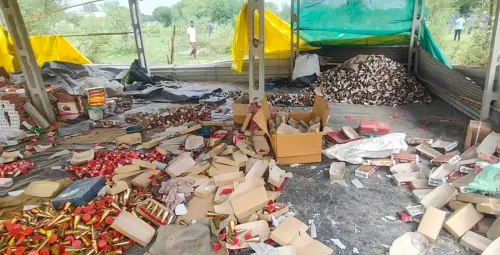
In a video message released ahead of the festival, Annamalai urged consumers to support locally manufactured firecrackers — particularly those produced in Sivakasi, the country's foremost fireworks hub located in Virudhunagar district of Tamil Nadu. He stated that the industry provides direct employment to nearly three lakh people and indirectly supports another five lakh workers.
'When we buy firecrackers, we are helping someone put food on the table,' he said, stressing the economic weight of Diwali-season sales for the region's working families.
On Pollution: Annamalai Pushes Back
Acknowledging concerns over air quality, Annamalai said he was not dismissing the importance of environmental protection — but maintained that firecrackers were being unfairly singled out as the primary cause of pollution. He argued that the fireworks industry should not face disproportionate restrictions while other, larger sources of pollution remained largely unaddressed across the country.
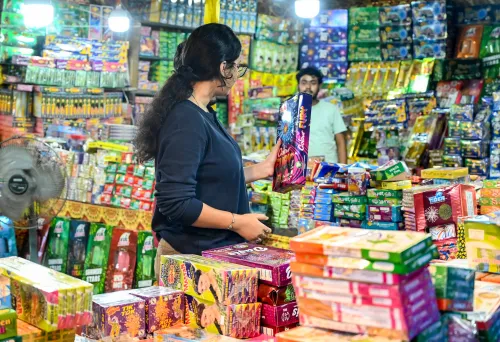
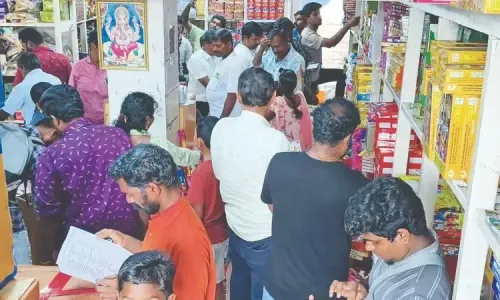
He concluded his appeal by encouraging families to visit neighbourhood shops with their children and purchase locally made crackers, framing public support during Diwali as essential to preserving Tamil Nadu's traditional fireworks industry.
The Delhi-NCR Pollution Context
Annamalai's remarks land against a sharply contrasting backdrop in northern India. The Air Quality Index (AQI) in Delhi has touched nearly 400, prompting authorities and health experts to call for a firecracker ban ahead of Diwali. Major cities including Mumbai, Gurugram, Noida, and Ghaziabad have also reported elevated pollution, with the Delhi-NCR region described by critics as a 'gas chamber' in the post-Diwali period.
Responding to the worsening air quality, the Commission for Air Quality Management (CAQM) on Friday invoked Stage III of the Graded Response Action Plan (GRAP) across Delhi-NCR as a precautionary measure, days before the festival. The nine-point action plan under Stage III includes restrictions on construction and demolition, vehicle movement, and industrial operations, along with curbs on school and office functioning — all aimed at preventing further deterioration in air quality.
A National Fault Line on Diwali and Pollution
The divergence between Annamalai's position and the northern India regulatory response reflects a wider national tension: how to balance cultural and economic traditions against measurable public health risks. Sivakasi accounts for the overwhelming majority of India's firecracker production, and any sustained dip in Diwali demand has immediate and severe consequences for the region's economy. Notably, this debate resurfaces every year before Diwali, but the conversation is sharpened this season by some of the highest pre-festival AQI readings recorded in Delhi in recent years.
How governments, courts, and consumers navigate this tension in the coming days will determine both the immediate festive season and the longer-term policy direction for India's fireworks industry.
Point of View
It is an identity, and defending it carries real electoral weight in the south. But framing it as a binary choice between livelihoods and unjust restrictions ignores the documented, measurable harm that post-Diwali pollution inflicts on millions in northern cities. The fact that this debate recurs unchanged every October-November points to a structural failure: neither a credible clean-cracker transition plan for Sivakasi workers nor a coherent national air quality framework has emerged from successive governments. Annamalai is right that fireworks are not the sole cause of Delhi's pollution — but that observation, without a policy alternative, amounts to stalling rather than solving.
NationPress
7 Nov 2026
Frequently Asked Questions
Why is K. Annamalai urging people to buy firecrackers this Diwali?
Annamalai argues that the Sivakasi fireworks industry supports the livelihoods of approximately eight lakh workers — three lakh directly and five lakh indirectly — and that Diwali sales are critical to the economic survival of these families. He made the appeal in a video message released on 7 November 2025.
What is the Sivakasi fireworks industry and why does it matter?
Sivakasi, located in Virudhunagar district of Tamil Nadu, is India's largest fireworks manufacturing hub and accounts for the bulk of the country's cracker production. The industry is a primary source of employment and income for a large section of the region's population, making Diwali demand a matter of direct economic consequence.
What pollution restrictions are in place in Delhi-NCR this Diwali?
The Commission for Air Quality Management (CAQM) has invoked Stage III of the Graded Response Action Plan (GRAP) across Delhi-NCR, days before Diwali. The nine-point action plan includes restrictions on construction, vehicle movement, and industrial operations, as Delhi's AQI has touched nearly 400.
What is Annamalai's position on the pollution argument against firecrackers?
He acknowledged environmental concerns but argued that firecrackers are being disproportionately blamed while other, larger sources of pollution go unchecked. He said the industry should not face unfair restrictions compared to other polluting sectors in the country.
What is GRAP Stage III and what does it mean for residents of Delhi-NCR?
GRAP Stage III is a set of emergency air quality measures activated under the Graded Response Action Plan when pollution crosses a severe threshold. Under Stage III, Delhi-NCR faces restrictions on construction and demolition, certain vehicle categories, industrial activity, and curbs related to schools and offices, all aimed at preventing further deterioration in air quality.