Shivraj Chouhan urges farmers: balance fertilisers, cut pesticides
Synopsis
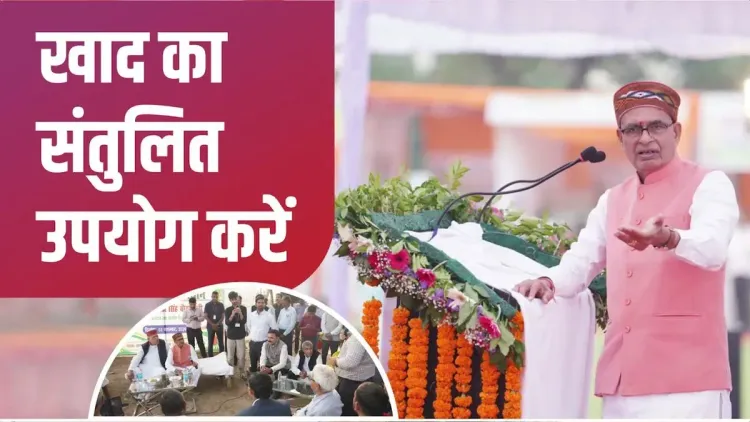
Union Agriculture Minister Shivraj Singh Chouhan has appealed to farmers under #KhetBachaoAbhiyan to use fertilisers in balance and avoid unnecessary pesticides — the latest signal in India's long campaign to reverse soil degradation and cut unsustainable input costs.
Key Takeaways
Shivraj Singh Chouhan posted on 3 November 2026 urging balanced fertiliser use and reduced pesticide application under #KhetBachaoAbhiyan .
The appeal targets the chronic problem of chemical overuse that has depleted soil health across large parts of India.
The Soil Health Card Scheme (2015) and neem-coated urea mandate (2015) are the key earlier policy interventions in the same space.
The campaign aligns with the National Mission for Sustainable Agriculture framework promoting integrated pest management and input efficiency.
State-level rollout of awareness drives and possible changes to pesticide regulation or fertiliser subsidy targeting are the key developments to watch.
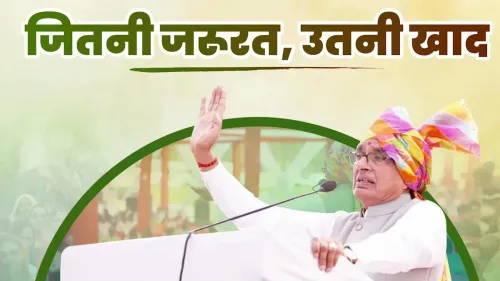
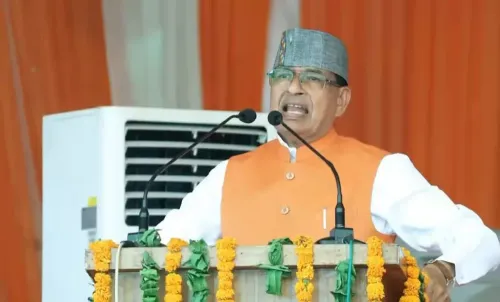
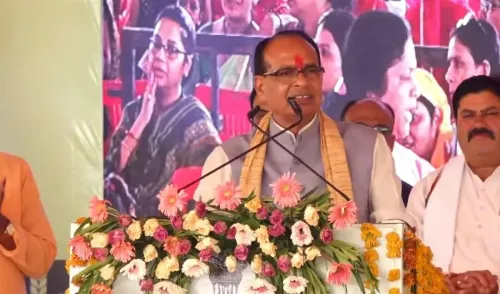
India's soils are sending a distress signal — and Union Agriculture Minister Shivraj Singh Chouhan wants every farmer to hear it. On Tuesday, 3 November 2026, the minister took to X with a direct appeal to cultivators across the country: protect your fields by using fertilisers in balance and avoiding unnecessary pesticides, rallying the message under the hashtag #KhetBachaoAbhiyan.
In his post, Chouhan addressed farmers as 'kisan bhaiyon-bahanon' — 'farmer brothers and sisters' — and urged: 'khet bachana hai toh khad ka santulit upyog karein aur anawashyak keetanashkon ke prayog se bachein' ('if you want to save your fields, use fertilisers in a balanced way and avoid unnecessary pesticide use'). The phrasing is deliberate — a field saved today is a livelihood protected for generations.
Decades of soil damage behind the warning
The minister's message did not emerge in a vacuum. India's green revolution delivered food security but left behind a legacy of chemically exhausted land. Overuse of urea and synthetic pesticides has depleted organic carbon in large tracts of agricultural soil, raised groundwater contamination levels, and quietly inflated the input costs that eat into farmer margins every season.
The Soil Health Card Scheme, launched in 2015, was the first major central push to put scientific data in farmers' hands — soil-testing cards that prescribed the precise nutrients a plot actually needed, rather than the blanket nitrogen-heavy doses that had become habit. The same year, neem-coated urea was mandated across the country to slow nitrogen release and curb the indiscriminate diversion of subsidised fertiliser. Both interventions targeted the same root problem Chouhan is amplifying now.
Where #KhetBachaoAbhiyan fits the sustainable agriculture push
The hashtag places this appeal within the broader architecture of the National Mission for Sustainable Agriculture, under which successive governments have pushed integrated pest management and balanced fertilisation as twin pillars. The logic is straightforward: chemical overload raises costs, degrades soil microbiota, and builds pest resistance — a cycle that ultimately forces farmers to spend more for shrinking returns.
Chouhan, who governed Madhya Pradesh across four terms before moving to the Union Cabinet, has consistently framed farmer welfare not just through income support but through input efficiency. A minister who once engineered one of India's most-watched agricultural turnarounds in central India now holds the national portfolio — and the #KhetBachaoAbhiyan message is his clearest signal yet that the next frontier of farm welfare is about what goes into the soil, not just what the government pays for it.
Watch for state-level awareness drives to follow, and whether the campaign translates into fresh guidelines on pesticide regulation or fertiliser subsidy targeting in the upcoming agricultural season. The fields are listening.
Point of View
High-signal move that reframes farm welfare beyond the familiar income-support narrative — positioning the ministry around sustainability without committing to any specific budget or regulatory change. For a government that has faced persistent criticism over agrarian distress, pivoting to soil health and input efficiency is politically safe ground with genuine long-term merit. The #KhetBachaoAbhiyan hashtag suggests an organised campaign is building, and if it triggers concrete subsidy-targeting or pesticide regulation changes, it could become a meaningful policy footnote. For now it is awareness infrastructure — but awareness that, if backed by extension services at the block level, can move the needle on one of Indian agriculture's most stubborn structural problems.
NationPress
4 Nov 2026
Frequently Asked Questions
What is #KhetBachaoAbhiyan?
#KhetBachaoAbhiyan is a campaign hashtag promoted by Union Agriculture Minister Shivraj Singh Chouhan to encourage Indian farmers to use fertilisers in a balanced way and avoid the unnecessary use of chemical pesticides, in order to protect and restore soil health.
Why does Shivraj Chouhan want farmers to reduce pesticide use?
Overuse of chemical pesticides and fertilisers degrades soil organic matter, contaminates groundwater, builds pest resistance, and raises input costs for farmers — ultimately reducing crop yields and farm incomes over time. Chouhan's appeal is aimed at breaking this cycle.
What is the Soil Health Card Scheme and how is it related?
The Soil Health Card Scheme , launched in 2015 , provides farmers with soil-test-based nutrient recommendations so they apply only what their land actually needs, directly addressing the habit of excessive fertiliser use that #KhetBachaoAbhiyan is campaigning against.
What is neem-coated urea and why was it introduced?
Neem-coated urea was mandated from 2015 onwards to slow the release of nitrogen into the soil, improve fertiliser use efficiency, and reduce the practice of applying excess urea — part of India's long-running effort to curb chemical overuse in agriculture.
What should Indian farmers do to save their fields according to Chouhan?
According to Chouhan's 3 November 2026 post, farmers should use fertilisers in a balanced, need-based quantity and strictly avoid applying pesticides unless genuinely necessary — two practices that together can restore soil health and reduce input costs.