Shivraj Singh Chouhan urges farmers: use only needed fertilizer
Synopsis
Union Agriculture Minister Shivraj Singh Chouhan has urged farmers to apply fertilizer only in required quantities, reinforcing a decade-old national push against over-application that damages soil health and inflates the fertilizer subsidy bill.
Key Takeaways
Shivraj Singh Chouhan posted on X on October 22, 2026 advising farmers to use only as much fertilizer as their crops need.
Over-fertilization is a persistent problem in Indian agriculture, degrading soil structure and driving up the annual fertilizer subsidy expenditure.
The Soil Health Card scheme , launched in 2015 , was designed precisely to shift farmers from blanket application to soil-test-based dosing.
Excess urea use acidifies soil, reduces long-term yield potential, and increases input costs for farmers with already-thin margins.
The minister's message reinforces a campaign that state governments and Krishi Vigyan Kendras have been running for years with uneven results.
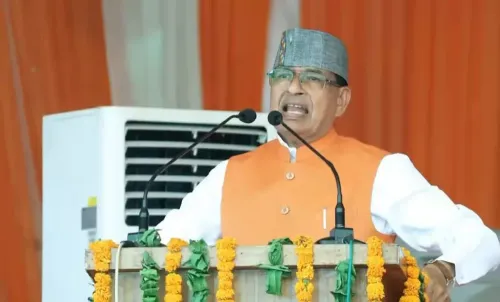
A simple directive from the top of Indian agriculture policy — but one that carries the weight of decades of soil damage and billions in subsidy spending. Union Agriculture Minister Shivraj Singh Chouhan posted a pointed message on X on Thursday, October 22, 2026, telling farmers directly: apply only as much fertilizer as the crop actually needs.
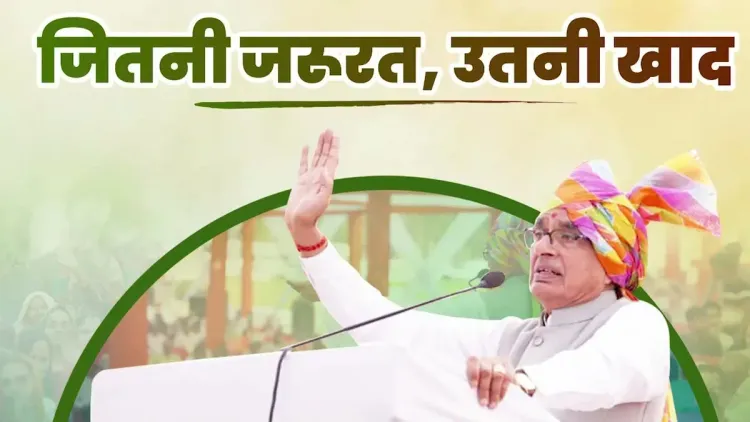
In Hindi, the minister wrote: 'किसान भाइयों, जितनी जरूरत है, उतनी ही खाद डालिए' — 'Farmer brothers, apply only as much fertilizer as is needed.' Seven words. One of Indian agriculture's most persistent problems.
Why over-fertilization became a crisis in Indian fields
For decades, Indian farmers — often working on thin margins and with little soil-testing infrastructure — defaulted to more-is-better when it came to urea and other fertilizers. The logic was intuitive but costly: excess nitrogen degrades soil structure, acidifies fields over time, and leaches into groundwater. The state, meanwhile, absorbs the fiscal hit through a fertilizer subsidy bill that runs into tens of thousands of crores annually.
The pattern became one of the most stubborn feedback loops in Indian farming — subsidised fertilizer made over-application cheap, and cheap over-application made subsidy reform politically impossible.
The Soil Health Card: a decade-old tool still fighting for uptake
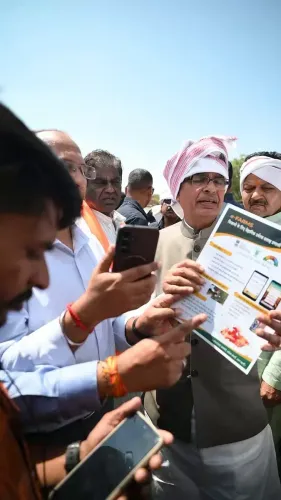
The policy response came in 2015, when the government launched the Soil Health Card scheme — issuing cards to farmers carrying the nutrient status of their specific plot, along with recommended doses of each fertilizer. The idea was to replace blanket application with precision: know your soil, match your input.
The scheme has reached millions of farmers across India. Yet awareness campaigns and soil-test-based dosing remain a work in progress, especially in smaller holdings where old habits and peer practice carry more weight than a card. Chouhan's post lands squarely in that gap — a minister-level nudge reinforcing what the scheme's field workers have been saying for years.
Balanced nutrition, lower costs, healthier land
The economics of judicious fertilizer use are straightforward. Applying the recommended dose — not more — cuts input costs directly. Healthier soil sustains yields over multiple seasons rather than demanding ever-larger doses to compensate for degraded fertility. For a country where the average farm holding is small and margins are tight, the arithmetic matters.
Successive governments have pushed this message through awareness drives, Krishi Vigyan Kendras, and state-level campaigns. The fact that a senior minister still needs to post it as a direct appeal to farmers in 2026 signals how deep-rooted the over-application habit remains — and how much work the extension machinery still has ahead of it.
The next test will come in fertilizer consumption figures for the season: whether awareness is finally bending the usage curve downward is something the data will reveal.
Point of View
Yet behavioural change on the ground has been slow. The Soil Health Card scheme gave the state a precision instrument a decade ago; a senior minister still needing to make the case personally in 2026 underlines the limits of top-down policy when extension systems and farm-level habits lag behind. For the BJP, which has staked significant political capital on farmer welfare, keeping input costs manageable is as much an electoral calculation as an environmental one — lower fertilizer bills directly improve net farm income, a number the government watches closely ahead of any election cycle.
NationPress
22 Oct 2026
Frequently Asked Questions
What did Agriculture Minister Shivraj Singh Chouhan say to farmers about fertilizer?
He advised farmers to apply only as much fertilizer as their crops actually need, cautioning against over-application that damages soil and raises costs.
What is the Soil Health Card scheme?
The Soil Health Card scheme, launched in 2015 , provides farmers with a card detailing the nutrient status of their specific plot and recommends the correct doses of fertilizers to apply, replacing guesswork with soil-test-based precision.
Why is excessive fertilizer use a problem for Indian farmers?
Over-application of fertilizers — especially urea — degrades soil structure, acidifies farmland over time, pollutes groundwater, and raises input costs, cutting into farmers' net income.
How does over-fertilization affect India's fertilizer subsidy bill?
Because fertilizers are heavily subsidised, excess use by farmers translates directly into higher government expenditure. Reducing over-application helps contain a subsidy bill that runs into tens of thousands of crores each year.
What should farmers do to find the right fertilizer dose for their land?
Farmers can get their soil tested and obtain a Soil Health Card, which provides crop-specific, plot-specific fertilizer recommendations from government agricultural services.