Shivraj Singh Chouhan backs E-FARMS app to cut fertiliser overuse
Synopsis
Union Agriculture Minister Shivraj Singh Chouhan endorsed the E-FARMS mobile app on June 1, 2026, after a live demo in Raisen, Madhya Pradesh. He urged farmers to use the app for soil-based fertiliser advice, warning that overuse harms soil health and raises costs. The push aligns with India's Digital Agriculture Mission and Soil Health Card programme.
Key Takeaways
Union Agriculture Minister Shivraj Singh Chouhan publicly backed the E-FARMS app on June 1, 2026 , calling it a useful initiative for farmers.
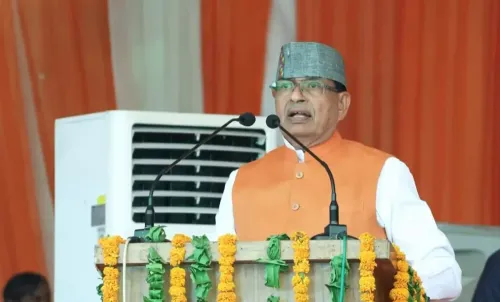
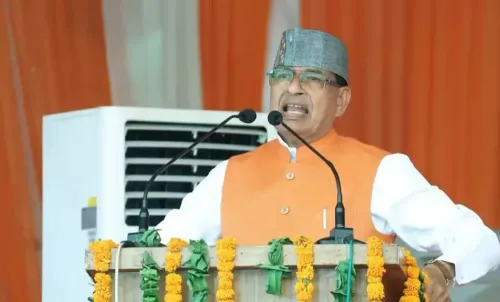
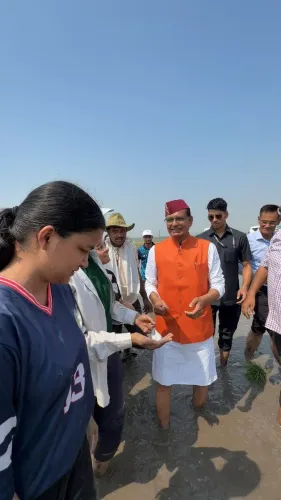
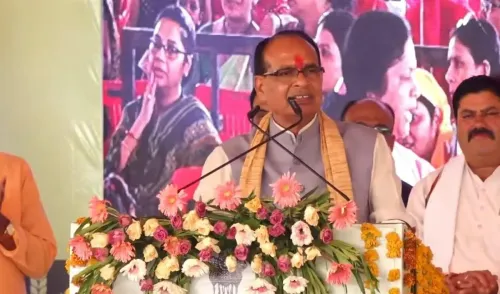
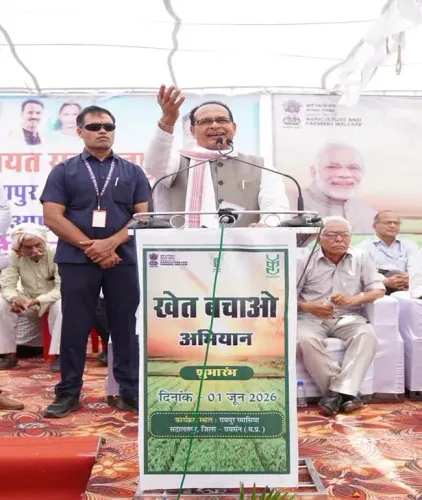
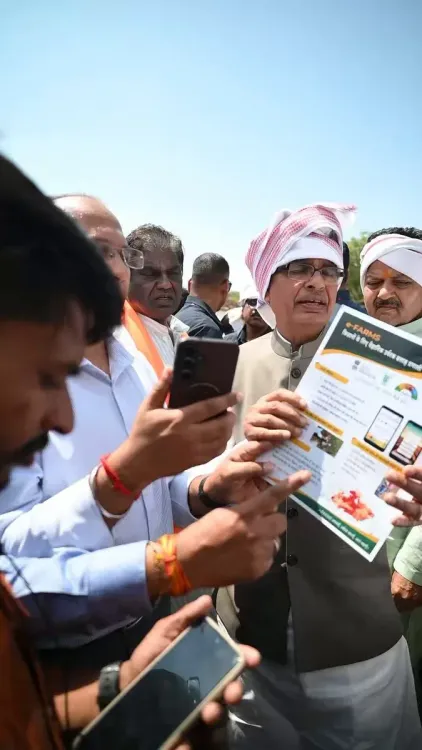
The minister observed a live demonstration of the app in Raisen, Madhya Pradesh .
Chouhan warned that over-application of fertiliser damages soil health and adds unnecessary cost burdens on farmers.
The E-FARMS app is designed to give soil-health and crop-specific fertiliser advice to increase yield and cut input costs.
The initiative aligns with the Soil Health Card Scheme (launched 2015) and India's broader Digital Agriculture Mission .
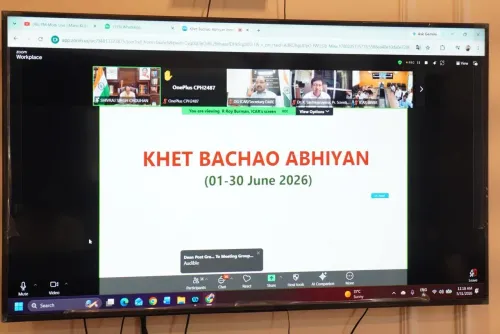
Chouhan urged all farmers under the #KhetBachaoAbhiyan campaign to adopt technology for sustainable and profitable farming.
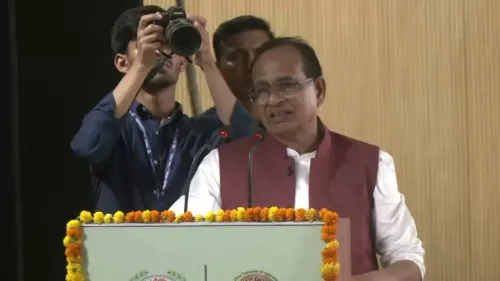
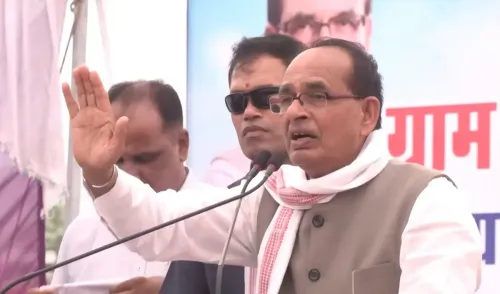
Union Agriculture Minister Shivraj Singh Chouhan on Monday, June 1, 2026, publicly endorsed the E-FARMS mobile application as a practical tool to help farmers apply fertilisers more precisely, reduce input costs, and protect soil health. The minister, who observed a live demonstration of the app in Raisen, Madhya Pradesh, urged all farmers across the country to adopt technology as a means of boosting income while preserving the long-term health of agricultural land.
Context
Posting under the hashtag #KhetBachaoAbhiyan (Save the Farm Campaign), Chouhan flagged a widespread practice among farmers of applying more fertiliser than their crops actually need. 'Unhe lagta hai ki jitni zyada khaad, utni achhi fasal' — 'They believe that more fertiliser means a better harvest' — he wrote, identifying this misconception as a dual threat: it degrades soil quality and places an unnecessary financial burden on farming households. The E-FARMS app, he said, addresses this by providing precise, soil-health-based advisories tailored to specific crop requirements.
Chouhan described the Raisen demonstration as a live showcase of the app's capabilities, adding that he personally witnessed how it generates recommendations. His appeal was directed at 'sabhi kisan bhai-behnon' — 'all farmer brothers and sisters' — to embrace digital tools as part of their farming practice.
Policy Backdrop
The push for precision nutrient management has a clear policy lineage in India. The Soil Health Card Scheme, launched in February 2015, was the central government's first systematic effort to provide farmers with soil-test-based fertiliser recommendations, covering nutrient levels across millions of farm plots nationwide. The scheme aimed to wean farmers away from blanket urea application, which had been linked to declining soil organic carbon and long-term productivity loss.
From 2021 onwards, the Digital Agriculture Mission expanded this framework by integrating mobile-based, location-specific crop and input advisories. E-FARMS fits within this broader arc: a mobile-first interface that translates soil data into actionable guidance for individual farmers, potentially building on the nutrient profiles already captured under the Soil Health Card programme. Excessive and imbalanced fertiliser use has remained a persistent challenge for Indian agriculture, contributing to both environmental degradation and inflated cultivation costs for smallholders.
Stakeholders and Impact
The primary beneficiaries of precision fertiliser advisory tools are small and marginal farmers, who account for the majority of India's agricultural holdings and are most exposed to the financial risk of input overuse. For this group, even a modest reduction in fertiliser expenditure can meaningfully improve net farm income, particularly as input prices have remained elevated in recent years.
From a fiscal standpoint, rationalising fertiliser application has implications for the central fertiliser subsidy bill, which runs into tens of thousands of crore rupees annually. If data-driven apps like E-FARMS succeed in shifting farmer behaviour at scale, they could contribute to subsidy savings without cutting support to farmers. Soil scientists and agronomists have long argued that restoring soil organic matter requires sustained reduction in chemical input loads — making the app's advisory function relevant beyond economics alone.
What's Next
Attention will now turn to the state-level rollout timeline for the E-FARMS app and whether it will be formally integrated with existing Soil Health Card data to deliver farmer-specific recommendations. Parliamentary scrutiny of adoption metrics — how many farmers download and actively use the app — and any measurable impact on fertiliser consumption will be key indicators of its real-world effectiveness. Chouhan's personal visit to Raisen and his direct social media appeal suggest the ministry is in an active promotion phase, signalling that wider institutional outreach, possibly through Krishi Vigyan Kendras and state agriculture departments, may follow.
Point of View
He is using the ministerial platform to drive behavioural change among farmers, not just announce policy. The #KhetBachaoAbhiyan framing is politically significant: it positions the BJP government as a steward of both farmer welfare and environmental sustainability ahead of a period of heightened rural focus. The real test, however, will be whether adoption scales beyond demonstration events into measurable shifts in fertiliser consumption data.
NationPress
15 Oct 2026
Frequently Asked Questions
What is the E-FARMS app for farmers in India?
E-FARMS is a mobile application that provides farmers with precise fertiliser and input recommendations based on soil health and specific crop requirements, aiming to increase yield while reducing unnecessary input costs.
Why did Shivraj Singh Chouhan visit Raisen?
Union Agriculture Minister Shivraj Singh Chouhan visited Raisen in Madhya Pradesh on June 1, 2026, to observe a live demonstration of the E-FARMS app as part of efforts to promote digital agricultural tools among farmers.
What is the KhetBachaoAbhiyan campaign?
#KhetBachaoAbhiyan, meaning 'Save the Farm Campaign,' is a campaign hashtag used by Agriculture Minister Chouhan to promote sustainable farming practices, including reduced fertiliser overuse and adoption of technology-based advisories.
How does over-fertilising affect Indian farmers?
Applying more fertiliser than crops need degrades soil organic matter over time, reducing long-term productivity, while also increasing cultivation costs unnecessarily — both problems that precision advisory apps like E-FARMS aim to address.
What is the Soil Health Card Scheme and how does it relate to E-FARMS?
The Soil Health Card Scheme, launched in February 2015, provides farmers with soil-test-based nutrient reports. E-FARMS builds on this policy lineage by delivering similar soil-specific fertiliser advice through a mobile app, making recommendations more accessible and actionable.