CM Fadnavis: 9,533 Bhandara Consumers Get Zero Electricity Bills
Synopsis
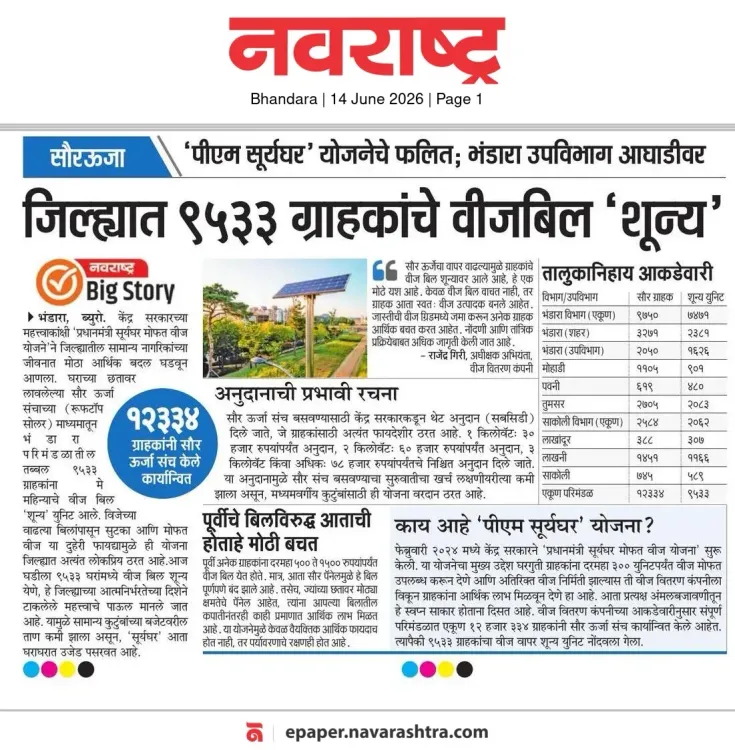
The Chief Minister's Office of Maharashtra announced that 9,533 electricity consumers in Bhandara district now receive zero electricity bills, crediting solar energy adoption under Chief Minister Devendra Fadnavis. The development reflects the state's push to deliver tangible consumer benefits from its distributed solar policy in the Vidarbha region.
Key Takeaways
9,533 consumers in Bhandara district , eastern Maharashtra, have received zero electricity bills.
The outcome is attributed to solar energy adoption under Chief Minister Devendra Fadnavis .
Bhandara is part of the Vidarbha region, historically burdened by high electricity costs for rural households and farmers.
The development reflects Maharashtra's distributed solar policy aimed at reducing dependence on conventional grid power.
Policy watchers expect potential rollout to adjacent Vidarbha districts including Gondia , Gadchiroli , and Wardha .
The initiative aligns with India's national push for increased rooftop and agricultural solar penetration.
The Chief Minister's Office of Maharashtra announced on Sunday, 14 June 2026 that 9,533 electricity consumers in Bhandara district have received zero electricity bills, attributing the development to solar energy adoption under Chief Minister Devendra Fadnavis.
Context
The CMO's post, shared in Marathi, stated: 'भंडारा जिल्ह्यात 9533 ग्राहकांचे वीजबिल शून्य' — meaning 'electricity bills of 9,533 consumers in Bhandara district are zero.' The announcement was tagged to @Dev_Fadnavis and accompanied by the hashtags #SolarEnergy and #Maharashtra, signalling the state government's intent to highlight solar as the enabling factor.
Bhandara is an eastern Maharashtra district in the Vidarbha region, an area historically dependent on conventional grid power and burdened by high agricultural and domestic electricity costs. The zero-bill outcome for thousands of consumers marks a visible milestone in the state's distributed solar push.
Policy Backdrop
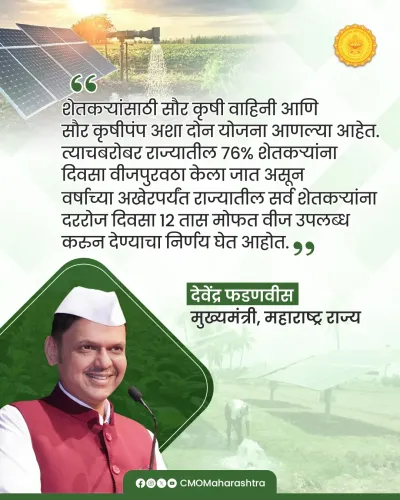
Maharashtra has pursued a solar policy framework that encourages distributed solar generation — including rooftop systems and feeder-level solar projects — to reduce reliance on conventional grid supply. These efforts align with India's broader national targets for renewable energy penetration, which include ambitious rooftop and agricultural solar schemes.
The Fadnavis administration has positioned solar adoption as a tool to deliver direct economic relief to households and farmers, particularly in the Vidarbha belt where power costs have long weighed on rural incomes. A zero electricity bill for consumers represents the most tangible consumer-level outcome such policies can deliver.
Stakeholders and Impact
The primary beneficiaries are rural and semi-urban households in Bhandara district whose solar installations now offset their entire grid consumption, bringing monthly bills to zero. For low-income families and small farmers, the elimination of electricity costs can free up meaningful household income.
The announcement also carries a political dimension for the Fadnavis government, which has sought to demonstrate concrete, measurable gains from its energy policy agenda ahead of continued scrutiny over rural welfare in Vidarbha. Wider rollout to adjacent districts would amplify both the economic and political impact of the programme.
What's Next
Policy watchers will look for the extension of similar solar programmes to other Vidarbha districts such as Gondia, Gadchiroli, and Wardha, where comparable energy-cost pressures exist. State budget allocations for further renewable infrastructure expansion will be a key indicator of whether the Bhandara outcome becomes a template for the region.
If the zero-bill model scales, it could redefine how Maharashtra measures the success of its solar investments — not in installed megawatts alone, but in the number of households freed from electricity expenditure entirely.
Point of View
But about household-level economic relief that can be counted and communicated. For a government navigating persistent rural distress narratives in Vidarbha, a zero-electricity-bill milestone offers a rare, concrete welfare data point. The tagging of the Chief Minister's personal handle alongside the CMO post suggests this is being positioned as a flagship outcome rather than routine programme reporting. If the model replicates across Vidarbha, it could meaningfully shift the political economy of energy in one of Maharashtra's most contested regions.
NationPress
13 Sept 2026
Frequently Asked Questions
Why are 9,533 consumers in Bhandara getting zero electricity bills?
The Maharashtra government says these consumers have adopted solar energy, which offsets their grid consumption entirely, resulting in zero electricity bills.
What is the Maharashtra solar policy for rural consumers?
Maharashtra's solar policy framework promotes distributed solar generation, including rooftop and feeder-level solar projects, to reduce reliance on conventional grid power and lower electricity costs for households and farmers.
Where is Bhandara district and why is it significant?
Bhandara is an eastern Maharashtra district in the Vidarbha region, an area where high electricity costs have long burdened rural households and farmers, making the zero-bill milestone particularly notable.
Will other Vidarbha districts get similar solar benefits?
Policy watchers are monitoring whether the Bhandara model will extend to adjacent Vidarbha districts like Gondia, Gadchiroli, and Wardha, which face similar energy-cost pressures.
What role has Devendra Fadnavis played in Maharashtra's solar push?
As Chief Minister, Devendra Fadnavis has overseen the state-level promotion of renewable energy projects, positioning solar adoption as a tool for direct economic relief to rural consumers in Maharashtra.