CM Fadnavis orders solar power shift for rural water schemes
Synopsis
Chief Minister Devendra Fadnavis has directed that all rural water supply schemes in Maharashtra be converted to solar energy to eliminate electricity arrear-driven shutdowns. A taluka-level maintenance framework involving gram panchayats is also being established. The plan covers 22,185 schemes, with 11,643 already integrated under Jal Jeevan Mission.
Key Takeaways
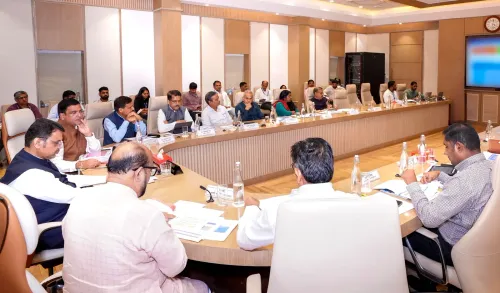
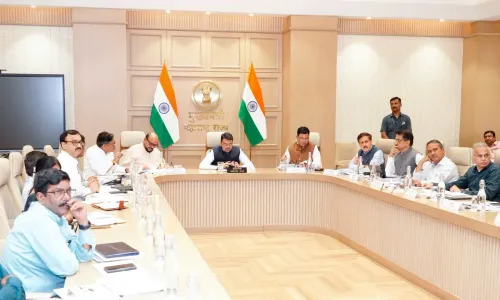
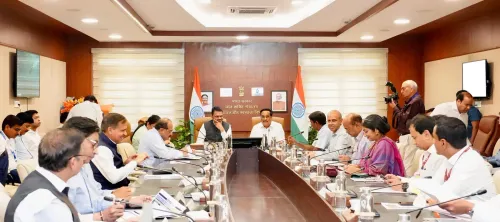
CM Devendra Fadnavis chaired a meeting on the State Rural Drinking Water Policy at Varsha residence, Mumbai on 12 June 2026 .
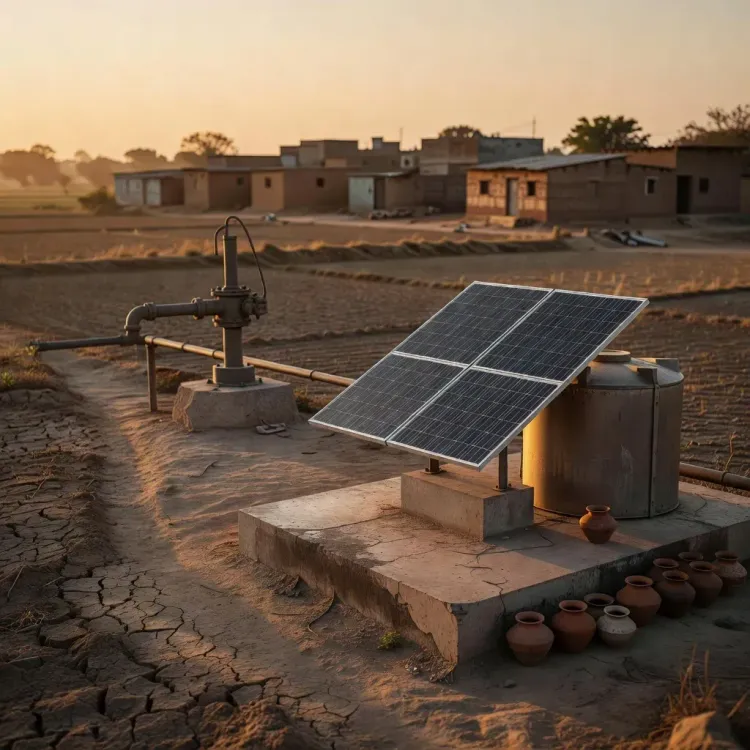
All rural water supply schemes in Maharashtra are to be converted to solar energy to prevent shutdowns caused by electricity bill arrears.
Maharashtra Energy Development Agency (MEDA) has been tasked with formulating a comprehensive solar policy for 22,185 schemes .
11,643 solar systems have already been included in original estimates under the Jal Jeevan Mission .
Taluka-level maintenance units with gram panchayat participation are to be set up for upkeep of rural water schemes.
All schemes must meet the central norm of 55 litres per person per day , and projects that are 50 per cent complete are to receive funding to reach completion.
The Chief Minister's Office of Maharashtra announced on Friday, 12 June 2026 that Chief Minister Devendra Fadnavis has directed that all rural water supply schemes in the state be converted to solar energy, following a high-level meeting on the State Rural Drinking Water Policy held at Varsha residence, Mumbai.
Context
The meeting, chaired by CM Fadnavis, was convened to address mounting electricity bill arrears that have been forcing rural water supply schemes across Maharashtra to shut down. The Chief Minister directed that no water supply scheme should be disrupted due to pending electricity dues, stating, 'राज्यामध्ये कुठेही वीज देयकांच्या थकबाकीमुळे पाणीपुरवठा योजना बंद पडू नये' ('No water supply scheme anywhere in the state should be shut down due to electricity bill arrears').
The directive covers all rural regional and independent water supply schemes. Minister Gulabrao Patil, Minister of State Adv. Ashish Jaiswal, and senior officials were present at the meeting.
Policy Backdrop
The solar transition plan targets a total of 22,185 water supply schemes across Maharashtra. Of these, 11,643 solar systems have already been incorporated into original project estimates under the Jal Jeevan Mission, the central government's flagship programme launched in 2019 to deliver tap water connections to rural households.
CM Fadnavis directed the Maharashtra Energy Development Agency (MEDA) to formulate a comprehensive solar energy policy calibrated to each scheme's water source, the population it serves, motor pump capacity, and total units required. The phased solarisation is intended to eliminate recurring arrear accumulation and reduce long-term operational costs.
The Chief Minister also emphasised adherence to the central government norm of supplying 55 litres of water per person per day, directing that all schemes be completed in line with this standard.
Stakeholders and Impact
At the institutional level, CM Fadnavis directed the establishment of taluka-level maintenance units for the upkeep of all rural water supply schemes, with mandatory participation from gram panchayats within each taluka. Maintenance and repair costs are to be met from water tariff collections, and where recovery is low, funds are to be drawn from local self-government body reserves.
Each taluka unit will maintain a panel of empanelled agencies; gram sabha resolutions will determine which agency undertakes repairs for a given scheme. This decentralised arrangement is designed to ensure no scheme is abandoned due to lack of maintenance. Funding is also to be provided to reconnection schemes that are 50 per cent complete, with instructions to bring them to full completion.
The meeting also stressed source sustainability: the CM cautioned against repeatedly identifying new water sources instead of strengthening existing ones, noting that such practice renders prior investment wasteful. Strengthening of water sources is to be undertaken through the 'VBG Ramji' scheme, which is providing funds for source augmentation.
What's Next
MEDA is expected to prepare the comprehensive solar policy framework, while departments are tasked with verifying all Jal Jeevan Mission projects reported as 100 per cent complete. The phased rollout of solar installations across 22,185 schemes will be a key indicator of implementation progress. The success of taluka-level maintenance units in reducing service disruptions and lowering costs will determine whether this institutional model is scaled or revised in subsequent policy reviews.
Point of View
The state is attempting to align central resources with a state-level operational problem. The taluka-unit model, if implemented, would represent a meaningful decentralisation of maintenance accountability to gram panchayats — a governance layer that has historically been under-resourced for this function. The broader pattern reflects a wider trend among large states of using renewable energy not just for climate goals but as a fiscal stabiliser for public service delivery.
NationPress
13 Sept 2026
Frequently Asked Questions
Why is Maharashtra converting rural water schemes to solar energy?
Accumulated electricity bill arrears have been causing rural water supply schemes to shut down. CM Fadnavis directed the shift to solar energy to eliminate this recurring problem and ensure uninterrupted water supply.
How many water supply schemes will get solar power in Maharashtra?
A total of 22,185 rural water supply schemes are proposed for solar installation in a phased manner. Of these, 11,643 solar systems have already been included under Jal Jeevan Mission estimates.
What is the role of MEDA in Maharashtra's rural water solar policy?
The Maharashtra Energy Development Agency (MEDA) has been directed to prepare a comprehensive solar energy policy for all rural water supply schemes, factoring in water source, population served, pump capacity, and total units required.
What is the per-day water supply norm for rural Maharashtra?
As per the central government's norm, 55 litres of water per person per day must be supplied. CM Fadnavis has directed that all schemes be completed in accordance with this standard.
How will rural water scheme maintenance be managed in Maharashtra?
Taluka-level maintenance units will be set up with gram panchayat participation. Maintenance costs will be met from water tariff collections, and where recovery is insufficient, local self-government body funds will be used.