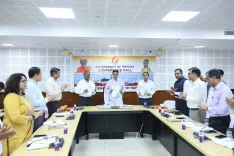
Maharashtra Cabinet clears rural drinking water policy
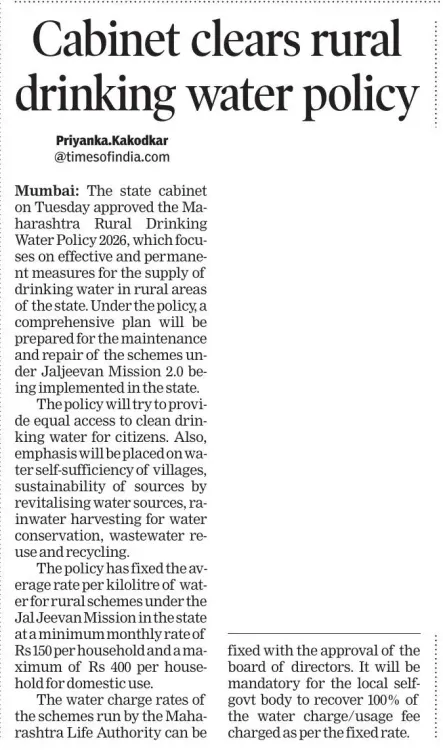
Synopsis
The Maharashtra cabinet cleared a new rural drinking water policy on 17 June 2026, with Chief Minister Devendra Fadnavis credited for the decision. The move aims to expand potable water access to rural households and aligns with the Jal Jeevan Mission's goals of universal household tap connections.
Key Takeaways
The Maharashtra cabinet approved a new rural drinking water policy on 17 June 2026 .
Chief Minister Devendra Fadnavis was directly cited in the official announcement from the Chief Minister's Office.
The policy builds on the Jal Jeevan Mission (launched 2019) and the Maharashtra State Water Policy of 2019 .
Primary beneficiaries are rural households and village panchayats across Maharashtra.
Next steps include release of the detailed policy document, district-level targets, and tendering for multi-village water supply schemes .
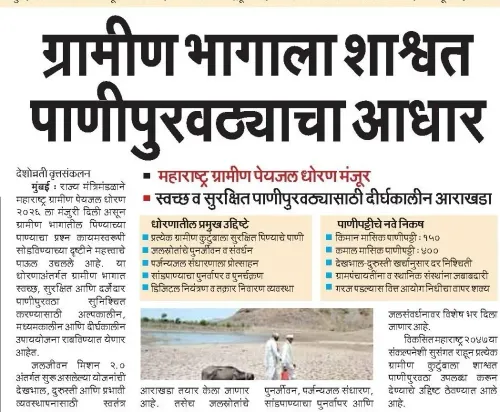
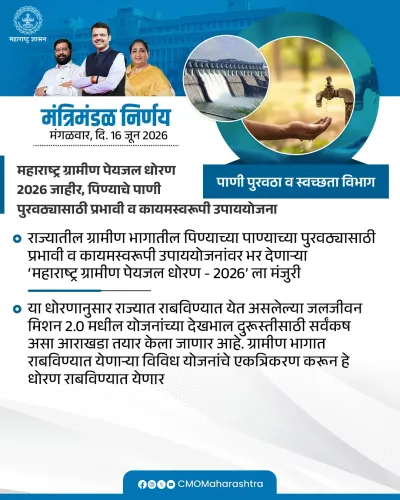
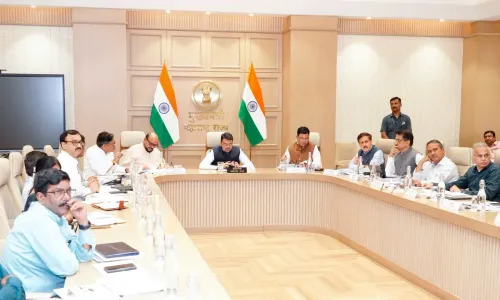
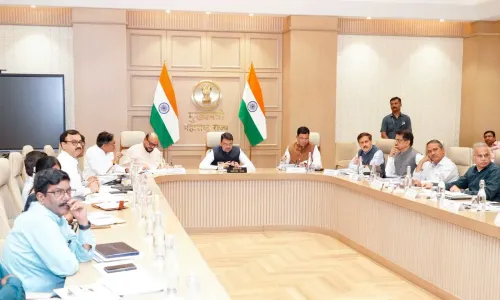
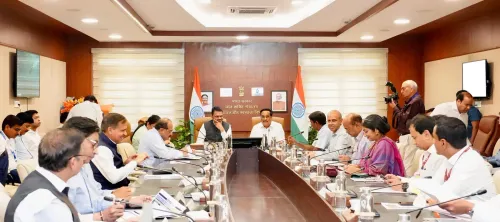
The Chief Minister's Office of Maharashtra announced on Wednesday, 17 June 2026 that the state cabinet has approved a new rural drinking water policy, with the decision attributed to Chief Minister Devendra Fadnavis. The clearance marks a significant step in the state's effort to expand potable water access to its rural population.
Context
The Maharashtra cabinet, the apex executive body of the state government, cleared the rural drinking water policy in a decision that aligns with the state's longstanding commitment to improving water infrastructure in villages. Chief Minister Devendra Fadnavis, who has previously championed water sector reforms across his tenures, was directly cited in the official communication from the Chief Minister's Office.
Maharashtra's rural water supply landscape has historically been shaped by seasonal scarcity, uneven groundwater distribution, and the need to integrate central and state funding streams into coherent delivery frameworks.
Policy Backdrop
The new policy builds on a lineage of national and state-level frameworks. The National Rural Drinking Water Programme, which operated from 2009, was subsumed into the Jal Jeevan Mission in 2019 — a central scheme aimed at providing functional household tap connections across rural India. Maharashtra's own State Water Policy of 2019 had already emphasised integrated water resource management and rural supply augmentation.
Successive Maharashtra cabinets have periodically updated rural water frameworks to address gaps in coverage, align with evolving central funding mechanisms, and prioritise piped water supply alongside watershed and aquifer recharge programmes. The present cabinet decision fits this pattern of state-level operationalisation of national drinking water goals through dedicated policy instruments.
Stakeholders and Impact
The primary beneficiaries of the policy are rural households across Maharashtra, many of which continue to depend on seasonal water sources or community water points rather than individual household tap connections. Village panchayats are expected to play a central role in local implementation, as they have under previous rural water supply schemes.
A dedicated rural drinking water policy provides a framework for prioritising coverage targets, coordinating inter-departmental responsibilities, and channelling funds from both state and central governments to underserved districts. Maharashtra's rural population, spread across diverse agro-climatic zones, stands to benefit from a unified policy approach that can address both perennial and seasonal water stress.
What's Next
Attention will now turn to the release of the detailed policy document, which is expected to outline implementation timelines, district-level coverage targets, and the fund-sharing arrangement between the state and the centre under the Jal Jeevan Mission. Tendering for multi-village water supply schemes and the mobilisation of village-level water committees will be key markers of on-ground progress.
If the policy translates into accelerated infrastructure rollout, it could meaningfully close the gap between Maharashtra's urban and rural water access indicators — and set a benchmark for how state governments operationalise centrally-backed drinking water goals at scale.
Point of View
The decision reflects a broader pattern of states codifying national programme goals into standalone state policy instruments to unlock administrative clarity and funding leverage. For Fadnavis, who has built a political identity around infrastructure delivery, the move reinforces a governance narrative centred on rural welfare ahead of the next electoral cycle. The real test, however, lies in implementation speed and whether district-level machinery can convert policy intent into functional tap connections at scale.
NationPress
17 Sept 2026
Frequently Asked Questions
What did the Maharashtra cabinet decide on 17 June 2026?
The Maharashtra cabinet approved a new rural drinking water policy on 17 June 2026, aimed at expanding potable water access to rural households across the state.
What is the Jal Jeevan Mission and how does it relate to this policy?
The Jal Jeevan Mission is a central government scheme launched in 2019 to provide functional household tap connections in rural India. Maharashtra's new rural drinking water policy is designed to align state-level implementation with this national framework.
Who is Devendra Fadnavis?
Devendra Fadnavis is the Chief Minister of Maharashtra, credited with the cabinet decision to clear the rural drinking water policy. He has previously led water sector reforms during his earlier tenures as Chief Minister.
Who benefits from Maharashtra's rural drinking water policy?
Rural households and village panchayats across Maharashtra are the primary beneficiaries, particularly communities dependent on seasonal water sources or community water points rather than individual household tap connections.
What are the next steps after the Maharashtra cabinet cleared the rural water policy?
Key next steps include the release of the detailed policy document, announcement of district-level coverage targets, finalisation of the fund-sharing pattern with the central government, and tendering for multi-village water supply schemes.