CM Fadnavis Chairs Meet on Rural Drinking Water Policy
Synopsis
Maharashtra CM Devendra Fadnavis chaired a State Rural Drinking Water Policy meeting in Mumbai on June 12, 2026, directing solar-powered transition of rural water schemes via MEDA, taluka-level maintenance units with Gram Panchayat involvement, and compliance with the 55 LPCD national norm.
Key Takeaways
CM Devendra Fadnavis chaired the State Rural Drinking Water Policy meeting at Varsha Bungalow, Mumbai on June 12, 2026 .
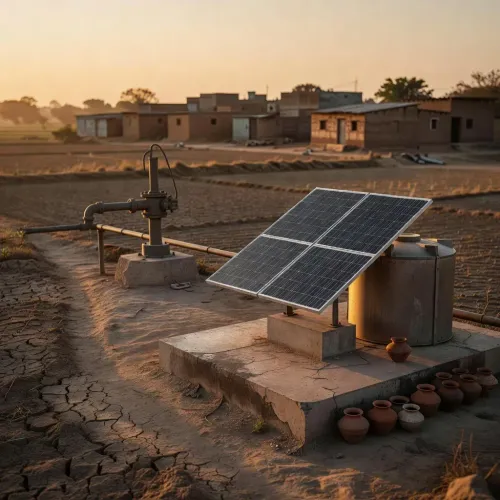
All rural water supply schemes in Maharashtra are to be progressively transitioned to solar energy to cut recurring electricity costs.
MEDA has been tasked with formulating a comprehensive solar energy policy for rural water schemes, factoring in water source, population served, pump capacity, and electricity consumption.
All schemes must comply with the Government of India's 55 LPCD norm under the Jal Jeevan Mission .
Maintenance and repair units are to be established at the taluka level , with active Gram Panchayat involvement.
Scheme maintenance costs to be financed through water charge collections , with shortfalls covered by local self-government institution funds .
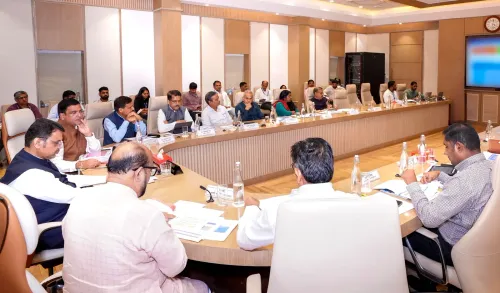
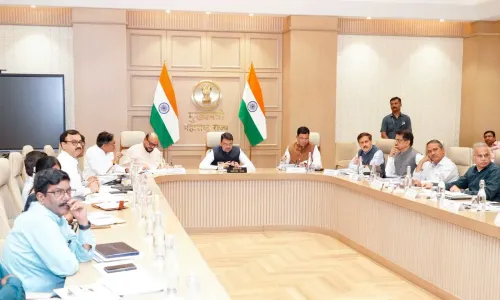
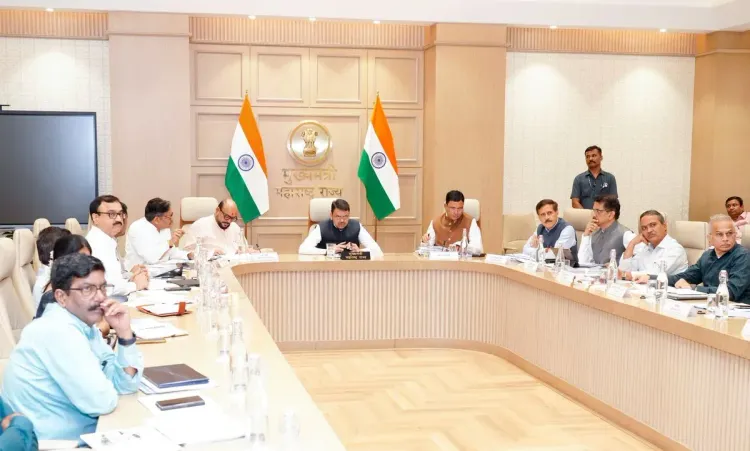
Maharashtra Chief Minister Devendra Fadnavis on Friday, June 12, 2026, chaired a high-level meeting on the State Rural Drinking Water Policy at Varsha Bungalow in Mumbai, directing a sweeping set of reforms to make rural water supply schemes solar-powered, locally maintained, and financially self-sustaining.
Context
The meeting produced a multi-pronged framework aimed at tackling two persistent problems in Maharashtra's rural water sector: high recurring electricity costs and poor scheme maintenance. CM Fadnavis directed that all rural water supply schemes across the state be progressively transitioned towards solar energy to ensure sustainable operations and reduce recurring expenditure. He further instructed that a comprehensive solar energy policy be formulated through the Maharashtra Energy Development Agency (MEDA), calibrated to each scheme's water source, the number of dependent citizens, motor-pump capacity, and total electricity units required.
Policy Backdrop
The directives align closely with the Government of India's Jal Jeevan Mission (JJM), launched in 2019, which sets a service-level benchmark of 55 litres of water per capita per day (LPCD) for rural households. Fadnavis explicitly instructed that all water supply schemes be completed and implemented in accordance with this 55 LPCD norm. Maharashtra has previously pursued water-security initiatives such as the Jalyukt Shivar Abhiyan, launched in 2015, which focused on drought mitigation through water conservation and source strengthening. The new solar-integration push also mirrors the broader national trend of deploying solar energy in rural water infrastructure under programmes such as PM-KUSUM, designed to cut electricity expenditure for pump-based schemes.
Stakeholders and Impact
A key structural reform announced at the meeting is the establishment of maintenance and repair units at the taluka level for all rural regional and individual water supply schemes. Gram Panchayats within each taluka are to be actively involved in the functioning of these units, deepening community ownership of local infrastructure. On financing, Fadnavis directed that maintenance and repair expenditure be met through the collection of water charges; in areas where collections fall short, the required funds are to be drawn from the resources of the concerned local self-government institutions. Minister Gulabrao Patil and Minister of State Adv. Ashish Jaiswal, along with senior officials, were present at the meeting.
What's Next
MEDA is now tasked with drafting the comprehensive solar energy policy for rural water schemes, a formulation exercise that will need to account for the wide variation in scheme sizes and geographies across Maharashtra's districts. Simultaneously, the state administration is expected to begin the groundwork for taluka-level maintenance units with Gram Panchayat participation. The success of the financing model — relying on water-charge collection supplemented by local body funds — will be a critical variable to watch, as collection efficiency has historically been uneven in rural Maharashtra. Together, these measures signal an intent to shift rural water security from a centrally-funded, ad hoc repair model to a decentralised, renewable-energy-driven, and fiscally grounded one.
Point of View
Reactive maintenance to a decentralised, solar-powered, and locally accountable model. The explicit alignment with the 55 LPCD norm signals an effort to synchronise state policy with central JJM benchmarks, likely with an eye on performance-linked funding. Entrusting Gram Panchayats with taluka-level maintenance units deepens the devolution agenda, but the durability of the model will hinge on water-charge collection discipline — a perennial weak point in rural local governance. The MEDA-led solar policy formulation, if executed with scheme-level granularity, could serve as a replicable template for other water-stressed states integrating renewables into civic infrastructure.
NationPress
27 Oct 2026
Frequently Asked Questions
What was decided at the Maharashtra Rural Drinking Water Policy meeting on June 12 2026?
CM Devendra Fadnavis directed that all rural water supply schemes be transitioned to solar energy, that MEDA formulate a comprehensive solar policy for these schemes, that taluka-level maintenance units be set up with Gram Panchayat involvement, and that all schemes comply with the 55 LPCD norm.
What is the 55 litres per capita per day norm for rural water supply?
The 55 LPCD norm is the minimum service-level standard set by the Government of India under the Jal Jeevan Mission (2019) for piped drinking water supply to every rural household.
What role will MEDA play in Maharashtra's rural water policy?
The Maharashtra Energy Development Agency (MEDA) has been tasked with drafting a comprehensive solar energy policy for all rural water supply schemes, taking into account each scheme's water source, dependent population, pump capacity, and electricity requirement.
How will taluka-level maintenance units for water schemes be funded?
Maintenance and repair costs are to be met primarily through water charge collections . Where collections are insufficient, funds will be sourced from the resources of the relevant local self-government institutions .
What is the Jal Jeevan Mission and how does it relate to Maharashtra's new water policy?
The Jal Jeevan Mission is a Government of India programme launched in 2019 to provide piped drinking water to all rural households at a minimum of 55 litres per person per day . CM Fadnavis has directed Maharashtra's rural schemes to be completed in line with this national norm.