CM Fadnavis: Dhule-Nandurbar to be Maharashtra's new growth engine
Synopsis
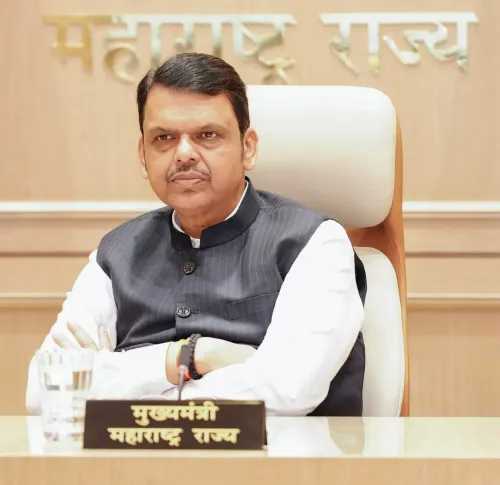
Chief Minister Devendra Fadnavis on 12 June 2026 pledged to make Dhule-Nandurbar a state growth engine, announced a Women Farmer Empowerment Bill for the monsoon session, and committed to converting all rural water schemes to solar power.
Key Takeaways
CM Devendra Fadnavis announced that Dhule and Nandurbar will be developed as a new 'growth engine' for Maharashtra .
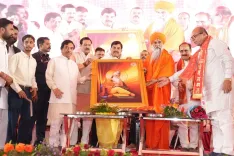
The announcement came at the launch of the biography 'Ajinkya' of Annasaheb Chudaman Patil .
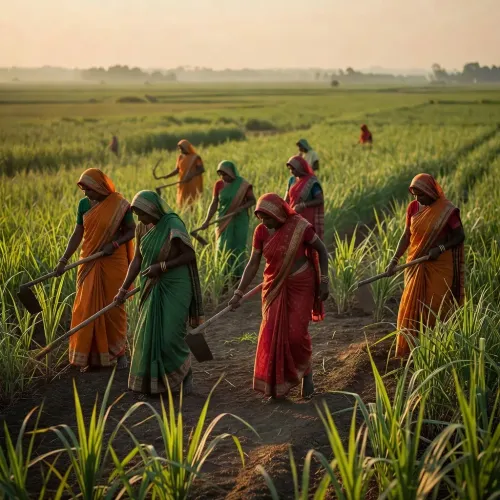
A Women Farmer Empowerment Bill will be introduced in the upcoming monsoon assembly session , granting women farmers an independent formal identity.
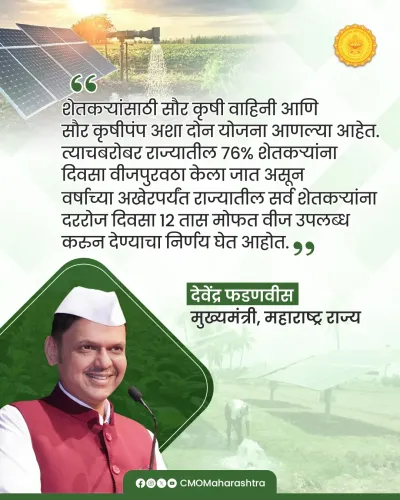
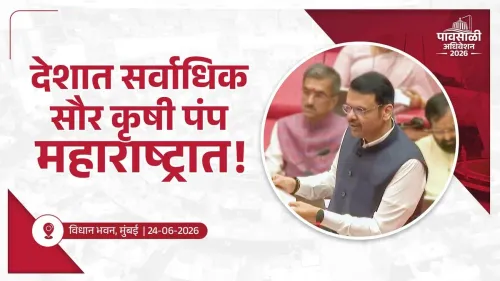
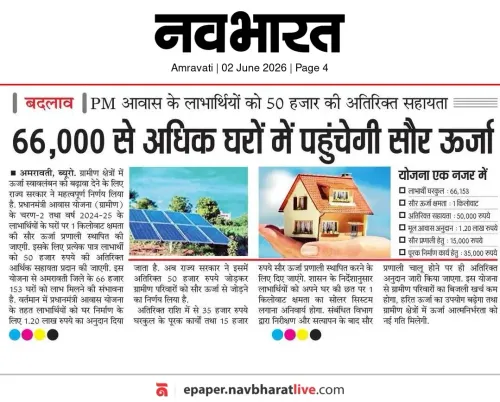
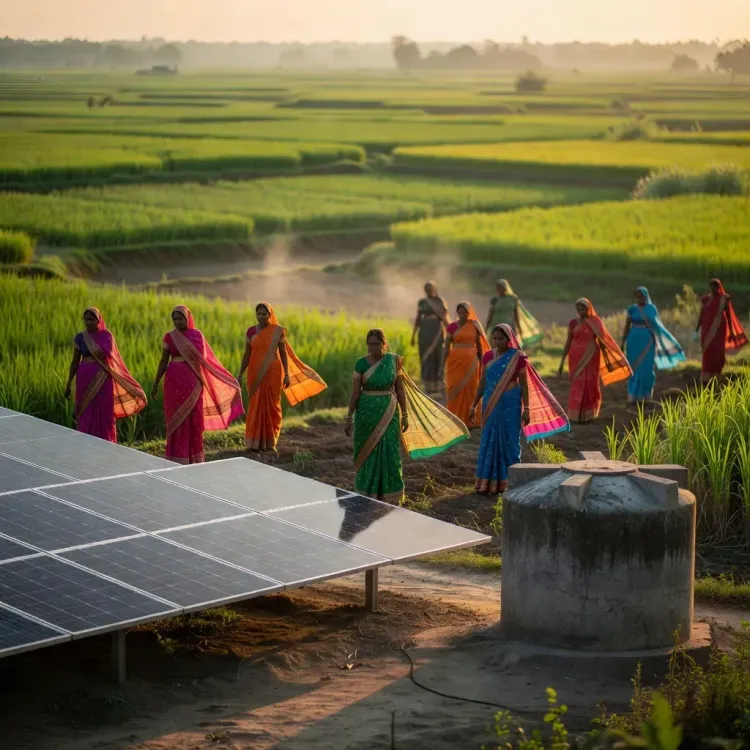
All rural drinking water supply schemes in Maharashtra will be converted to solar energy , as decided at a Rural Drinking Water Policy meeting.
The three announcements together address regional equity, gender inclusion in agriculture, and renewable energy for rural utilities.
The Chief Minister's Office of Maharashtra released its daily briefing on Friday, 12 June 2026, summarising three major policy announcements made by Chief Minister Devendra Fadnavis — covering regional development for Dhule and Nandurbar, a forthcoming Women Farmer Empowerment Bill, and a plan to convert all rural water supply schemes to solar power.
Context
Chief Minister Devendra Fadnavis declared his intent to transform Dhule and Nandurbar into a new 'growth engine' (vikaasache nave growth engine) for the state. The announcement was made at the launch of the biography 'Ajinkya' of regional figure Annasaheb Chudaman Patil, underlining the political and social significance of the Dhule-Nandurbar belt. Nandurbar is a tribal-majority district in northwest Maharashtra historically marked by lower development indicators, making this pledge a pointed signal of intent toward equitable regional growth.
Policy Backdrop
The second announcement confirmed that a Women Farmer Empowerment Bill will be tabled in the upcoming monsoon assembly session. The bill aims to grant women engaged in farming a formal, independent identity — addressing a long-standing gap in land-record and credit access for women cultivators. Earlier state and central policies have sought to formalise women's role in agriculture, but dedicated legislation conferring a standalone legal identity marks a significant step forward.
On the third front, CM Fadnavis announced that all rural drinking water supply schemes across Maharashtra will be converted to solar energy. The decision was taken at a Rural Drinking Water Policy presentation meeting. This builds on the state's prior push under the Mukhyamantri Solar Krishi Vahini Yojana, which promoted solar feeders for agricultural pumps, and reflects the broader national thrust toward decentralised renewable energy for rural utilities.
Stakeholders and Impact
Residents of Dhule and Nandurbar — among the state's more economically lagging districts — stand to benefit directly from the growth-engine framing, which typically translates into prioritised infrastructure investment, industrial incentives, and connectivity projects. Women farmers across Maharashtra would gain formal recognition under the proposed bill, potentially unlocking access to institutional credit, government subsidies, and land rights that currently accrue primarily to male landholders. Rural households in every district would see the impact of solar-powered water supply, which promises lower operational costs and greater reliability compared with grid-dependent systems.
What's Next
The most immediate legislative milestone is the presentation of the Women Farmer Empowerment Bill during the monsoon assembly session, where its scope, definitions, and enforcement mechanisms will face scrutiny from lawmakers and civil society. Simultaneously, the state government is expected to outline tendering timelines and pilot districts for the solar conversion of rural water schemes. Progress on positioning Dhule-Nandurbar as a growth node will be watched through announcements on highway connectivity, industrial clusters, and tribal welfare allocations in the months ahead.
Point of View
Gender justice, and green infrastructure into a single political narrative ahead of the monsoon session. Targeting Nandurbar — a tribal district that has historically underperformed on development indices — as a growth engine is a calibrated move to counter criticism of north Maharashtra neglect. The Women Farmer Empowerment Bill, if enacted with robust land-record linkages, could set a legislative precedent that other states follow. The solar water-scheme push extends a renewable energy arc the Fadnavis administration began in its earlier term, now applied to a sector — rural drinking water — that has direct daily visibility for voters.
NationPress
26 Oct 2026
Frequently Asked Questions
What did CM Devendra Fadnavis announce for Dhule and Nandurbar?
CM Devendra Fadnavis announced on 12 June 2026 that Dhule and Nandurbar will be developed as a new 'growth engine' for Maharashtra , signalling prioritised infrastructure and industrial investment for the region.
What is the Women Farmer Empowerment Bill in Maharashtra?
The Women Farmer Empowerment Bill is proposed legislation that will be tabled in Maharashtra's monsoon assembly session . It aims to grant women engaged in farming a formal, independent identity, potentially improving their access to credit, subsidies, and land rights.
When will the Women Farmer Empowerment Bill be introduced in Maharashtra?
According to CM Devendra Fadnavis , the bill will be introduced during the upcoming monsoon assembly session of the Maharashtra legislature .
What is Maharashtra's plan for rural water supply and solar energy?
CM Fadnavis announced that all rural drinking water supply schemes across Maharashtra will be converted to solar energy , a decision taken at a Rural Drinking Water Policy presentation meeting, aimed at reducing costs and improving reliability.
Who is Annasaheb Chudaman Patil and why was his biography launched?
Annasaheb Chudaman Patil is a regional figure from the Dhule-Nandurbar belt. His biography titled 'Ajinkya' was launched on 12 June 2026 , an event at which CM Fadnavis also made his regional development announcement.