Indian national from Tamil Nadu killed in Nepal helicopter collision
Synopsis
An Indian national from Tamil Nadu, Vasanth Kumar, died when two AS350 helicopters collided at a high-altitude helipad in Nepal's Solukhumbu district at 8:12 a.m. on 3 November. The crash near the Everest corridor — where helicopter traffic is dense and coordination challenging — raises fresh questions about landing protocols at Nepal's busiest mountain helipads.
Key Takeaways
Vasanth Kumar , an Indian national from Tamil Nadu , was killed in a helicopter collision in Solukhumbu district, Nepal , on 3 November 2026 .
A New Zealand national of Indian origin was injured and evacuated to Kathmandu for treatment.
Two AS350 helicopters — operated by Fishtail Air (9NAJR) and Air Dynasty (9NAOD) — collided at 8:12 a.m. while attempting to land at the Pheriche helipad.
The Fishtail Air pilot sustained minor injuries; the Air Dynasty helicopter carried no passengers.
The body of the deceased is being transported to Kathmandu for a post-mortem; repatriation procedures are expected to follow.
The Civil Aviation Authority of Nepal has confirmed the incident and a formal investigation is anticipated.
An Indian national from Tamil Nadu, identified as Vasanth Kumar, was killed on Tuesday, 3 November 2026, when two helicopters collided while attempting to land at a helipad in the Pheriche area of Solukhumbu district in eastern Nepal. A second passenger — a New Zealand national of Indian origin — was injured in the accident and has since been brought to Kathmandu for further treatment.
How the collision happened
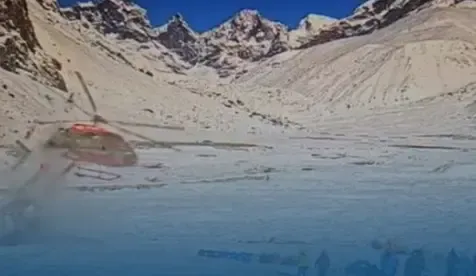
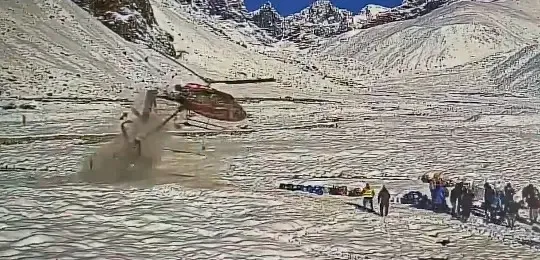
The two aircraft involved were both AS350-type helicopters. The first, operated by Air Dynasty Heli Service Pvt. Ltd. (registration 9NAOD), had departed from Lukla Airport bound for Pheriche. The second, operated by Fishtail Air Pvt. Ltd. (registration 9NAJR), had taken off from the Gorakshep area carrying the two foreign nationals, also headed to Pheriche. The two helicopters collided at 8:12 a.m. local time as both attempted to land at the same helipad, according to a press release from the Civil Aviation Authority of Nepal (CAAN).
Videos circulating on social media appear to show the rotor blades of the two aircraft making contact as they approached each other, before both fell to the ground. The pilot of the Fishtail Air helicopter also sustained minor injuries. The Air Dynasty helicopter had no passengers on board at the time, Nepali authorities confirmed.
Official response and ongoing procedures
Deputy Superintendent of Police (DSP) Nabin Raja Budhathoki, chief of the District Police Office in Solukhumbu, confirmed the identity of the deceased and the nationality of the injured passenger. 'We are preparing to send the body of the passenger killed in the accident to Kathmandu for a post-mortem examination,' Budhathoki said. The injured New Zealand national of Indian origin was evacuated to Kathmandu for further medical care, according to local media reports.
Context: Helicopter operations in the Everest region
The Solukhumbu district, which encompasses the Everest base camp trail and surrounding Himalayan terrain, is one of Nepal's most active helicopter corridors. Aircraft routinely ferry international tourists, supply high-altitude tea houses, and support emergency rescue operations in an area where road access is almost non-existent. The high frequency of helicopter movements — particularly at narrow, high-altitude helipads such as the one at Pheriche (approximately 4,240 metres above sea level) — has long been cited by aviation safety analysts as a risk factor. This is not the first mid-air or landing incident in the region; Nepal has recorded several helicopter accidents in the Everest corridor over the past decade.
What happens next
The Civil Aviation Authority of Nepal is expected to initiate a formal accident investigation. The body of Vasanth Kumar is to be transported to Kathmandu for a post-mortem, after which consular procedures for repatriation to India are likely to follow. The Indian Embassy in Kathmandu had not issued a public statement at the time of reporting. Nepal's aviation regulator and airline operators will face scrutiny over landing coordination procedures at high-altitude helipads in the coming days.
Point of View
The pressure on these helipads will only intensify unless CAAN imposes binding traffic management rules — not just another post-accident inquiry.
NationPress
3 Nov 2026
Frequently Asked Questions
Who was killed in the Nepal helicopter collision on 3 November 2026?
Vasanth Kumar, an Indian national from Tamil Nadu, was killed when two helicopters collided at a helipad in the Pheriche area of Solukhumbu district in Nepal on 3 November 2026. A New Zealand national of Indian origin was also injured in the accident.
What caused the helicopter collision in Nepal's Solukhumbu district?
According to preliminary reports from the Civil Aviation Authority of Nepal, two AS350 helicopters — one operated by Fishtail Air and one by Air Dynasty — collided while simultaneously attempting to land at the Pheriche helipad at 8:12 a.m. on 3 November. Videos on social media appear to show the rotor blades of the two aircraft making contact on approach.
Which helicopters were involved in the Pheriche accident?
The two helicopters were an AS350 operated by Air Dynasty Heli Service Pvt. Ltd. (registration 9NAOD), which had departed Lukla Airport, and an AS350 operated by Fishtail Air Pvt. Ltd. (registration 9NAJR), which had departed from the Gorakshep area carrying two foreign nationals.
What is the current condition of the injured passenger?
The injured passenger, a New Zealand national of Indian origin, was evacuated to Kathmandu for further medical treatment, according to local media reports. No further update on their condition had been officially confirmed at the time of reporting.
Why are helicopter accidents relatively common in Nepal's Everest region?
The Solukhumbu district, which includes routes to Everest base camp, sees extremely high helicopter traffic due to tourism, supply runs, and rescue operations, with limited road access. High-altitude helipads like Pheriche — at roughly 4,240 metres — are narrow, serve multiple operators, and have historically lacked centralised landing sequencing, creating collision risk.