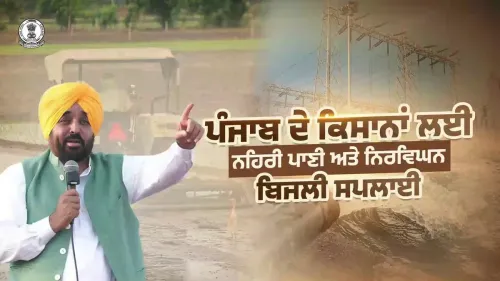
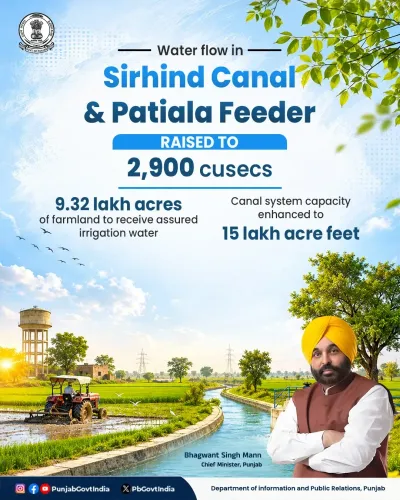
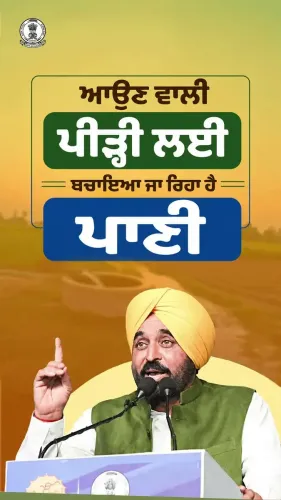
CM Bhagwant Mann inaugurates two water treatment plants in Patiala
Synopsis
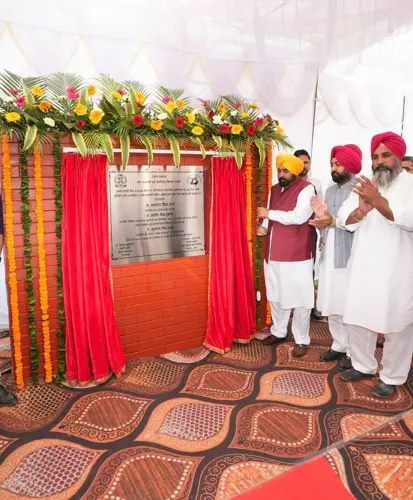
Chief Minister Bhagwant Mann inaugurated two new water treatment plants at village Mandoli in Patiala on 3 November 2026, extending Punjab's rural clean-water push while also claiming major gains under the government's 'education revolution' in public schools.
Key Takeaways
Two water treatment plants were inaugurated at village Mandoli, Patiala district on 3 November 2026 .
Chief Minister Bhagwant Singh Mann performed the inauguration as part of Punjab's rural drinking-water drive.
Mann linked the event to the AAP government's Siksha Kranti (education revolution), claiming government school students are achieving significant academic milestones.
Punjab's rural groundwater quality has been a long-standing challenge addressed under schemes including the Jal Jeevan Mission .
The district-wise rollout of water treatment infrastructure and official data on school performance outcomes remain key areas to watch.
Clean water arrived in a new form at village Mandoli, Patiala district on Tuesday, 3 November 2026, as Punjab Chief Minister Bhagwant Singh Mann inaugurated two new water treatment plants — a direct delivery on a promise that helped sweep the Aam Aadmi Party to power in 2022. The Chief Minister's Office of Punjab announced the event, noting that Mann used the occasion to also highlight what the government is calling an 'education revolution' in the state's public schools.
Two plants, one village, a district-wide push for safe water
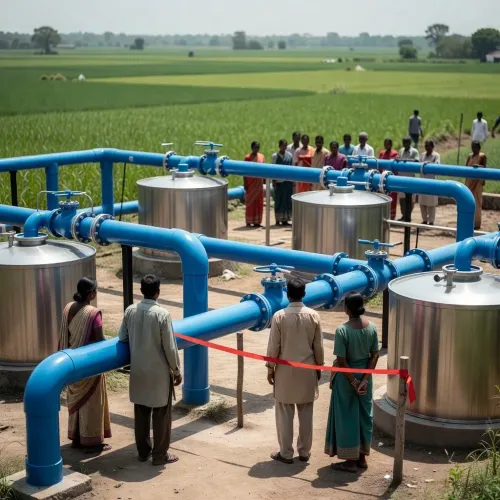
The twin water treatment plants at Mandoli are part of a sustained drive across Punjab's rural belt to address one of the state's most persistent challenges: groundwater quality. Punjab's agricultural heartland has long grappled with contamination linked to decades of heavy fertiliser use, with successive administrations launching treatment facilities under central schemes including the Jal Jeevan Mission. The AAP government has continued and, it claims, accelerated that rollout, targeting district-by-district coverage of safe drinking water infrastructure.
Patiala district, with its large rural population and deep agricultural base, sits squarely in the zone most affected by contamination concerns. Today's inauguration signals that the government's attention has moved beyond the state's urban centres into village-level infrastructure.
Mann pairs pipes with pedagogy — the 'Siksha Kranti' claim
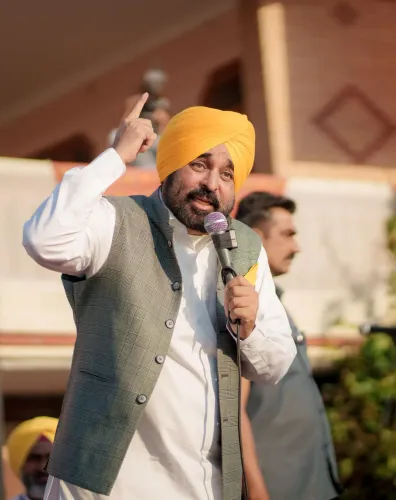
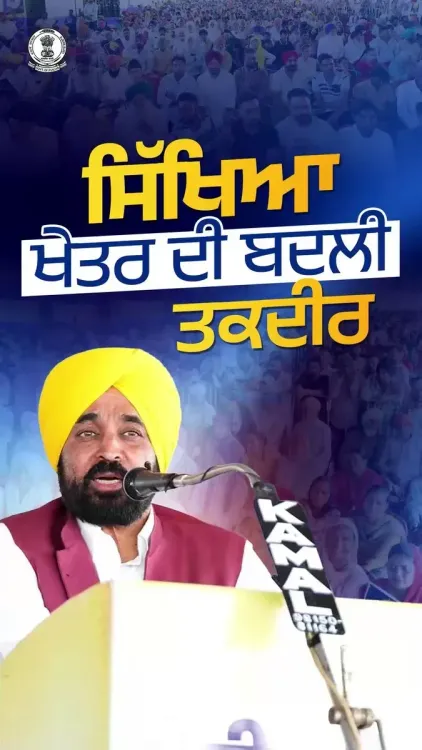
Standing at the inauguration, Chief Minister Mann chose to widen the moment. He stated that the Punjab government's Siksha Kranti (education revolution) had brought sweeping changes to the state's schooling system, with students from government schools 'achieving great feats' in the academic sphere. The pairing of a water infrastructure event with an education message is a deliberate political signature for the AAP government, which has built much of its national brand — first in Delhi, now in Punjab — around simultaneous gains in basic services and public schooling.
Since March 2022, the Punjab government has pointed to teacher recruitment drives and school infrastructure upgrades as evidence of a broader transformation. The claim of large-scale student achievement gains, however, remains a campaign-level assertion; verifiable board exam data and enrolment trend figures are yet to be officially published for the current academic cycle.
What the Mandoli inauguration signals for the rest of Punjab
The key question now is pace and scale. Punjab has hundreds of villages still awaiting piped, treated water, and the state's groundwater crisis in districts like Bathinda and Fatehgarh Sahib is far more acute than in Patiala. Today's inauguration adds two plants to the tally, but observers will be watching for a district-wise rollout schedule and whether operational maintenance — historically the weak link in rural water infrastructure — is built into the programme.
For a government that made water and schools the twin pillars of its electoral pitch, every plant switched on is both a public-service milestone and a political statement — and in Punjab's villages, the two are rarely easy to separate.
Point of View
The co-opting of an infrastructure event to amplify education claims — without citing verifiable outcome data — reflects a broader pattern where announcements and achievements are bundled for maximum political optics. The real test will be operational continuity of these plants and whether student-performance data eventually substantiates the 'revolution' rhetoric.
NationPress
3 Nov 2026
Frequently Asked Questions
Where did CM Bhagwant Mann inaugurate water treatment plants in November 2026?
Chief Minister Bhagwant Mann inaugurated two water treatment plants at village Mandoli in Patiala district, Punjab, on 3 November 2026.
What is the Jal Jeevan Mission and how does it relate to Punjab's water plants?
Jal Jeevan Mission is a central government scheme aimed at providing piped drinking water to every rural household. Punjab, including under the current AAP government, has used this scheme alongside state funds to install water treatment infrastructure across rural districts.
What is the Punjab government's 'Siksha Kranti' or education revolution?
The Punjab government uses the term 'Siksha Kranti' to describe its reforms in public school education since 2022, including teacher recruitment, infrastructure upgrades, and efforts to improve student outcomes in government schools.
When did Bhagwant Mann become Chief Minister of Punjab?
Bhagwant Singh Mann became Chief Minister of Punjab in March 2022, after the Aam Aadmi Party won the state assembly elections.
What are the main water quality challenges in rural Punjab?
Rural Punjab faces significant groundwater contamination linked to decades of heavy agricultural chemical use, with districts like Bathinda and Fatehgarh Sahib among the most severely affected. The state has been installing water treatment plants to provide safe drinking water to affected villages.