CM Mann's Punjab Govt Pushes Canal Water to Every Farm

Synopsis
The Chief Minister's Office of Punjab announced on 23 May 2026 that CM Bhagwant Mann's government is channelling canal water to every agricultural field in the state, aiming to strengthen farming and conserve groundwater for future generations amid a long-running water-table crisis.
Key Takeaways
The Chief Minister's Office of Punjab announced on 23 May 2026 that canal water is being delivered to every field in the state under CM Bhagwant Mann 's government.
The initiative is framed as serving two goals: strengthening agriculture and ensuring water conservation for future generations .
Punjab 's rice-wheat cropping cycle has caused significant groundwater depletion, making canal irrigation a critical alternative to tubewells.
The effort aligns with the national Pradhan Mantri Krishi Sinchayee Yojana (PMKSY) , launched in 2015 , which supports canal rehabilitation and last-mile water delivery.
Sustained state budget allocations for canal lining and rehabilitation will determine whether the stated ambition translates into measurable on-ground coverage.
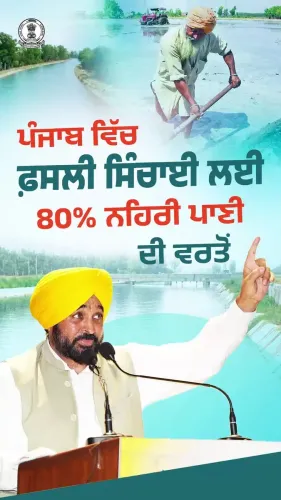
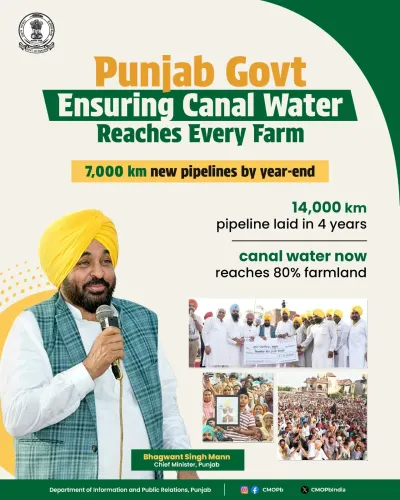
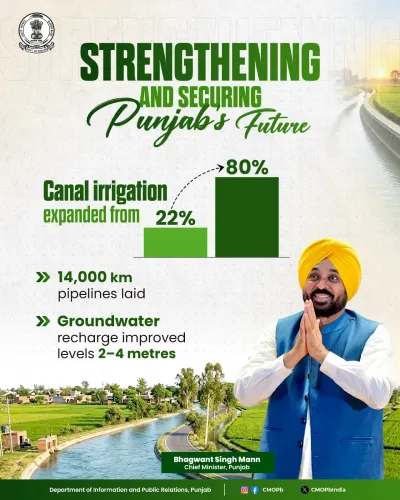
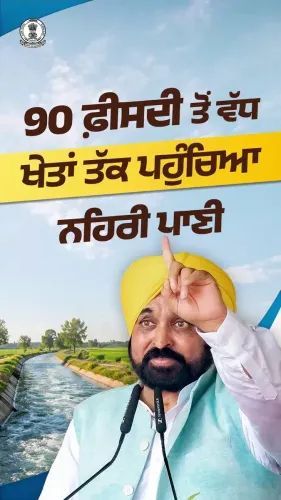
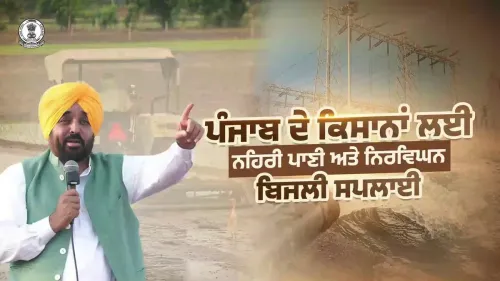
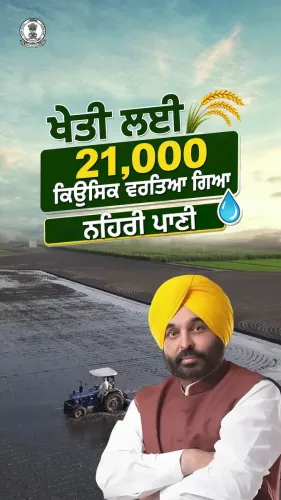
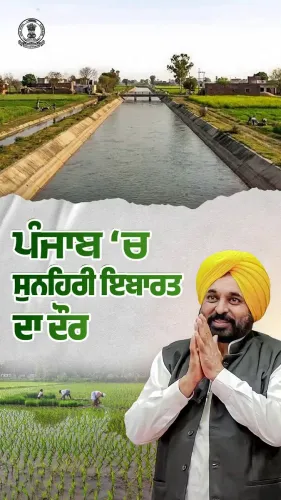
The Chief Minister's Office of Punjab announced on Saturday, 23 May 2026 that the state government, led by Chief Minister Bhagwant Mann, is actively working to deliver canal water to every agricultural field in Punjab, framing the effort as both an agricultural strengthening measure and a long-term water conservation initiative for future generations.
The post, shared in Punjabi, states: 'ਮੁੱਖ ਮੰਤਰੀ @BhagwantMann ਦੀ ਅਗਵਾਈ ਵਾਲੀ ਪੰਜਾਬ ਸਰਕਾਰ ਦੇ ਯਤਨਾਂ ਸਦਕਾ ਪੰਜਾਬ ਦੇ ਹਰ ਖੇਤ ਤੱਕ ਨਹਿਰੀ ਪਾਣੀ ਪਹੁੰਚ ਰਿਹਾ ਹੈ' ['Through the efforts of the Punjab government led by Chief Minister Bhagwant Mann, canal water is reaching every field in Punjab.']. The statement adds that the initiative is 'not only strengthening agriculture, but also ensuring water conservation for generations to come.'
Context
Punjab is India's most intensively irrigated agricultural state, with its economy anchored in a rice-wheat cropping cycle that places enormous pressure on both surface and groundwater resources. Decades of over-reliance on tubewells have led to a steady decline in the water table across large parts of the state, making canal-based irrigation a critical alternative. The Mann government's emphasis on reaching 'every field' signals a push to reverse this dependence.
Policy Backdrop
Canal irrigation expansion in Punjab sits within the broader national framework of the Pradhan Mantri Krishi Sinchayee Yojana (PMKSY), launched in 2015, which aims to expand irrigated area and improve water-use efficiency across India. Punjab has been a participating state under this scheme, with components directed at canal rehabilitation and last-mile water delivery. The current state government has layered an explicit conservation rationale onto this infrastructure push, linking field-level delivery to aquifer preservation.
Punjab governments across political formations have long sought to increase the share of canal water relative to groundwater extraction. What distinguishes the present framing is the explicit invocation of intergenerational equity — positioning canal expansion not merely as a farm productivity tool but as a safeguard for future water availability.
Stakeholders and Impact
Punjab's farming community, which constitutes a politically and economically significant constituency, stands as the primary beneficiary of expanded canal coverage. Reduced dependence on electric-powered tubewells could lower cultivation costs for smallholder farmers and ease pressure on the state's power subsidy bill. Environmental stakeholders and water-resource planners have a parallel interest, as slowing groundwater depletion is considered essential to the state's long-term agricultural viability.
Canal lining, maintenance, and distribution network rehabilitation require sustained state budget allocations, making fiscal commitment a key variable in whether the stated ambition translates into measurable coverage gains across Punjab's diverse agro-climatic zones.
What's Next
Observers will watch state budget allocations for canal infrastructure in the coming financial year as the clearest indicator of the government's fiscal commitment to this agenda. Reports from the Central Water Commission and Punjab's own groundwater board on water-table trends will serve as independent benchmarks for whether expanded canal delivery is slowing aquifer depletion. The government's ability to demonstrate field-level coverage gains — particularly in districts with the most severe groundwater stress — will be central to the political and policy credibility of this initiative.
Point of View
The Mann government is positioning a routine irrigation push as a long-horizon governance statement — a rhetorical move that also pre-empts criticism about the pace of groundwater recovery. The announcement, however, arrives without verifiable data on coverage gains or budget outlays, which means its policy weight remains aspirational until corroborated by independent water-resource assessments. This pattern — bold directional commitment paired with limited granular disclosure — has been a recurring feature of state-level irrigation communications across India's political spectrum.
NationPress
23 Sept 2026
Frequently Asked Questions
Is Punjab government providing canal water to all farmers?
The Chief Minister's Office of Punjab stated on 23 May 2026 that the government led by CM Bhagwant Mann is working to deliver canal water to every agricultural field in the state, though independent verification of full coverage is not yet available.
Why is canal water important for Punjab agriculture?
Punjab's dominant rice-wheat cropping cycle has caused severe groundwater depletion over decades. Canal water provides a surface-water alternative that reduces dependence on tubewells and helps slow the decline of the state's water table.
What is Pradhan Mantri Krishi Sinchayee Yojana and how does it relate to Punjab?
Pradhan Mantri Krishi Sinchayee Yojana (PMKSY) is a national scheme launched in 2015 to expand irrigated area and improve water-use efficiency. Punjab is a participating state, with components directed at canal rehabilitation and last-mile water delivery to farms.
What is Bhagwant Mann doing for Punjab farmers on water issues?
CM Bhagwant Mann's government has announced a push to extend canal irrigation to every field in Punjab, framing it as a measure to strengthen agriculture and conserve groundwater for future generations.
How serious is Punjab's groundwater crisis?
Punjab faces one of India's most acute groundwater crises, with water tables declining steadily across large parts of the state due to intensive tubewell-based irrigation for rice and wheat cultivation over several decades.