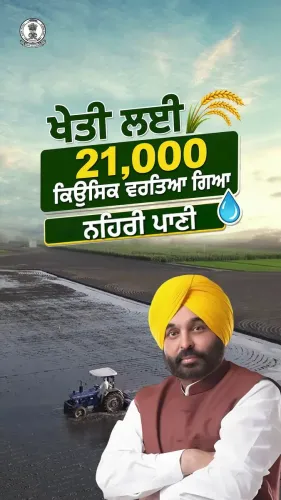
CM Bhagwant Mann: Canal Water Reaches Punjab Fields After 50 Years

Synopsis
Chief Minister Bhagwant Mann says Punjab's canal system is now delivering water continuously to farms, with the state channelling 18,000 cusecs through the network. Villagers report canal water reaching their fields for the first time in 40 to 50 years, as the AAP government's desilting drive yields on-ground results.
Key Takeaways
CM Bhagwant Mann announced on 4 November 2026 that canal water is continuously reaching Punjab farms.
Villagers are reporting canal flow in their fields for the first time in 40 to 50 years .
The Punjab government says it has delivered 18,000 cusecs of water through the canal network.
The AAP government has been undertaking canal desilting and renovation since taking office in March 2022 .
Restoring canal irrigation is seen as a key measure to reduce Punjab's severe groundwater depletion crisis.
Official area-irrigated data and future budget allocations for canal maintenance are the key next milestones to watch.
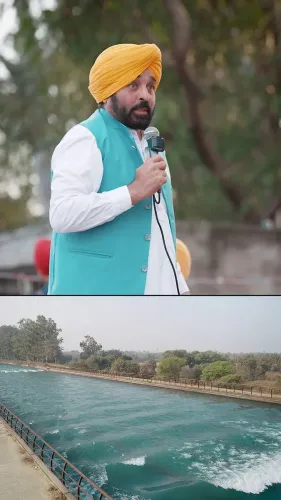
For some Punjab farmers, the sight of water flowing through their village canals is not routine — it is a moment four or five decades in the making. Chief Minister Bhagwant Mann, on Wednesday, 4 November 2026, said that canal water is now reaching fields continuously across Punjab, with villagers sending him videos every day to share their joy.
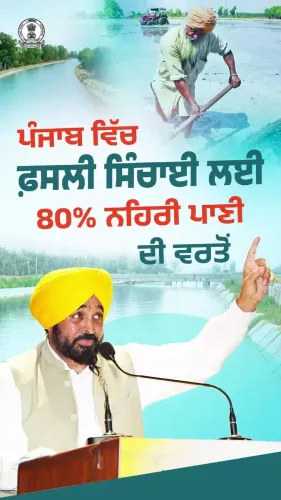
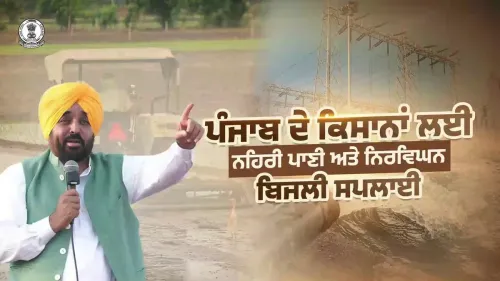
Speaking from his office, CM Mann quoted farmers telling him that 'ਸਾਡੇ ਖੇਤਾਂ ਵਿੱਚ 40 ਤੋਂ 50 ਸਾਲਾਂ ਬਾਅਦ ਨਹਿਰੀ ਪਾਣੀ ਪਹੁੰਚਿਆ ਹੈ' ('Canal water has reached our fields after 40 to 50 years'). The Punjab government, he announced, has channelled 18,000 cusecs of water to farms through the canal network — a figure the Chief Minister's Office cited as a marker of the irrigation drive's scale.
Decades of Siltation and the Tail-End Farmer's Drought
Punjab's canal system is a colonial-era inheritance — a sprawling network of distributaries designed to carry river water deep into the agricultural plains. But decades of siltation, encroachment, and inequitable water distribution had steadily starved tail-end farmers: those whose fields sit farthest from the canal head and are historically last in line to receive water, if they receive it at all.
The Aam Aadmi Party government, since taking office in March 2022, has undertaken canal desilting and renovation works with the stated goal of restoring flow to precisely these neglected reaches. The emotional response CM Mann describes — farmers filming the moment water enters their fields and sending the clips to him — suggests the work is reaching communities that had effectively given up on surface irrigation.
Groundwater Stress and Why Canal Revival Matters Now
Punjab's agricultural economy runs on paddy and wheat — two of India's most water-intensive crops — and for years the state's farmers compensated for dried-up canals by sinking ever-deeper tubewells. The result has been an accelerating groundwater crisis, with water tables in several districts falling to critical levels.
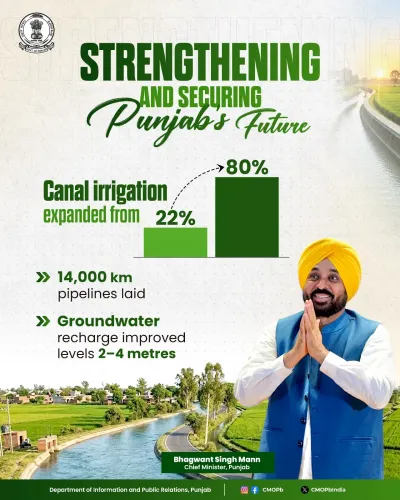
Restoring canal irrigation directly reduces pressure on groundwater, making every cusec delivered above ground worth more than its face value. The state government frames the current push as both a farmer-welfare measure and a longer-term ecological correction — turning back, however partially, decades of over-extraction.
What the 18,000 Cusecs Claim Signals
The 18,000 cusecs figure cited by CM Mann is a substantial volume by any measure of Punjab's irrigation network. While official data on the precise area covered and independently verified flow records are yet to be published, the government's framing positions this as among the larger single interventions in the canal system's recent history. The Chief Minister's Office has invited farmers to continue sharing feedback directly — an unusual accountability loop that also doubles as real-time political communication.
The next milestones to watch: official acreage data showing how many hectares received canal water this season, and whether the coming state budget allocates sustained maintenance funds to prevent canals from silting up again once the political spotlight moves on.
Fifty years is a long time to wait for water. The harder question is whether the infrastructure behind this moment is built to last — or whether the next generation of tail-end farmers will be sending the same videos all over again.
Point of View
But it also reflects a genuine infrastructure gap the AAP government inherited. Punjab's canal-revival push sits at the intersection of two of India's most pressing agrarian challenges: farmer distress and groundwater depletion — giving the initiative cross-partisan policy relevance beyond party optics. The '40 to 50 years' framing is powerful precisely because it implicitly indicts every previous state government, turning an infrastructure update into a sweeping political contrast. The real test, however, lies not in the volume of water released this season but in whether maintenance budgets and institutional oversight are strengthened enough to prevent the network from reverting to its neglected state.
NationPress
4 Nov 2026
Frequently Asked Questions
What did CM Bhagwant Mann say about canal water in Punjab?
CM Bhagwant Mann said that canal water is now continuously reaching Punjab's farms, with the state government delivering 18,000 cusecs through the canal network. He cited farmers' reports that water has reached their fields for the first time in 40 to 50 years.
How much canal water has Punjab delivered to farms?
According to the Chief Minister's Office, the Punjab government has channelled 18,000 cusecs of water to fields through the canal system as part of its ongoing irrigation restoration drive.
Why had Punjab's canal water not reached many farms for decades?
Punjab's canal network suffered from decades of siltation, encroachment, and inequitable distribution that cut off tail-end farmers — those farthest from canal head points. The AAP government began desilting and renovation works after coming to power in March 2022.
How does canal water revival help Punjab's groundwater crisis?
Punjab farmers historically over-relied on tubewells to compensate for dried-up canals, causing severe groundwater depletion. Restoring canal irrigation reduces dependence on groundwater extraction, helping stabilise falling water tables in the state.
What are the next steps for Punjab's canal irrigation programme?
Key milestones include official data releases on the total area irrigated this season and whether the state budget allocates sustained funds for canal maintenance to prevent future siltation and ensure the gains are permanent.