CM Bhagwant Mann Claims Canal Water Now Reaching Tail-End Farms
Synopsis
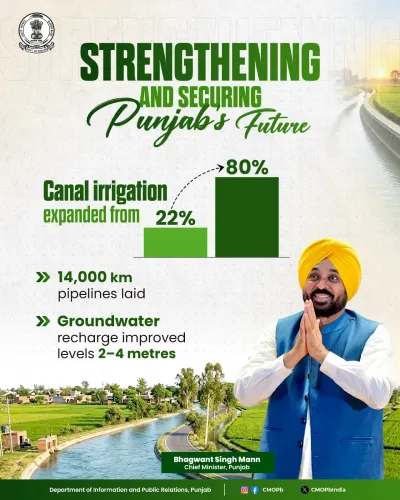
Punjab CM Bhagwant Mann says his AAP government has revived long-buried irrigation maps and extended thousands of kilometres of new pipelines, claiming canal water now reaches the most remote tail-end fields — a historic gap in the state's agricultural water distribution.
Key Takeaways
Punjab CM Bhagwant Mann announced on 18 October 2026 that canal water is now reaching tail-end farm fields across the state.
The government claims it excavated and revived kasses and khale (minor waterways) that had been buried in old survey maps for decades.
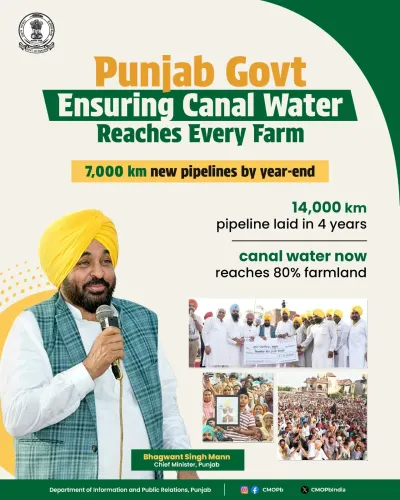
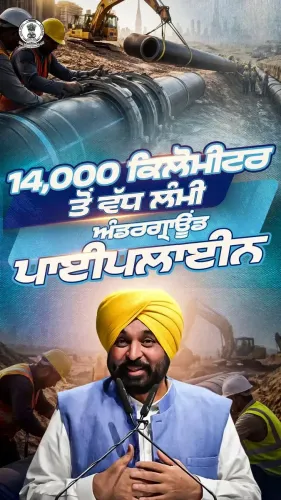
Thousands of kilometres of new pipes were reportedly laid to extend the canal network to the most remote agricultural zones.
Mann's framing — same offices, same officers, but a reformed system — positions the achievement as a governance and accountability victory rather than a purely infrastructural one.
Tail-end water inequity has been a documented, long-standing problem in Punjab's canal distribution system, disproportionately affecting small and marginal farmers.
Specific figures on pipeline lengths, villages covered, and budget spend have not been independently verified.
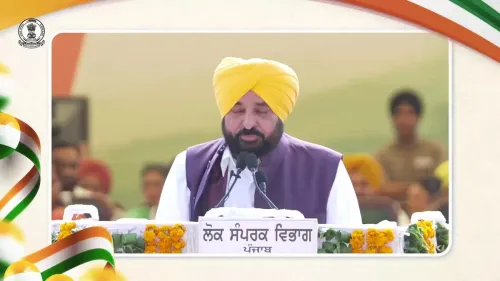
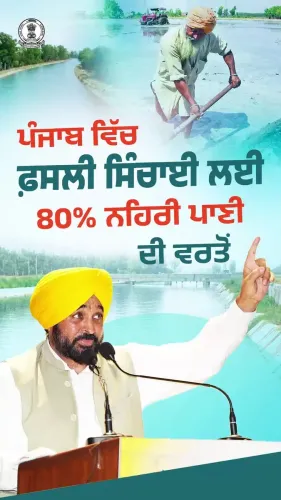
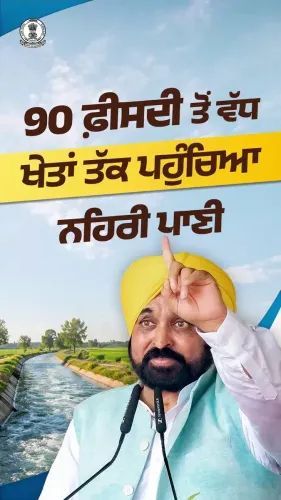
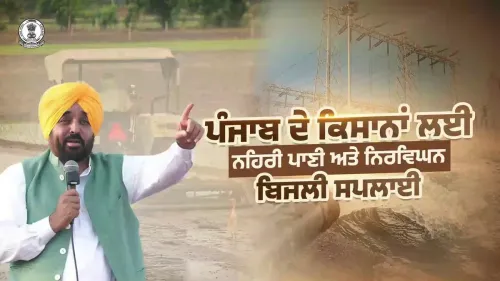
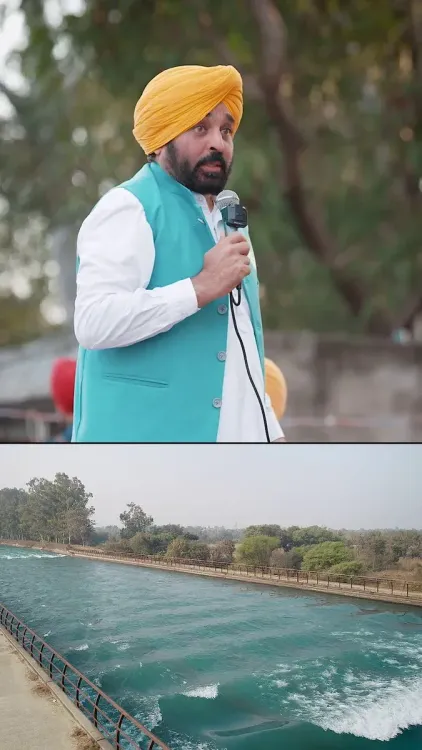
The same offices, the same officers — but Punjab Chief Minister Bhagwant Mann says the system underneath them has been overhauled completely. In a post on X on Sunday, 18 October 2026, Mann claimed his government has revived long-buried irrigation maps and laid thousands of kilometres of new pipes to push canal water all the way to the most remote tail-end fields in the state.
Writing in Punjabi, Mann declared: 'Daftar uhi ne, afsar vi uhi ne, par tuhaade is putt ne system nu saaf-suthara te lokan prati jawabdehi bana ditta hai' — 'The offices are the same, the officers are the same, but this son of yours has made the system clean and accountable to the people.' He added that waterways and channels which had been 'buried in old maps' have been excavated and revived, with thousands of kilometres of new pipelines laid to carry canal water to the last tail-ends of farms.
Why Tail-End Water Distribution Has Long Been Punjab's Weak Link
Punjab's canal network is among the most extensive in Asia, the backbone of a state that supplies a significant share of India's food grain. Yet for decades, tail-end farmers — those whose fields sit at the furthest points of distributary channels — have complained of receiving little or no water while head-reach farmers drew more than their share. Siltation, broken infrastructure, and alleged irregularities in irrigation department allocations compounded the problem, leaving entire micro-zones chronically under-irrigated.
The Aam Aadmi Party government, which swept to power in March 2022 on a platform of anti-corruption and governance reform, has repeatedly cited irrigation accountability as a marker of systemic change. Mann's framing — same buildings, same bureaucrats, transformed outcomes — is a deliberate rhetorical device aimed at contrasting the AAP era with previous administrations without invoking them by name.
Reviving Buried Maps: What the Claim Actually Means
The reference to channels and waterways buried in maps points to a real and documented problem: over decades, minor irrigation works — small distributary cuts called kasses and field channels called khale — fell into disuse, were encroached upon, or simply disappeared from active maintenance records. Reviving them requires both physical excavation and administrative recovery of original survey maps from district revenue offices.
Mann's post does not specify total pipe lengths, the number of villages covered, or the budget deployed — figures that remain unverified at this stage. What the government has consistently argued is that the accountability deficit, not infrastructure alone, was the root cause: water would often be diverted or sold before it reached the tail, a problem the administration says it has tackled through digital monitoring and officer accountability frameworks.
The Political Arithmetic Behind the Announcement
Tail-end farmers represent a politically significant and historically neglected constituency. For Mann, delivering canal water to the last row of fields is both a tangible governance claim and a powerful symbol — the state reaching those it previously forgot. The direct address to voters as 'your son' (tuhaada putt) is a signature of Mann's political communication style, collapsing the distance between the chief minister's office and the farm gate.
With the next Punjab assembly election on the horizon, the AAP government is building a record of granular, ground-level delivery claims. Whether the irrigation metrics hold up to independent scrutiny will matter — but for now, the message from Chandigarh is unambiguous: the water is flowing where it never reached before.
Point of View
Same officers') while claiming transformed outcomes, AAP is directly challenging the opposition argument that the party is all promise and no delivery. The tail-end irrigation claim targets a constituency — small farmers at the periphery of the canal network — that previous governments failed conspicuously and that could prove decisive in Punjab's electoral arithmetic. If the claims are backed by verifiable data, this becomes a durable policy credential; if the metrics are contested, it hands opponents a sharp line of attack. The broader arc here is AAP's attempt to build a replicable 'Punjab model' of governance reform that it can export politically — and irrigation, unlike most sectors, produces daily, visceral proof of either success or failure.
NationPress
18 Oct 2026
Frequently Asked Questions
What did Bhagwant Mann say about Punjab's canal water system?
CM Bhagwant Mann claimed on 18 October 2026 that his government has revived long-buried irrigation maps and laid thousands of kilometres of new pipelines to deliver canal water to the last tail-end fields of farms across Punjab.
What is a tail-end farmer in Punjab's irrigation system?
A tail-end farmer is one whose fields lie at the furthest points of a canal distributary. These farmers have historically received little or no water because it is diverted or depleted by the time it reaches them, making tail-end equity a chronic problem in Punjab.
What are kasses and khale in Punjab irrigation?
Kasses and khale are minor irrigation works — small distributary cuts and field channels — that form the last mile of Punjab's canal network. Many fell into disuse, were encroached upon, or disappeared from maintenance records, and Mann's government claims to have revived them.
How has the AAP government changed Punjab's irrigation department?
The AAP government has claimed accountability reforms including digital monitoring of water distribution and officer accountability frameworks. Mann argues the problem was not just infrastructure but corruption and diversion of water before it reached tail-end fields.
Are Bhagwant Mann's irrigation claims verified?
The specific figures — total kilometres of pipe laid and number of villages covered — have not been independently verified. The broader claim of reviving buried irrigation maps aligns with a documented, long-standing problem in Punjab's canal system.