CM Mann: Punjab lays 14,000-km underground canal pipeline

Synopsis
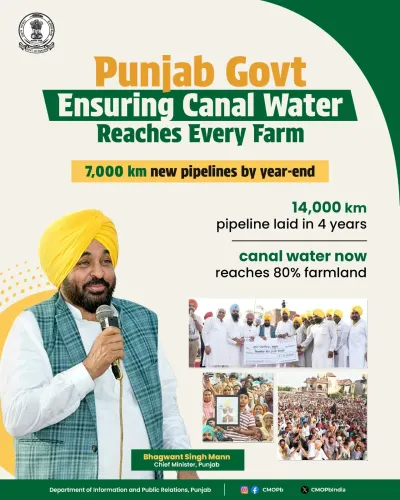
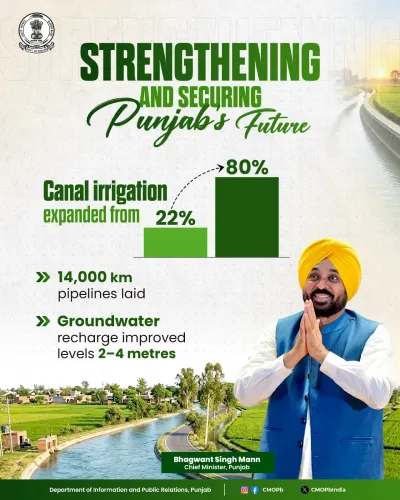
Chief Minister Bhagwant Singh Mann has announced that Punjab has laid over 14,000 km of underground pipelines to channel canal water directly to fields, aiming to cut tubewell dependence and slow the state's alarming groundwater decline.
Key Takeaways
The Chief Minister's Office of Punjab announced on 27 June 2026 that more than 14,000 km of underground pipelines have been laid across the state.
The network is designed to carry canal water directly to farmers' fields, bypassing open channels that lose water to seepage and evaporation.
CM Bhagwant Singh Mann stated that canal water access has already reduced farmers' dependence on tubewells.
Punjab has one of India's fastest-falling groundwater tables, driven by subsidised tubewell use for wheat-rice cultivation.
The pipeline push builds on the AAP government's 2022 commitment to accelerate canal lining and underground pipe projects.
Future milestones include groundwater-table monitoring in covered districts and potential new budget allocations for pipeline expansion in 2027-28 .
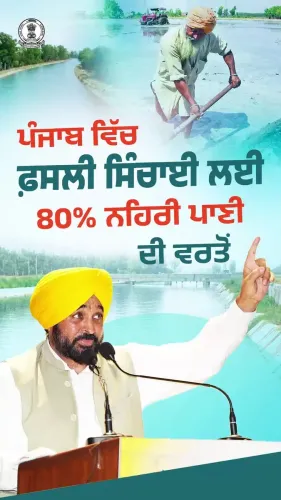
The Chief Minister's Office of Punjab announced on Saturday, 27 June 2026 that Chief Minister Bhagwant Singh Mann has shared that a network of more than 14,000 kilometres of underground pipelines has been laid across the state to carry canal water directly to farmers' fields, reducing dependence on tubewells.
Context
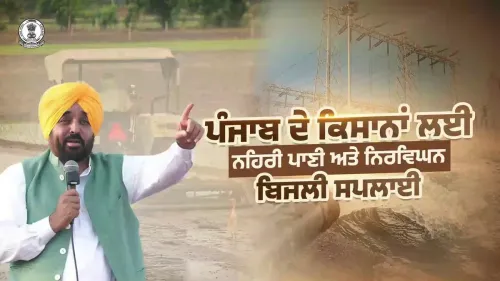
Posting in Punjabi, CM Mann stated — 'ਖੇਤਾਂ ਵਿੱਚ ਨਹਿਰੀ ਪਾਣੀ ਦੀ ਪਹੁੰਚ ਨਾਲ ਟਿਊਬਵੈੱਲਾਂ 'ਤੇ ਨਿਰਭਰਤਾ ਘਟੀ ਹੈ' ('Canal water access in fields has reduced dependence on tubewells'). The announcement positions the underground pipeline grid as a flagship infrastructure push by the Aam Aadmi Party government in Punjab, which took office in March 2022.
The pipeline network is designed to minimise seepage losses that are common with open channels and to extend the reach of surface water to fields that previously had no viable alternative to electric tubewells.
Policy Backdrop
Punjab is one of India's most water-stressed agricultural states. Decades of subsidised tubewell irrigation, combined with the dominant wheat-rice cropping cycle, have caused the groundwater table to fall at one of the fastest rates in the country. The crisis prompted the Punjab Preservation of Subsoil Water Act, 2009, which restricted early paddy transplantation to slow aquifer depletion.
When the AAP government came to power in 2022, it announced accelerated canal lining and underground pipe projects as a structural remedy. The present disclosure of a more than 14,000-km network represents the scale at which that programme has been implemented, connecting canal-fed water to the last mile of agricultural land.
Stakeholders and Impact
Punjab's farming communities stand to benefit most directly. Reduced tubewell use translates into lower electricity consumption, easing the burden on the state's power subsidy bill and cutting input costs for individual farmers. It also addresses long-standing concerns about diesel and electricity expenditure in districts where the water table has dropped beyond economical pumping depth.
The shift toward surface-water delivery through sealed underground pipes also reduces evaporation and field-to-field seepage, making each unit of canal water more productive. Agronomists and water-policy advocates have long argued that such infrastructure is essential for Punjab to move away from groundwater-intensive paddy cultivation without sacrificing farm incomes.
What's Next
Attention will now turn to independent monitoring of groundwater-table recovery in districts covered by the pipeline network, and to whether the Punjab government tables further budget allocations for additional pipeline phases in 2027-28. The efficacy of the scheme will ultimately be measured by verified reductions in tubewell extraction and stabilisation of the water table in the most depleted blocks of the state.
If the model proves effective, it could serve as a template for other groundwater-stressed states in northern India that face similar agricultural water challenges.
Point of View
Framing a large infrastructure number — 14,000 km — as proof of delivery on its agrarian promises. The move connects directly to Punjab's existential groundwater crisis, giving CM Mann a concrete metric to counter criticism that his government has not addressed structural farm-sector problems. However, the true test will be independent verification of groundwater recovery data, since pipeline construction and actual reduction in tubewell extraction are distinct outcomes. If validated, the model could elevate Punjab as a reference point in India's broader debate over sustainable agricultural water use.
NationPress
26 Sept 2026
Frequently Asked Questions
What is the underground pipeline project announced by CM Bhagwant Mann in Punjab?
CM Bhagwant Singh Mann announced that Punjab has laid more than 14,000 km of underground pipelines to deliver canal water directly to agricultural fields, reducing the need for tubewell irrigation and curbing groundwater extraction.
Why is Punjab's groundwater situation so critical?
Punjab has one of India's fastest-declining water tables due to decades of subsidised tubewell use for irrigating water-intensive wheat and paddy crops. The state enacted the Punjab Preservation of Subsoil Water Act in 2009 to slow aquifer depletion, but groundwater stress has continued.
How does the underground pipeline network help Punjab farmers?
The sealed underground pipes minimise seepage and evaporation losses, delivering canal water more efficiently to fields. This reduces farmers' electricity and diesel costs associated with running tubewells and lowers their overall input expenditure.
When did the AAP government start the canal pipeline initiative in Punjab?
After taking office in March 2022, the AAP government announced accelerated canal lining and underground pipe projects. The 14,000-km network figure shared by CM Mann on 27 June 2026 reflects the scale achieved under that programme.
What will be the next steps for Punjab's underground irrigation pipeline project?
Key next steps include independent monitoring of groundwater-table recovery in districts covered by the pipeline and possible new budget allocations for further pipeline expansion phases in 2027-28.