CM Mann's Punjab: Canal Water Now Reaches 90% of Farms

Synopsis
The Chief Minister's Office of Punjab announced on 20 June 2026 that canal water now reaches over 90 per cent of the state's farms under CM Bhagwant Mann, providing relief to farmers and reportedly improving groundwater levels in several areas.
Key Takeaways
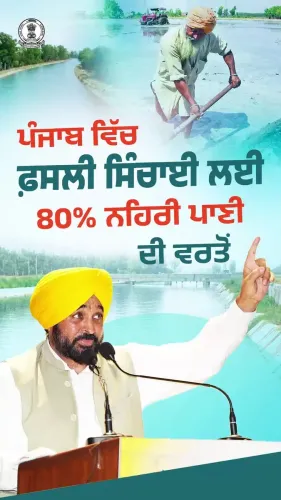
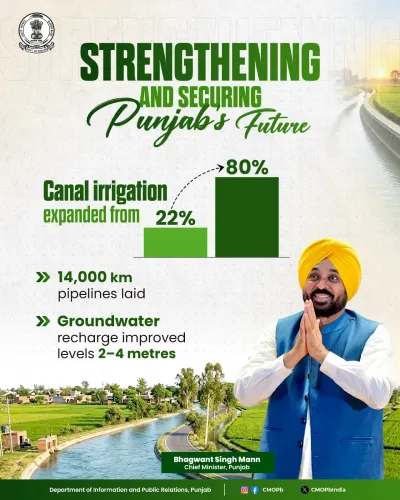
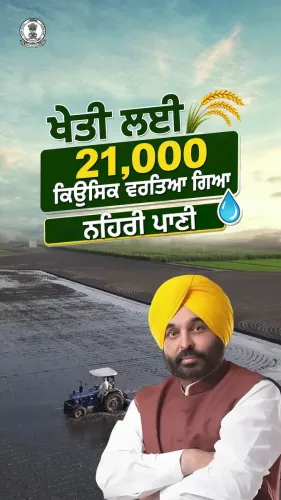
The Chief Minister's Office of Punjab announced on 20 June 2026 that canal irrigation now covers more than 90 per cent of Punjab's farmland.
Chief Minister Bhagwant Mann 's government has attributed this to sustained efforts in canal desilting, lining, and rehabilitation since March 2022 .
Groundwater levels have reportedly improved in several areas of the state as a result of reduced tubewell dependence.
Punjab farmers are the primary beneficiaries, with reduced energy and cost burdens from groundwater pumping.
Independent verification of the 90 per cent coverage figure and groundwater improvement data from the Central Ground Water Board or state agencies is yet to be confirmed.
Future budget allocations and sustained canal maintenance will be key to consolidating these gains.
The Chief Minister's Office of Punjab announced on Saturday, 20 June 2026 that canal irrigation now reaches more than 90 per cent of the state's farmland under the leadership of Chief Minister Bhagwant Mann, with groundwater levels also reportedly improving in several areas.
The post, shared in Punjabi, stated: 'ਮੁੱਖ ਮੰਤਰੀ ਭਗਵੰਤ ਮਾਨ ਦੀ ਅਗਵਾਈ ਵਾਲੀ ਪੰਜਾਬ ਸਰਕਾਰ ਦੇ ਯਤਨਾਂ ਸਦਕਾ' [Through the efforts of the Punjab government led by Chief Minister Bhagwant Mann], canal water is reaching more than 90 per cent of the state's fields, providing major relief to farmers and bringing improvement in groundwater levels in many areas.
Context
Punjab is one of India's most agriculturally intensive states, anchoring the country's food security through its rice-wheat cultivation cycle. However, this very productivity has come at a steep environmental cost — decades of intensive paddy farming, combined with heavily subsidised electricity for tubewells, have caused groundwater tables to fall sharply across large parts of the state. Many districts in central and southern Punjab have been classified as 'over-exploited' or 'critical' by water resource authorities.
Canal irrigation, when functional and accessible, offers a crucial alternative to groundwater extraction, allowing aquifers to recharge naturally. The challenge has historically been the deteriorating condition of Punjab's canal network — silted, breached, or poorly maintained stretches that prevented surface water from reaching tail-end farms.
Policy Backdrop
Since assuming office in March 2022, Chief Minister Bhagwant Mann and the Aam Aadmi Party government have prioritised the rehabilitation of the state's canal infrastructure. Government programmes have focused on desilting, lining, and repairing canals to restore flow capacity and extend coverage to fields that had previously relied entirely on tubewells.
The administration has framed these efforts as both an agricultural relief measure and an environmental intervention, aiming to reduce the state's dependence on groundwater and slow the decline of water tables. The announcement of 90 per cent farm coverage represents the government's claim of significant progress on this front, though independent verification of the figure and its measurement methodology remains awaited.
Stakeholders and Impact
Punjab's farmers are the most direct beneficiaries of expanded canal coverage. Access to surface water reduces the cost and energy burden of pumping groundwater, which is particularly significant given rising electricity consumption and the state's fiscal pressure around power subsidies. Farmers in tail-end areas — historically the last to receive canal water — stand to gain the most if coverage claims hold.
The reported improvement in groundwater levels in 'several areas' is a closely watched indicator. A sustained rise in water tables would mark a meaningful reversal of a trend that has alarmed agronomists and policymakers for years. Confirmation from the Central Ground Water Board or state water resource agencies would lend independent weight to the government's claims.
What's Next
Observers will look to upcoming state budget announcements for further allocations toward canal works and water conservation. The release of the latest groundwater monitoring data from central or state agencies will be critical in corroborating the administration's claims about aquifer recovery. Sustained maintenance of the expanded canal network — not just initial rehabilitation — will determine whether the gains translate into long-term agricultural and environmental resilience for Punjab.
Point of View
Which has staked part of its agrarian credibility on reversing the state's groundwater crisis. If independently verified, it would represent a tangible policy win in one of India's most electorally sensitive farming states. However, the absence of corroborating data from central water authorities means the claim sits in a familiar space between government assertion and verifiable outcome. The broader arc here is critical: Punjab's water crisis is structural, and canal coverage alone — without complementary crop diversification and demand-side management — will not be sufficient to stabilise the state's aquifers long-term.
NationPress
19 Sept 2026
Frequently Asked Questions
How much of Punjab's farmland now receives canal water?
According to the Chief Minister's Office of Punjab, more than 90 per cent of the state's farms are now receiving canal water as of June 2026, a result the government attributes to canal rehabilitation efforts under CM Bhagwant Mann.
Why is canal water important for Punjab farmers?
Canal water provides a surface irrigation alternative to groundwater pumping, reducing farmers' electricity costs and helping slow the depletion of Punjab's critically low water tables caused by decades of intensive paddy cultivation.
Has Punjab's groundwater level improved?
The CMO Punjab post states that groundwater levels have improved in several areas of the state, though independent confirmation from the Central Ground Water Board or state water resource agencies is yet to be publicly available.
What has the Bhagwant Mann government done for canal irrigation in Punjab?
Since March 2022, the Bhagwant Mann-led AAP government has undertaken desilting, lining, and rehabilitation of Punjab's canal network to restore flow capacity and extend coverage to farms that previously depended entirely on tubewells.
Which districts in Punjab face the worst groundwater depletion?
Several districts in central and southern Punjab have historically been classified as over-exploited or critical by water resource authorities due to intensive paddy farming and heavy tubewell use, though specific district-level improvement data from the current period has not been independently released.