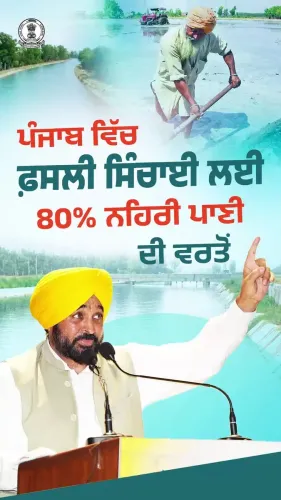
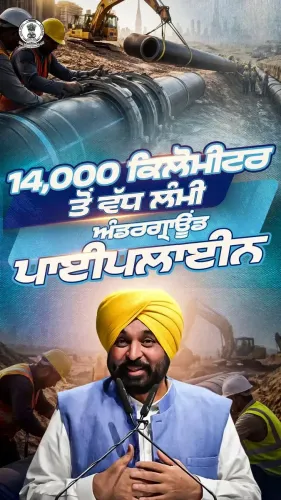
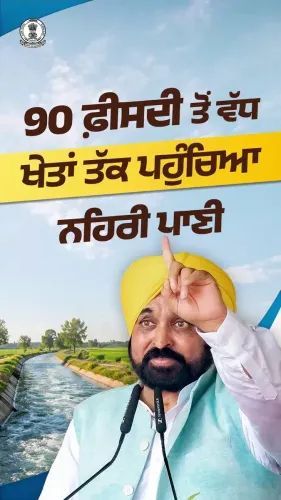
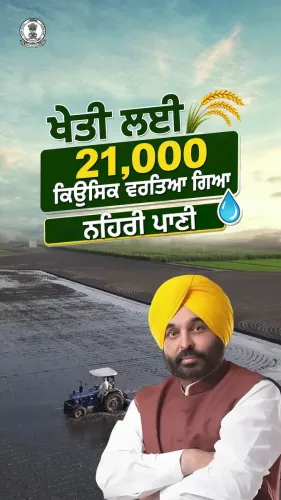
CM Mann shares Punjab's groundwater revival efforts

Synopsis
Chief Minister Bhagwant Mann has shared that Punjab government initiatives to conserve subsoil water have resulted in a rise in groundwater levels across several areas of the state, marking a potential reversal of decades of depletion driven by intensive rice-wheat farming.
Key Takeaways
CM Bhagwant Mann announced on 30 May 2026 that groundwater levels have risen in several areas of Punjab .
The state has pursued conservation through the Punjab Preservation of Subsoil Water Act, 2009 , which restricts early paddy sowing dates.
The Direct Seeding of Rice (DSR) programme, expanded by the AAP government since 2022 , reduces water use by eliminating flooded nursery transplantation.
Punjab's water tables had been falling by an estimated 0.3 to 1 metre annually in many blocks due to post-Green Revolution rice-wheat monoculture.
The Central Ground Water Board 's next annual bulletin will be key to independently verifying the extent of any recovery.
Sustained improvement depends on farmer participation, monsoon recharge, and continued enforcement of sowing-date regulations.
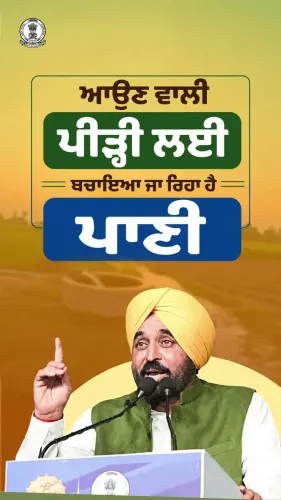
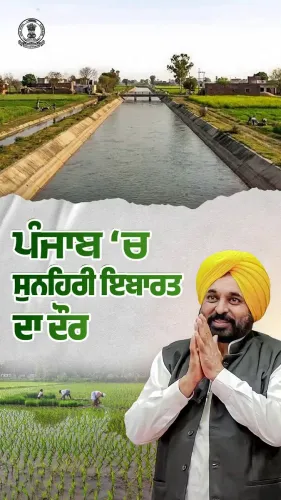
The Chief Minister's Office of Punjab on Saturday, 30 May 2026, shared that Chief Minister Bhagwant Mann has disclosed details of the state government's ongoing initiatives to conserve groundwater, noting that water table levels have risen in several areas of the state.
Sharing information about the steps being taken by the Punjab government to save subsoil water, CM Mann stated — 'ਸੂਬੇ ਦੇ ਕਈ ਇਲਾਕਿਆਂ ਵਿੱਚ ਧਰਤੀ ਹੇਠਲੇ ਪਾਣੀ ਦਾ ਪੱਧਰ ਉੱਚਾ ਹੋਇਆ ਹੈ' ('the groundwater level has risen in several areas of the state').
Context
Punjab has been grappling with one of India's most acute groundwater crises, driven by the post-Green Revolution rice-wheat monoculture that has lowered water tables by an estimated 0.3 to 1 metre annually in many blocks. Decades of intensive paddy cultivation requiring flooded fields placed enormous extraction pressure on the state's aquifers, turning what was once a water-surplus region into a critically over-exploited one. The announcement signals that some of those trends may be reversing in select areas, though the government has not specified which blocks or districts are showing improvement.
Policy Backdrop
Conservation efforts in Punjab date back to the Punjab Preservation of Subsoil Water Act, 2009, which restricted early paddy transplantation dates to reduce peak-summer groundwater extraction. Subsequent administrations layered on laser land-levelling subsidies, micro-irrigation support, and incentives for the Direct Seeding of Rice (DSR) method, which eliminates the need for flooded nursery beds and can save significant volumes of water per acre. When the Aam Aadmi Party government under CM Bhagwant Mann came to power in March 2022, it expanded crop diversification incentives and scaled up the DSR programme, targeting the most water-stressed blocks identified by the Central Ground Water Board.
The DSR push has been central to the current government's water narrative. Farmers who adopt DSR are offered a per-acre incentive, reducing the financial disincentive of shifting away from traditional transplanting. Combined with awareness drives and tighter enforcement of sowing-date norms, the state has pursued a multi-pronged strategy rather than relying on any single measure.
Stakeholders and Impact
Punjab's roughly 10.5 million farm households are the most directly affected stakeholders — both as the primary users of groundwater for irrigation and as the population most vulnerable to its depletion. Rising water tables, if sustained across multiple seasons, would reduce pumping costs, extend the life of existing tubewells, and ease the financial burden on smallholder farmers who cannot afford to deepen wells. Rural households dependent on groundwater for drinking and domestic use stand to benefit as well, since over-extraction in agricultural blocks has historically contaminated shallow aquifers.
Beyond agriculture, the broader environmental implication is significant: stabilising or reversing groundwater decline would reduce land subsidence risks and help maintain base flows in seasonal rivers and wetlands across the state.
What's Next
The credibility and scale of the water-table recovery will come into sharper focus with the release of the next Central Ground Water Board annual groundwater bulletin, which provides block-level data that can corroborate or contextualise the state government's claims. Observers will also watch whether the Punjab 2026-27 budget expands the crop diversification scheme and DSR incentives, which would indicate the government's commitment to institutionalising these gains rather than treating them as a one-season outcome. Sustained improvement will require continued farmer participation, adequate monsoon recharge, and enforcement of the subsoil water protection law — factors that no single policy announcement can guarantee on its own.
Point of View
Framing the AAP government's conservation record as delivering measurable results on one of Punjab's most chronic environmental challenges. By citing rising water tables, the government is attempting to convert a long-term structural problem — decades of over-extraction — into a governance success story. The claim will face scrutiny from independent hydrological data; without block-level specifics, it risks being read as aspirational rather than empirical. Nonetheless, the communication signals that water security is now a core plank of the AAP's Punjab identity, sitting alongside its power subsidy and education reform narratives.
NationPress
13 Oct 2026
Frequently Asked Questions
Has Punjab's groundwater level actually improved?
CM Bhagwant Mann stated on 30 May 2026 that groundwater levels have risen in several areas of Punjab, attributing this to state conservation initiatives; independent verification through the Central Ground Water Board's annual bulletin is pending.
What is the Direct Seeding of Rice scheme in Punjab?
Direct Seeding of Rice (DSR) is a water-saving paddy cultivation method promoted by the Punjab government as an alternative to traditional flooded transplanting; it can save significant volumes of water per acre and farmers are offered a per-acre incentive to adopt it.
What is the Punjab Preservation of Subsoil Water Act?
Enacted in 2009, the Punjab Preservation of Subsoil Water Act restricts farmers from transplanting paddy before a government-notified date, typically in June, to prevent peak-summer groundwater extraction and allow monsoon rains to recharge aquifers.
Why is Punjab's groundwater crisis so severe?
Punjab's crisis stems from the post-Green Revolution rice-wheat monoculture, which requires intensive irrigation; water tables in many blocks have fallen by an estimated 0.3 to 1 metre annually over decades, making the state one of India's most critically over-exploited groundwater regions.
What is Bhagwant Mann doing to save water in Punjab?
Under CM Bhagwant Mann's government since March 2022, Punjab has expanded crop diversification incentives, scaled up the Direct Seeding of Rice programme, and continued enforcing sowing-date restrictions under the 2009 subsoil water law to reduce agricultural groundwater extraction.