Foreign operatives near India: 3 incidents raise South Asia security alarm
Synopsis
Three seemingly unconnected incidents — a US national detained without documents at the Nepal border, the NIA's arrest of an alleged American military trainer and six Ukrainians for drone-running to Myanmar, and the unexplained death of a US Special Forces officer in a Dhaka hotel — are converging into a single, uncomfortable question: who is operating in South Asia's shadow corridors, and why is no one talking?
Key Takeaways
Jordan Brown , a California resident claiming prior US Navy service, was detained by the SSB near Sonauli, Uttar Pradesh while attempting to enter Nepal without travel documents.
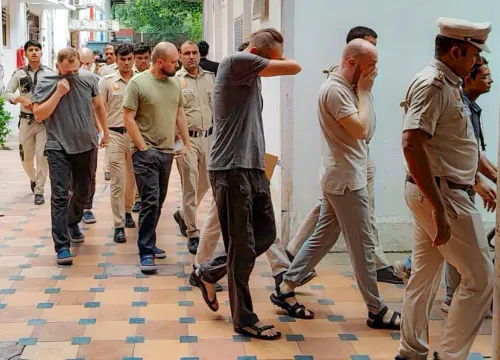
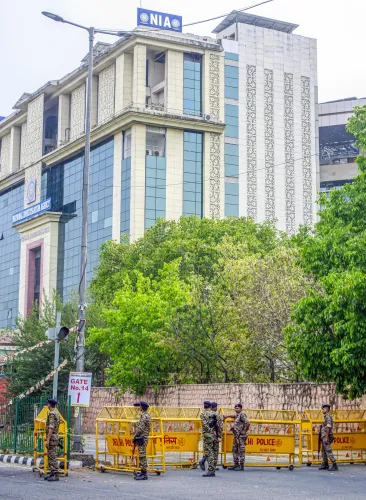
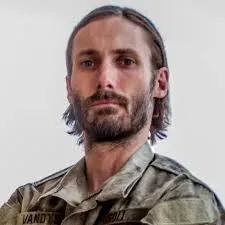
The NIA arrested US citizen Matthew Aaron VanDyke and six Ukrainian nationals in March at airports in Kolkata , New Delhi , and Lucknow ; investigators allege they used India as a transit route to deliver drones and training to ethnic armed groups in Myanmar .
Terrence Arvelle Jackson , a US Army 1st Special Forces Command officer, died in a Dhaka hotel on 31 August last year under circumstances that remain publicly unexplained.
Israel's Ambassador Reuven Azar alleged Hamas-linked activity in Pakistan and Bangladesh in a recent interview.
Security experts are calling for urgent improvements in border vetting, intelligence-sharing, and transparent investigations across South Asia .
A series of incidents involving foreign nationals — including a detained California resident near the Nepal border, the arrest of alleged US military trainer Matthew Aaron VanDyke and six Ukrainian nationals, and the unexplained death of a US Army Special Forces officer in Dhaka — has put South Asia's security establishment on alert, according to reports. Taken together, experts warn these cases expose critical gaps in border vetting, intelligence-sharing, and cross-border surveillance across the region.
The Nepal Border Detention
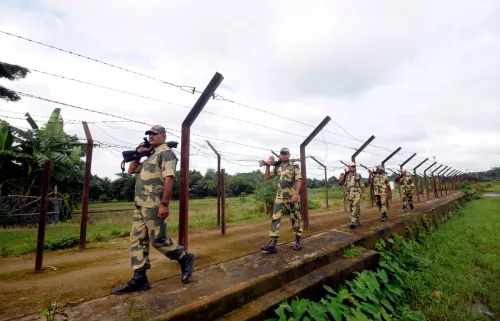
Earlier this month, the Sashastra Seema Bal (SSB) detained a US national identified as Jordan Brown near Sonauli in Uttar Pradesh while he was allegedly attempting to cross into Nepal without any travel documents. Brown reportedly claimed prior service with the US Navy and Special Forces, though he could not produce any documentation to support that claim. Authorities recovered cash, mobile phones, and other items from his possession; investigations are said to be ongoing.
NIA Arrests: VanDyke and the Ukrainian Nationals
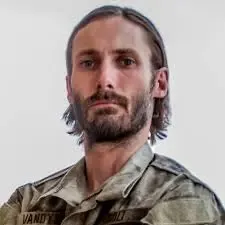
The Sonauli detention comes approximately four months after India's National Investigation Agency (NIA) apprehended US citizen Matthew Aaron VanDyke and six Ukrainian nationals at airports in Kolkata, New Delhi, and Lucknow in March. VanDyke reportedly rose to prominence during the Libyan Civil War in 2011, where he fought alongside rebel forces and was subsequently imprisoned. He later founded Sons of Liberty International (SOLI), an organisation that reportedly provides military training and strategic advice to armed groups in conflict zones worldwide.
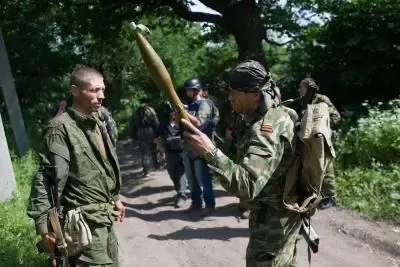
Investigators allege that VanDyke and the Ukrainian nationals used India as a transit route to Myanmar in 2025 and 2026, delivering drones and training ethnic armed groups. Seized electronic devices reportedly contained photographs and videos of drone training sessions. The episodes, according to security analysts, raise concerns about cross-border networks, arms smuggling, and the import of hardware including drones into conflict-adjacent zones.
The Dhaka Hotel Death of a US Special Forces Officer
A separate and still-unexplained incident involves the death of Terrence Arvelle Jackson, a serving officer of the US Army's elite 1st Special Forces Command (Airborne), in a five-star hotel in Dhaka on 31 August last year. Authorities in Dhaka initially attributed his death to natural causes, according to reports. However, questions have persisted over what a Bangladeshi publication described as 'the secrecy surrounding the removal of his body, the confiscation of his belongings by US Embassy officials, and his covert activities in the country.'
Jackson was reportedly working as a military trainer supervising army exercises at Bangladesh's Saint Martin's Island in the Bay of Bengal — an area where Washington is said to have had strategic interest as a vantage point over trade routes involving Myanmar, India, China, and the Strait of Malacca. According to the same report, Jackson allegedly made frequent trips to Chittagong, Cox's Bazar, Sylhet, and Lalmonirhat — districts described as being in proximity to militant corridors and cross-border trafficking routes. One question raised in that context was whether he had been tracking Islamist movements and their alleged links to Myanmar's Arakan Army. Neither Dhaka nor Washington has publicly addressed these questions.
Notably, some media reports pointed out that Prime Minister Narendra Modi was in China for the Shanghai Cooperation Organisation (SCO) Summit at the time of Jackson's death, a coincidence that drew additional scrutiny in regional security circles.
Hamas-Linked Activity Allegation and the Broader Picture
Adding a further dimension, Israel's Ambassador to India, Reuven Azar, alleged in an NDTV interview last month that Hamas-linked activity is taking place in Pakistan and Bangladesh, raising concerns about the spread of extremist influence beyond the Middle East. The allegation has not been independently verified but has amplified the sense of unease among security analysts monitoring the region.
What Experts Are Saying
Security analysts caution that while these incidents may be isolated and apparently unconnected, they collectively illuminate what they describe as 'warning lights' for South Asia. Experts are calling on regional governments to urgently tighten vetting protocols, deepen intelligence-sharing frameworks, and strengthen on-ground border controls — while insisting on transparent, publicly communicated investigations into each case. The pattern, they argue, points to the possibility of professional cross-border networks operating in a region already under significant geopolitical stress.
Point of View
But that framing may itself be the problem. When a claimed US Special Forces veteran dies unexplained in Dhaka, an alleged American military trainer is caught running drones to Myanmar through Indian airports, and a third US national turns up without documents at the Nepal border — the pattern demands a regional intelligence audit, not case-by-case dismissal. South Asian governments have historically been reluctant to publicly interrogate the activities of Western nationals on their soil, and that reticence is precisely what makes these corridors attractive. The silence from both Washington and Dhaka on the Jackson case is the loudest signal of all.
NationPress
14 Jul 2026
Frequently Asked Questions
Who is Jordan Brown and why was he detained in India?
Jordan Brown is a California resident who was detained by the Sashastra Seema Bal (SSB) near Sonauli in Uttar Pradesh while allegedly attempting to cross into Nepal without travel documents. He reportedly claimed prior US Navy and Special Forces service but could not produce documentation to verify the claim; authorities recovered cash and phones, and investigations are ongoing.
Who is Matthew Aaron VanDyke and what did the NIA allege against him?
Matthew Aaron VanDyke is a US citizen who reportedly founded Sons of Liberty International (SOLI), an organisation said to provide military training to armed groups in conflict zones. The NIA arrested him along with six Ukrainian nationals in March at Indian airports, alleging they used India as a transit route to deliver drones and military training to ethnic armed groups in Myanmar in 2025 and 2026.
What happened to US Army officer Terrence Arvelle Jackson in Dhaka?
Terrence Arvelle Jackson, a serving officer of the US Army's 1st Special Forces Command (Airborne), died in a Dhaka five-star hotel on 31 August last year. Bangladeshi authorities initially cited natural causes, but the circumstances — including the reported confiscation of his belongings by US Embassy officials and questions about his activities in Bangladesh — have remained publicly unexplained.
What is the broader security concern raised by these incidents?
Security experts say the incidents, while apparently unconnected, collectively expose gaps in South Asia's border vetting, intelligence-sharing, and on-ground surveillance. Concerns include possible cross-border networks involving professional military personnel, drone smuggling, arms trafficking, and links to ethnic armed groups and extremist organisations.
What did Israel's ambassador allege about Hamas activity in the region?
Israel's Ambassador to India, Reuven Azar, alleged in a recent NDTV interview that Hamas-linked activity is taking place in Pakistan and Bangladesh. The allegation has not been independently verified but has added to growing concerns among security analysts about extremist influence spreading beyond the Middle East into South Asia.