CM Bhagwant Mann: 21,000 Cusecs Canal Water Used for Punjab Agriculture
Synopsis
Chief Minister Bhagwant Mann, addressing the 38th annual barsi of Sant Baba Avtar Singh Ji, said Punjab's canal water policy has directed 21,000 cusecs toward agriculture, helping raise the state's declining groundwater table — a key intervention in one of India's most water-stressed farming regions.
Key Takeaways
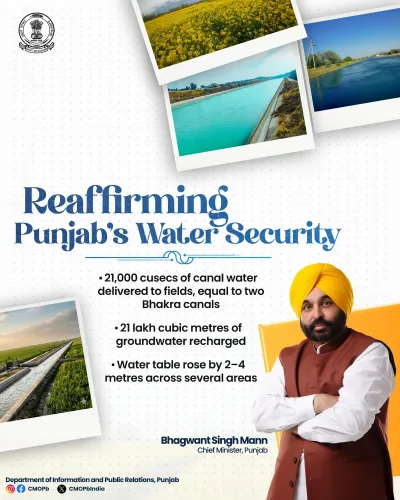
CM Bhagwant Mann announced that 21,000 cusecs of canal water has been used for agricultural purposes under the Punjab government's irrigation policy.
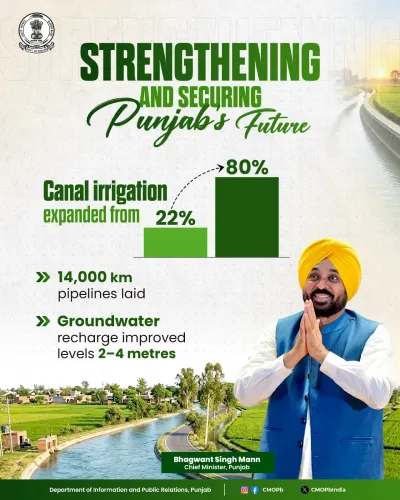
The canal water utilisation has contributed to a rise in groundwater levels across Punjab , according to the Chief Minister.
The announcement was made at the 38th annual death anniversary of Sant Baba Avtar Singh Ji , a widely attended religious gathering.
Punjab has long faced groundwater over-exploitation driven by tubewell-dependent paddy cultivation in the rice-wheat belt.
Increased canal water use reduces farmer dependence on diesel-powered tubewells, lowering irrigation costs alongside the environmental benefit.
The Central Ground Water Board's next biennial Punjab assessment will be a critical test of whether aquifer recovery is measurable on the ground.
The Chief Minister's Office of Punjab announced on Friday, 29 May 2026 that Chief Minister Bhagwant Mann addressed a gathering on the occasion of the 38th annual death anniversary of Sant Baba Avtar Singh Ji, stating that the Punjab government's canal water policy has channelled 21,000 cusecs of canal water for agricultural use, which has contributed to a rise in groundwater levels across the state.
Context
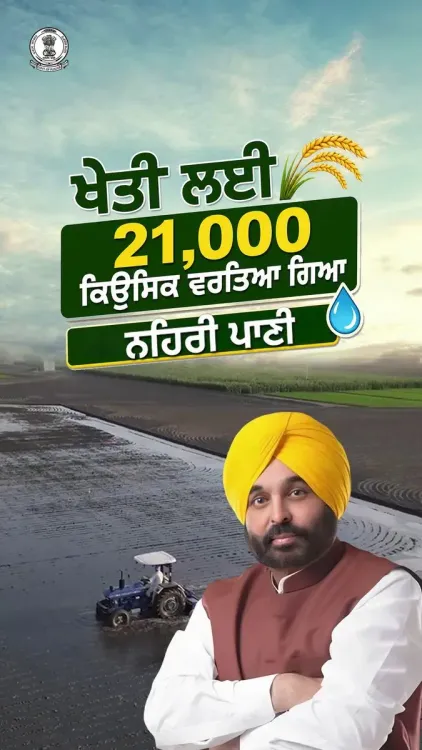
Speaking at the commemorative event, CM Bhagwant Mann told the assembled gathering — ਪੰਜਾਬ ਸਰਕਾਰ ਦੀ ਨੇਕ ਨੀਤੀ ਸਦਕਾ 21,000 ਕਿਊਸਿਕ ਨਹਿਰੀ ਪਾਣੀ ਖੇਤੀ ਲਈ ਵਰਤਿਆ ਗਿਆ ਹੈ ['owing to the Punjab government's righteous policy, 21,000 cusecs of canal water has been used for agriculture'] — and that this has resulted in a measurable rise in the underground water table. The annual barsi of Sant Baba Avtar Singh Ji draws large crowds from across Punjab and serves as a platform where political leaders often address rural and agrarian communities on matters of public concern.
Policy Backdrop
Punjab sits at the heart of India's rice-wheat belt and has faced severe groundwater depletion for decades, driven largely by intensive paddy cultivation dependent on tubewell irrigation. Central ground water assessments have classified a significant number of Punjab's blocks as 'over-exploited', placing the state among the most water-stressed in the Indo-Gangetic plains. Successive state administrations have periodically increased canal water releases — drawing from rivers including the Sutlej and the Beas under projects such as the Bhakra system — as a substitution and aquifer-recharge strategy.
The Bhagwant Mann government, which took office in March 2022, has positioned canal water utilisation as a flagship element of its agrarian policy, framing it as both a cost-relief measure for farmers who otherwise pay for diesel-run tubewells and as an environmental intervention to stabilise the declining water table.
Stakeholders and Impact
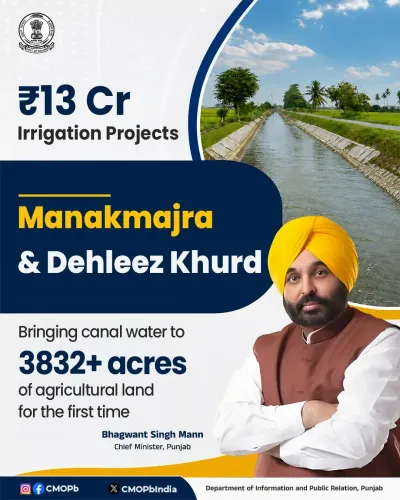
Punjab's farming community — the primary beneficiary of canal water releases — stands to gain through reduced irrigation costs and improved soil moisture conditions if the groundwater table rises. Rural households in over-exploited blocks also benefit indirectly, as deeper water tables have forced many villages to invest in costly borewells for drinking water. The state's canal irrigation network, one of the most extensive in South Asia, requires sustained maintenance investment to deliver water efficiently to tail-end fields, and the government's claim of 21,000 cusecs utilisation signals an operational push on this front.
The announcement at a religious gathering also underscores the political significance of agrarian messaging in Punjab, where farm welfare remains a decisive electoral and governance issue.
What's Next
The next biennial assessment by the Central Ground Water Board for Punjab blocks will be a key indicator of whether the canal water push is translating into measurable aquifer recovery at the district level. Observers will also watch for state budget allocations and canal modernisation tenders in the coming fiscal year that could scale up the current utilisation figures. If groundwater data corroborates the government's claim, it could strengthen the case for a broader national replication of canal-substitution models in other over-exploited states of the Indo-Gangetic belt.
Point of View
CM Bhagwant Mann is deliberately connecting agrarian governance with the cultural and spiritual fabric of rural Punjab — a communication strategy that maximises reach beyond formal press channels. The 21,000-cusecs figure, if substantiated by independent hydrology data, would represent a meaningful operational milestone in a state where groundwater depletion has resisted policy intervention for over two decades. The move also fits a broader AAP pattern of using visible, quantifiable metrics to project administrative competence ahead of electoral cycles. The real test, however, lies in the next Central Ground Water Board assessment, which will determine whether the claimed water-table rise is statistically significant or confined to localised pockets near canal command areas.
NationPress
24 Sept 2026
Frequently Asked Questions
What did CM Bhagwant Mann say about Punjab canal water?
CM Bhagwant Mann stated that 21,000 cusecs of canal water has been used for agriculture in Punjab owing to the state government's policy, and that this has led to a rise in groundwater levels.
Why is groundwater depletion a problem in Punjab?
Punjab's intensive rice-wheat cultivation relies heavily on tubewell irrigation, which has led to severe over-exploitation of aquifers, with many blocks classified as 'over-exploited' by central ground water agencies.
What is the significance of 21,000 cusecs of canal water in Punjab?
Directing 21,000 cusecs of canal water toward agriculture reduces dependence on groundwater-draining tubewells and helps recharge aquifers, addressing one of Punjab's most critical environmental and farming challenges.
Who was Sant Baba Avtar Singh Ji?
Sant Baba Avtar Singh Ji was a spiritual figure in Punjab whose annual death anniversary — the barsi — draws large gatherings of devotees and serves as a community platform across the state.
How will Punjab's groundwater recovery be measured?
The Central Ground Water Board conducts biennial assessments of groundwater levels across Punjab's blocks; the next such assessment will indicate whether the canal water push has produced a measurable improvement in aquifer status.