CM Mohan Yadav Hails Modi's Bastar Diwali with Troops

Synopsis
MP CM Dr. Mohan Yadav praised PM Modi for celebrating Diwali with soldiers in Bastar, crediting Modi and Home Minister Amit Shah's leadership for steering Madhya Pradesh and India toward freedom from Naxalism, calling it a glorious national milestone.
Key Takeaways
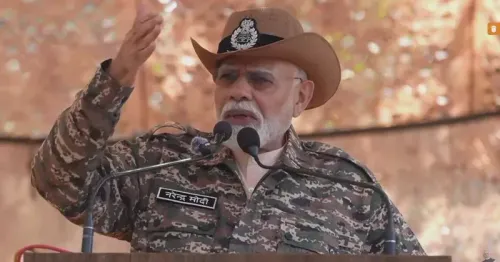
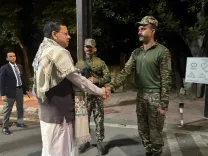
Mohan Yadav praised PM Narendra Modi for spending Diwali 2026 with security forces in Bastar, Chhattisgarh .
Yadav credited Union Home Minister Amit Shah's leadership alongside Modi's guidance for anti-Naxal gains.
The post specifically mentioned Madhya Pradesh as part of the country's movement toward being Naxal-free.
The hashtag #NaxalFreeIndia anchored the political messaging around a security governance milestone.
The Ministry of Home Affairs has since 2014 run a twin-track policy of kinetic operations and development in left-wing extremism-affected districts.
Bastar has been the epicentre of India's Naxal insurgency and remains a key barometer of counter-insurgency progress.
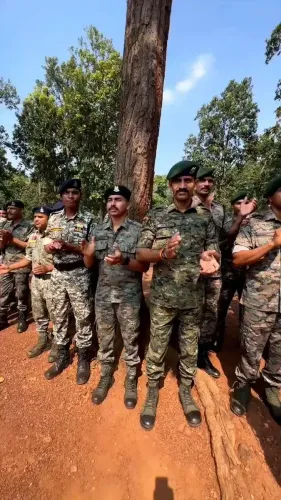
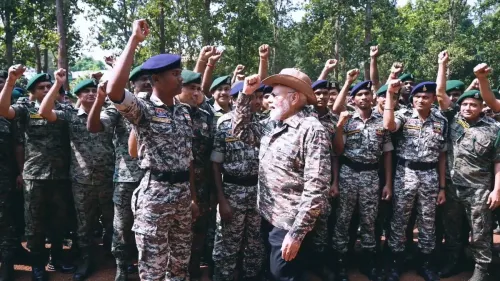
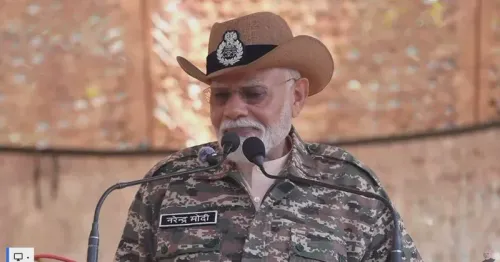
When a Prime Minister spends Diwali not in Delhi but in Bastar — one of India's most conflict-scarred regions — alongside the soldiers who guard it, the message lands louder than any speech. Madhya Pradesh Chief Minister Dr. Mohan Yadav marked the occasion on Sunday, 8 November 2026, by saluting Prime Minister Narendra Modi's gesture and linking it to what he described as a landmark moment: the country's journey toward being free of Naxal violence.
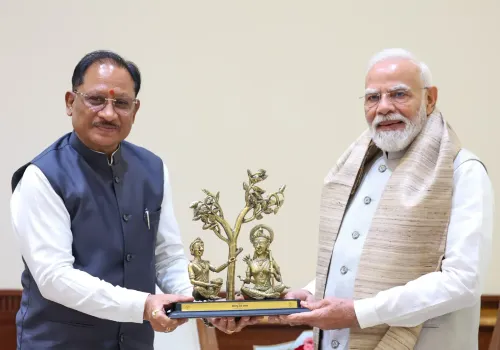
In his post, CM Yadav wrote — 'बस्तर में जवानों के साथ दीपावली मनाकर आदरणीय प्रधानमंत्री श्री @narendramodi जी द्वारा सुरक्षाबलों के शौर्य को दिया गया सम्मान प्रशंसनीय है' — 'The respect shown to the courage of the security forces by Prime Minister Shri Narendra Modi by celebrating Diwali with the soldiers in Bastar is commendable.' He went further, crediting Union Home Minister Amit Shah's leadership alongside Modi's guidance for steering Madhya Pradesh and the broader nation toward freedom from Naxalism, calling it a development that makes Diwali 2026 even more glorious. The post carried the hashtags #NaxalFreeIndia and #HappyDiwali2026.Modi in Bastar: A Prime Minister at the Front Line of Diwali
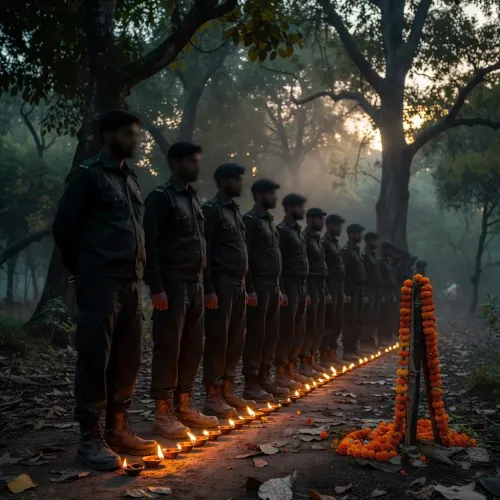
Bastar, the sprawling forested division in southern Chhattisgarh, has been the epicentre of left-wing extremism in India for decades. For years, its festivals were muted by the shadow of violence; Diwali in many parts of the region was not the blaze of lights visible in Indian cities. A Prime Ministerial visit to celebrate the festival with deployed troops is a deliberately symbolic act — placing national leadership visibly alongside those who bear the operational cost of the counter-insurgency effort.
The Ministry of Home Affairs has since 2014 pursued a twin-track approach against Naxalism: coordinated kinetic operations across affected states, combined with infrastructure investment, surrender-and-rehabilitation policies, and connectivity projects in tribal belts of Chhattisgarh, Jharkhand, Odisha and parts of Madhya Pradesh. The number of left-wing extremism-affected districts has been a closely watched metric of that policy's progress, with the government periodically reporting reductions in both the geographic spread and the intensity of Naxal violence.
Yadav Frames the Moment as a Governance Milestone
CM Yadav, who took charge of Madhya Pradesh in December 2023, has consistently aligned the state's security narrative with the Centre's broader internal-security push. His post on this occasion places Amit Shah — the architect of the Home Ministry's intensified counter-Naxal strategy — at the centre of the credit alongside the Prime Minister. The framing is deliberate: operational gains on the ground, the message implies, are inseparable from political will at the top.
The reference to Madhya Pradesh in particular is significant. The state shares a sensitive border corridor with Chhattisgarh, and portions of its Balaghat, Mandla, and Dindori districts have historically featured on Home Ministry watch-lists for left-wing extremism. Yadav's invocation of the state alongside the national picture signals that the MP government regards this Diwali as a moment of genuine transition — not just a ceremonial occasion.
A Festival of Lights, and a Political Signal
The optics of a festival-day post matter in Indian political communication. Diwali messages from chief ministers are routine; one that ties Diwali wishes to a specific security achievement and a Prime Ministerial front-line visit is a pointed piece of governance branding. CM Yadav closed his message with warm Diwali greetings to 'सभी वीर जवानों' — 'all brave soldiers' — a note of human acknowledgment beneath the political framing.
What to watch next: the Home Ministry's formal update on the count of Naxal-affected districts, and any new joint operations announced along the Chhattisgarh–Madhya Pradesh border corridor, will indicate whether the political confidence reflected in this Diwali messaging translates into verifiable operational closure.
Diwali has long been the festival India uses to salute its soldiers — this year, the salute came from the front line itself.
Point of View
And attributing the achievement explicitly to central leadership. This keeps MP's political identity firmly within the Modi-Shah orbit, a consistent positioning since Yadav's elevation in December 2023. The invocation of a 'Naxal-free' trajectory ahead of any formal Home Ministry certification is also notable — it front-runs an official milestone the party clearly expects to claim soon. Watch whether the Centre formalises that declaration in the weeks ahead.
NationPress
8 Nov 2026
Frequently Asked Questions
Why did PM Modi celebrate Diwali in Bastar in 2026?
PM Modi celebrated Diwali in Bastar, Chhattisgarh, with deployed security forces as a symbolic act of solidarity with soldiers engaged in counter-Naxal operations in one of India's most affected regions.
Is Madhya Pradesh Naxal-free in 2026?
MP CM Dr. Mohan Yadav described Madhya Pradesh as being on a path toward freedom from Naxalism in his Diwali post; an official declaration from the Home Ministry has not been independently verified.
What is the government's strategy against Naxalism in India?
Since 2014, the Ministry of Home Affairs has pursued a combined approach of coordinated security operations, surrender-and-rehabilitation policies, and infrastructure development in left-wing extremism-affected tribal districts.
What is Bastar known for in the context of Indian security?
Bastar, a division in southern Chhattisgarh, has been the epicentre of India's Naxal insurgency for decades and remains one of the most closely watched regions for left-wing extremism activity.
What role has Amit Shah played in India's anti-Naxal drive?
Union Home Minister Amit Shah has overseen an intensified counter-Naxal strategy from the Ministry of Home Affairs, coordinating state-centre security operations and setting targets for reducing the number of LWE-affected districts.