US senators urge Trump to seek AI safety deal with China at Xi summit
Synopsis
Seventeen US Democratic senators have asked President Trump to strike a formal AI safety deal with China at his summit with Xi Jinping — proposing shared testing standards, human oversight of military AI, and even a mutual pause on developing the most powerful systems. It is one of the most concrete congressional pushes yet to bring AI governance into superpower diplomacy.
Key Takeaways
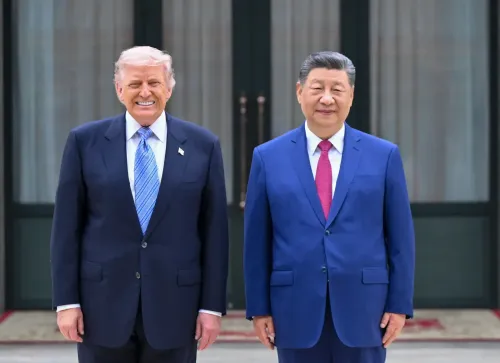
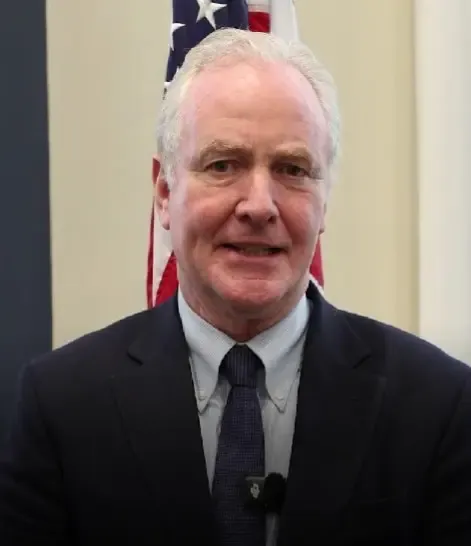
17 Democratic senators , led by Senator Chris Van Hollen , urged President Trump to seek a formal AI safety agreement with China at the 24 September summit with President Xi Jinping .
The proposed pact would cover development, testing, deployment, human oversight, and a verifiable compliance mechanism for advanced AI models.
A mutual pause in AI development was raised as a consideration — not an agreed step — to guard against cyberattacks and biological weapons risks.
The senators drew a parallel with Cold War nuclear arms negotiations , arguing that rival powers can still reach enforceable technical agreements.
A separate 18 September letter from House Democrats also called for sustained US-China dialogue on AI safety risks.
Senate Democratic leader Chuck Schumer has separately urged Trump to restrict China's access to advanced American AI chips — a complementary but distinct approach.
Seventeen Democratic senators have urged President Donald Trump to pursue a formal artificial intelligence safety agreement with China when he meets President Xi Jinping, proposing common rules for developing and testing advanced AI systems and asking him to consider a mutual pause in their development. The appeal, conveyed in a letter dated Wednesday, 24 September, arrives as the two leaders prepare for a summit on the same day.
What the Senators Are Asking For
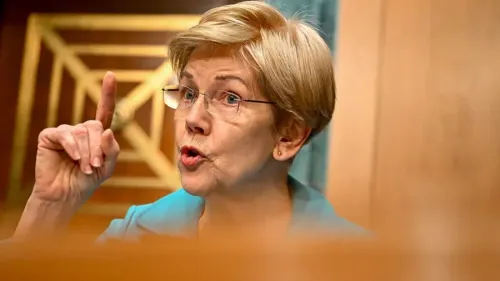
The letter, led by Senator Chris Van Hollen and co-signed by 16 colleagues — including Senators Ben Ray Lujan, Maria Cantwell, Elizabeth Warren, and Tammy Duckworth — calls on Trump to raise AI safety directly with Xi rather than leave the matter to lower-level diplomatic channels. The senators want a formal pact covering how advanced AI models are developed, tested, and deployed, with provisions for government oversight, human control over autonomous systems, and a verifiable compliance mechanism.
'AI technology is too powerful, and its risks too many, for the US and China to forgo discussions on parameters around its development and use,' the lawmakers wrote.
The Case for a Mutual Development Pause
A mutual pause in the development of the most powerful AI systems is proposed in the letter as one option for Trump to consider — not a committed position. The senators framed it as a safeguard against AI being weaponised for cyberattacks, biological weapons development, and other harmful activities. They acknowledged that the idea is aspirational at this stage and would require significant negotiation.
Existing Safeguards Called Insufficient
The letter argues that current protections in both countries fall short. It cites a voluntary US pre-release testing scheme for advanced models and notes that China reportedly has testing and registration requirements for certain AI applications — though the senators expressed uncertainty about how consistently those rules are enforced. Both frameworks, the lawmakers concluded, are inadequate for the scale of risk involved.
Notably, the senators drew an explicit parallel with Cold War-era nuclear arms negotiations between the United States and the Soviet Union, arguing that two rival powers can still reach enforceable technical agreements despite fundamental differences. They called for a similar commitment to detailed compliance verification work on AI.
Military AI and Enforcement at the Centre
A particular concern raised is the integration of AI into defence systems. Both the US and China are incorporating the technology into autonomous and unmanned military applications, the letter noted, and the senators called for meaningful human oversight to be retained in those contexts. Enforcement, they stressed, must be built into any agreement from the outset — not treated as an afterthought.
Broader Congressional Push on AI Diplomacy
The Van Hollen letter follows a separate 18 September appeal from House Democrats — including Representatives Sara Jacobs and Ami Bera — urging sustained US-China dialogue on AI safety risks. Representative Kristen McDonald Rivet also called on the leaders on Wednesday to establish common rules protecting workers, consumers, and national security.
Running in parallel, Senate Democratic leader Chuck Schumer has pressed Trump to restrict China's access to advanced American AI chips and chipmaking equipment — a position focused on technology denial rather than cooperative governance. Neither proposal has been adopted as a direct outcome of the planned summit, according to available information. The White House and the Chinese government had not publicly responded to the letter at the time of reporting.
With AI emerging as one of the defining geopolitical fault lines of the decade, how Trump chooses to frame the technology in his talks with Xi could shape the trajectory of international AI governance for years to come.
Point of View
Leaving the hardest technical problem unresolved. Meanwhile, Schumer's parallel push to restrict chip exports points in the opposite direction — deny rather than cooperate — underscoring that there is no unified US strategy on AI and China yet. Trump's response, or lack of one, at the summit will itself be a policy signal.
NationPress
24 Sept 2026
Frequently Asked Questions
What are US senators asking Trump to do on AI with China?
Seventeen Democratic senators have urged President Trump to seek a formal AI safety agreement with China at his summit with President Xi Jinping on 24 September. The proposed deal would establish common rules for developing, testing, and overseeing advanced AI systems, along with a compliance verification mechanism.
What is the proposed mutual pause in AI development?
The senators asked Trump to consider a mutual pause in developing the most powerful AI systems as a safeguard against risks such as cyberattacks and biological weapons. It is a proposal in the letter, not an agreed policy, and would require negotiation between the two governments.
Why are the senators comparing AI talks to Cold War nuclear negotiations?
The senators drew a parallel to US-Soviet nuclear arms negotiations to argue that rival superpowers can reach enforceable technical agreements despite deep differences. They called for a similar commitment to detailed compliance verification work in any AI safety pact.
Who signed the letter and when was it sent?
The letter was led by Senator Chris Van Hollen and co-signed by 16 colleagues, including Senators Ben Ray Lujan, Maria Cantwell, Elizabeth Warren, and Tammy Duckworth. It was sent on Wednesday, 24 September, coinciding with the planned Trump-Xi summit.
How does this differ from Chuck Schumer's position on China and AI?
Senate Democratic leader Chuck Schumer has pressed Trump to restrict China's access to advanced American AI chips and chipmaking equipment — a denial-focused approach. The Van Hollen letter, by contrast, seeks cooperative governance rules. The two positions are complementary but reflect different strategic logics, and neither has been adopted as a summit outcome.