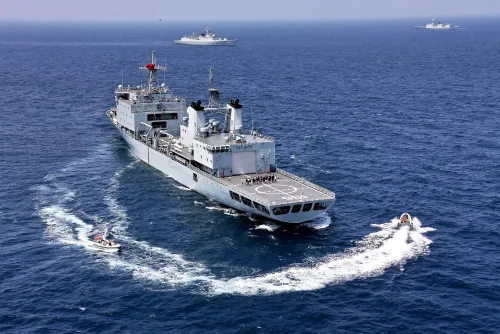
US senators urge Trump to confront Xi over South China Sea island push
Synopsis
Six Democratic senators dropped a letter on Trump's desk the day before his summit with Xi, warning that China's renewed island-building at Antelope Reef — dormant for a decade — signals that US deterrence has failed. With potential PLA air and naval facilities threatening to surveil American ships and coerce regional allies, the senators are forcing a test: will Washington raise it at the table, or let diplomacy quietly absorb it?
Key Takeaways
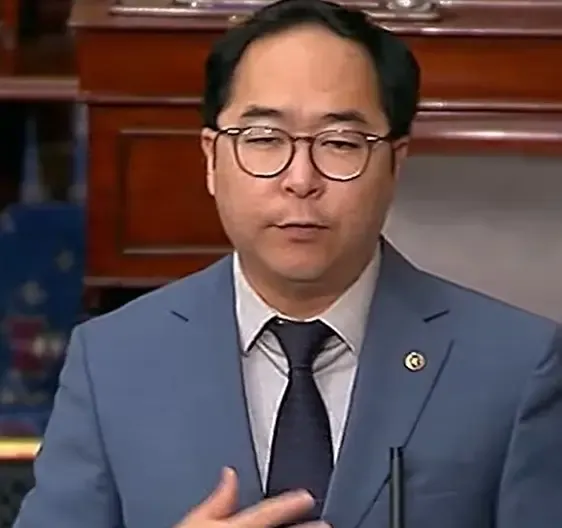
Six Democratic senators — led by Senator Andy Kim — wrote to President Donald Trump on 24 September 2025 , urging him to confront Xi Jinping over South China Sea island-building.
China has begun large-scale dredging and land-reclamation at Antelope Reef , its first such construction in roughly a decade.
The senators warned that a new outpost could give the People's Liberation Army a platform to surveil US naval operations and coerce allies including the Philippines , Vietnam , and Taiwan .
Beijing claims approximately 90 per cent of the South China Sea via its nine-dash line; a Hague tribunal ruled in 2016 that claim has no legal basis — a ruling China rejects.
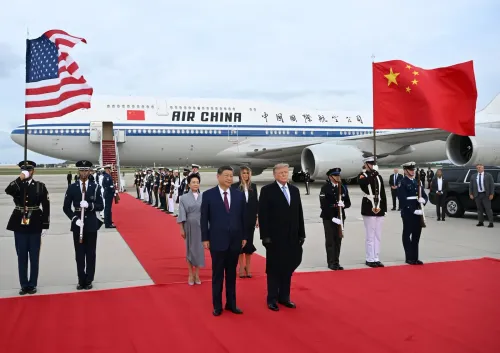
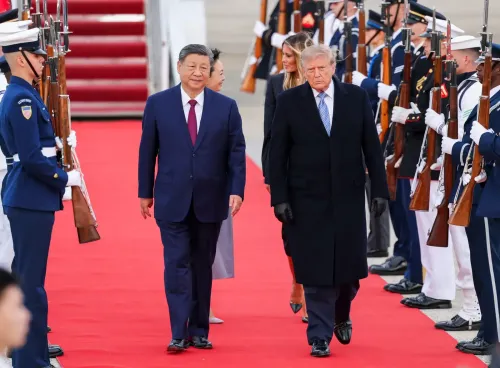
The letter arrived one day before the Trump–Xi summit in Washington , which covers trade, AI, and security.
The administration has not publicly responded to the senators' demands.
Six Democratic senators have written to President Donald Trump, urging him to directly confront Chinese President Xi Jinping over Beijing's renewed artificial island-building in the South China Sea — warning that the new outpost at Antelope Reef could threaten regional stability and curtail US naval operations. The letter was delivered on Wednesday, 24 September 2025, one day before a high-stakes Trump–Xi summit convened in Washington.
Who Signed and What They Demanded
Senator Andy Kim of New Jersey led the letter, joined by Senators Tim Kaine, Michael Bennet, Brian Schatz, Tammy Duckworth, and Jeff Merkley. The lawmakers asked Trump to raise China's large-scale dredging and land-reclamation work at Antelope Reef and to address what they described as broader strategic consequences for the United States and its Indo-Pacific partners.
The senators wrote: 'We are concerned that your administration appears to be ignoring this renewed island building campaign while pursuing diplomacy with China.' They added that Beijing's decision to resume construction 'after a decade of dormancy' signalled that deterrence efforts had, to date, 'proven insufficient.'
The Strategic Threat Outlined
According to the senators, China's earlier artificial islands in the South China Sea have already been fitted with surveillance systems, military bases, and long runways capable of handling military aircraft. Those facilities, the lawmakers argued, have expanded Beijing's ability to project power and pressure Taiwan, Vietnam, and the Philippines.
The letter warned that potential air and naval facilities on Antelope Reef would hand the People's Liberation Army, China Coast Guard, and Chinese Maritime Militia another platform 'to intimidate, harass, and coerce' regional allies. Experts, the senators noted, have also warned that the island would likely be used to 'surveil and constrain US naval activity in the South China Sea.'
Context: The Disputed Waterway
The South China Sea is claimed, in overlapping measure, by China, the Philippines, Vietnam, Malaysia, Brunei, and Taiwan. Beijing asserts sovereignty over roughly 90 per cent of the waterway through its so-called nine-dash line — a claim that a Hague tribunal ruled in 2016 had no legal basis under international law. China has rejected that ruling. The senators characterised Beijing's latest construction as a direct challenge to 'longstanding US policy' and a step toward a 'might makes right' world order.
This is not the first time Congress has pressed the executive branch on South China Sea developments, but the timing — arriving on the eve of a bilateral summit covering trade, artificial intelligence, security, and other flashpoints — sharpens the political pressure on the Trump administration to publicly address the issue in its diplomatic engagements with Beijing.
Broader Push by Senator Kim
Senator Kim's office indicated that the letter forms part of a wider effort to protect a free and open Indo-Pacific. Kim has separately pressed the administration to reaffirm US support for Taiwan, maintain technology export safeguards, and engage Beijing on export controls. The senators argued explicitly that diplomatic engagement with China should not come at the cost of overlooking coercive maritime conduct.
What Happens Next
The Trump–Xi summit in Washington is addressing a broad bilateral agenda, and it remains unclear whether Antelope Reef was raised formally in talks. The administration has not publicly responded to the senators' letter. With Beijing's island-building now reportedly back in motion after a decade-long pause, the Senate's push signals that bipartisan scrutiny of China policy — particularly in the Indo-Pacific — is set to intensify regardless of the summit's diplomatic outcomes.
Point of View
They ensure that any silence on Antelope Reef reads as a concession. What the letter doesn't resolve is whether bipartisan congressional pressure actually shapes executive conduct on China — a record that, across administrations, is mixed at best. Beijing's decision to resume construction 'on Trump's watch,' as the senators put it, is a calculated probe of red lines; the real question is whether the summit produces a private commitment or a public ambiguity that China will read as permission to continue.
NationPress
25 Sept 2026
Frequently Asked Questions
What is Antelope Reef and why is it significant?
Antelope Reef is a disputed maritime feature in the South China Sea where China has reportedly begun large-scale dredging and land-reclamation work. If developed into a military outpost — as China's earlier artificial islands have been — it could host surveillance systems, runways, and naval facilities that extend Beijing's reach over a critical international waterway and threaten US and allied operations.
Which US senators signed the letter to Trump?
The letter was led by Senator Andy Kim of New Jersey and co-signed by Senators Tim Kaine, Michael Bennet, Brian Schatz, Tammy Duckworth, and Jeff Merkley — all Democrats. It was delivered on 24 September 2025, a day before the Trump–Xi summit in Washington.
What did the senators ask Trump to do?
The senators urged Trump to raise China's island-building activities at Antelope Reef directly with President Xi Jinping during their Washington summit, and to address the broader strategic consequences for the United States and its Indo-Pacific partners. They also argued the administration's deterrence efforts had so far been insufficient.
Does China have a legal right to build in the South China Sea?
According to the senators, China's sweeping claims over approximately 90 per cent of the South China Sea have no basis under international law. A Hague tribunal ruled in 2016 that Beijing's nine-dash line claims were invalid; China has rejected that ruling and continued to assert sovereignty over the disputed waters.
How does this fit into the broader Trump–Xi relationship?
The Trump–Xi summit in Washington is covering trade, artificial intelligence, security, and other disputes between the world's two largest economies. The senators' letter argues that diplomatic engagement with Beijing should not come at the expense of ignoring coercive maritime conduct, effectively asking Trump to link the two tracks rather than treat them separately.