US senators urge Trump to confront China on shipbuilding at Xi summit
Synopsis
Four US senators — spanning both parties — have told Trump not to blink on shipbuilding at his Xi summit. With China controlling over 60% of global commercial shipbuilding orders and US yards falling behind even Vietnam and the Philippines, the senators argue this is no longer just a trade dispute but a direct national security threat.
Key Takeaways
Senators Tammy Baldwin , Mark Kelly , Todd Young , and Tim Scott wrote to President Trump on 12 May 2025 urging a hard line on China's shipbuilding at his upcoming summit with Xi Jinping .
China accounted for more than 60 per cent of global commercial shipbuilding orders in 2025 , while the US lagged behind South Korea , Japan , Vietnam , and others.
Chinese shipyard orders reportedly fell 25 per cent between March and May 2025 after the US Trade Representative cited non-market practices.
The senators urged support for the bipartisan SHIPS for America Act to revitalise the domestic maritime sector.
Lawmakers warned that China's shipbuilding dominance poses a long-term strategic threat in the Indo-Pacific .
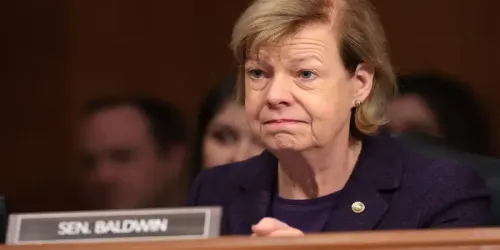
A bipartisan group of four US senators has urged President Donald Trump to take a firm stance against China's shipbuilding practices during his upcoming summit with Chinese President Xi Jinping, warning that Beijing's policies have severely damaged the American maritime industry and undermined US national security. The letter, released on Monday, 12 May 2025, was signed by Senators Tammy Baldwin, Mark Kelly, Todd Young, and Tim Scott.
What the Senators Warned
The lawmakers explicitly urged Trump against offering any concessions to China on shipbuilding and maritime trade. "The United States is at an inflection point and cannot cede additional ground to the People's Republic of China (PRC)," the senators wrote. "The PRC's decades-long effort to decimate American shipbuilding as part of their effort to position themselves as the dominant global shipbuilding power affords them no grace or opportunity for compromise."
The senators attributed China's rise as the world's dominant shipbuilder to what they described as "unfair and discriminatory tactics", including state subsidies, government-backed financing, and non-market practices that have eroded US shipyard competitiveness over the past two decades.
China's Dominance in Global Shipbuilding
According to the letter, China accounted for more than 60 per cent of global commercial shipbuilding orders in 2025, while the United States lagged behind countries including South Korea, Japan, Vietnam, the Philippines, Taiwan, Italy, and Germany. The senators described the decline of American shipbuilding as both an economic and a national security crisis, noting that domestic shipyards provide "good-paying and often union jobs" and maintain the industrial knowledge required to build vessels for military and commercial purposes.
Early Signs of US Policy Impact
The senators praised actions already taken by the Trump administration, including announced fees on Chinese-built ships docking at US ports and additional charges on companies using Chinese-built vessels. They pointed to a reported 25 per cent drop in Chinese shipyard orders between March and May 2025, following a determination by the US Trade Representative that China had used non-market practices in the sector. "The sudden decrease in Chinese shipping orders shows that when your Administration acts on this issue, the global maritime industry pays attention," the senators wrote.
The SHIPS for America Act
The lawmakers also urged Trump to support the bipartisan Shipbuilding and Harbor Infrastructure for Prosperity and Security (SHIPS for America) Act, which aims to revitalise the domestic maritime industry. Senator Baldwin, a vocal advocate for expanding shipbuilding capacity in the Great Lakes region, said rebuilding the sector would strengthen American manufacturing and create jobs.
Broader Strategic Context
The letter arrives as Washington and Beijing remain locked in sweeping strategic competition spanning trade, technology, military power, and industrial policy. Shipbuilding has become a growing concern for US defence planners, who argue that China's rapidly expanding naval and commercial fleet gives Beijing a long-term strategic advantage in the Indo-Pacific. This comes amid ongoing US-China trade tensions and signals that maritime industrial capacity is fast becoming a core front in the two powers' rivalry. How Trump responds at the Xi summit could set the tone for US maritime and trade policy for years ahead.
Point of View
The bipartisan group is making it politically costly for the administration to offer quiet concessions on maritime trade in exchange for movement elsewhere — say, on fentanyl or Taiwan optics. The 25 per cent drop in Chinese shipyard orders is real leverage, and the senators are right to flag it. But the deeper issue is structural: the US has not meaningfully rebuilt shipbuilding capacity in decades, and fees on Chinese vessels alone will not close that gap. The SHIPS for America Act is the right instrument, but without sustained funding and a long-term industrial policy commitment, it risks becoming another Washington declaration that stops at the press release.
NationPress
24 Sept 2026
Frequently Asked Questions
Why are US senators writing to Trump about China's shipbuilding ahead of the Xi summit?
Four bipartisan senators want Trump to avoid making concessions to China on shipbuilding and maritime trade at his upcoming summit with President Xi Jinping. They argue that China's dominance — built on subsidies and non-market practices — has crippled US shipyards and poses a direct national security threat.
How dominant is China in global shipbuilding?
China accounted for more than 60 per cent of global commercial shipbuilding orders in 2025, according to the senators' letter. The United States trails not just China but also South Korea, Japan, Vietnam, the Philippines, Taiwan, Italy, and Germany.
What impact have US actions already had on Chinese shipbuilding orders?
Chinese shipyard orders reportedly fell 25 per cent between March and May 2025 after the US Trade Representative determined that China had used non-market practices in the sector. The senators cited this as evidence that firm US policy can shift global maritime industry behaviour.
What is the SHIPS for America Act?
The Shipbuilding and Harbor Infrastructure for Prosperity and Security (SHIPS for America) Act is a bipartisan bill aimed at revitalising the US domestic maritime industry. The senators urged President Trump to support the legislation as part of a broader strategy to rebuild American shipbuilding capacity.
Why is shipbuilding considered a national security issue?
US defence planners argue that China's rapidly expanding naval and commercial fleet gives Beijing a long-term strategic advantage in the Indo-Pacific. Domestic shipyards also maintain the industrial skills and workforce needed to build military vessels, making their decline a direct security vulnerability.