Trump-Xi summit puts AI and superintelligence on Washington agenda
Synopsis
For the first time at the White House, Trump and Xi put AI — and the more explosive concept of 'superintelligence' — on the agenda of a US-China summit. Xi's call for AI to stay 'under human control' signals Beijing wants global governance guardrails, while Washington's framing around common interests hints at a potential thaw. No deal was struck yet, but the mere fact that both superpowers are talking AI governance at head-of-state level is a significant shift.
Key Takeaways
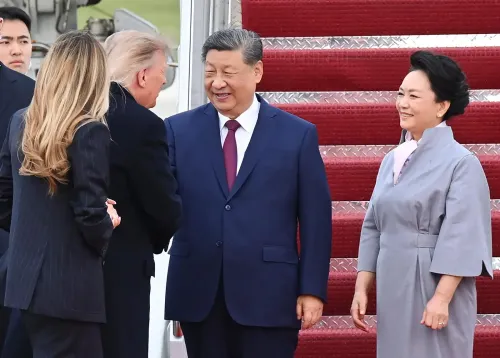
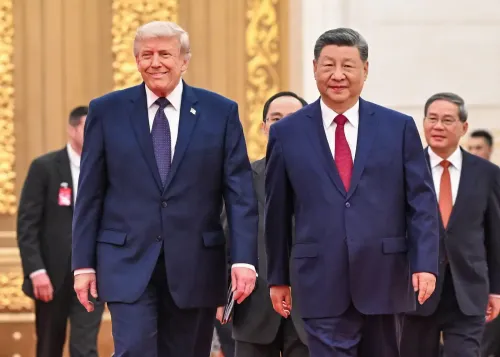
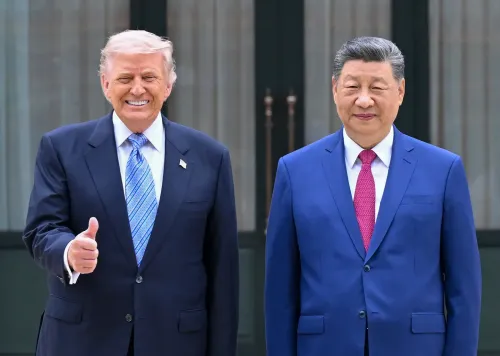
Donald Trump and Xi Jinping met at the White House on 24 September 2026 — their first joint appearance at the presidential residence.
Trump placed AI and superintelligence on the summit agenda; Xi called for AI to remain 'under human control' and serve the public good.
No joint AI agreement or formal framework was announced during the opening ceremony.
Xi listed AI alongside trade, law enforcement, and people-to-people exchanges as potential areas of US-China cooperation.
On trade, Trump cited progress since his Beijing visit in May , including greater market access for American farmers; Xi urged fair treatment for Chinese firms in the US.
Xi called for both militaries to maintain regular contact and strengthen crisis communication .
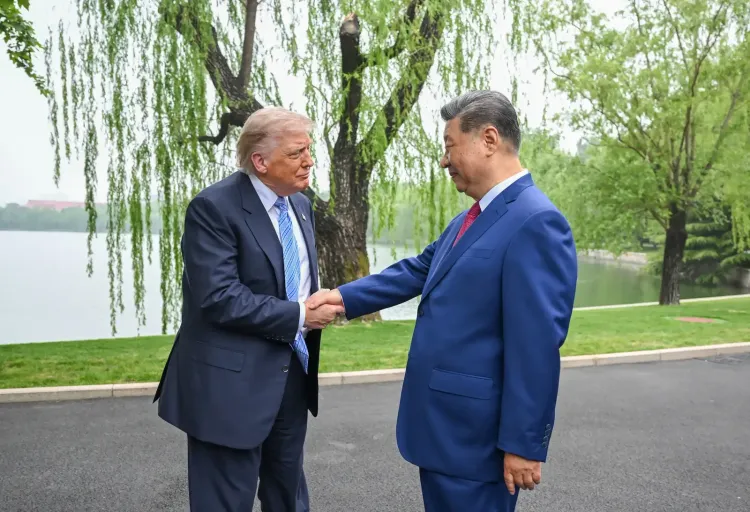
US President Donald Trump placed artificial intelligence and 'superintelligence' at the centre of his talks with Chinese President Xi Jinping on Thursday, 24 September 2026, as the two leaders met at the White House for a state visit — the first such meeting between them at the White House. Xi, for his part, called for AI development to remain under human control and serve the public good, framing the technology as a shared responsibility of the world's two leading AI powers.
What the Two Leaders Said
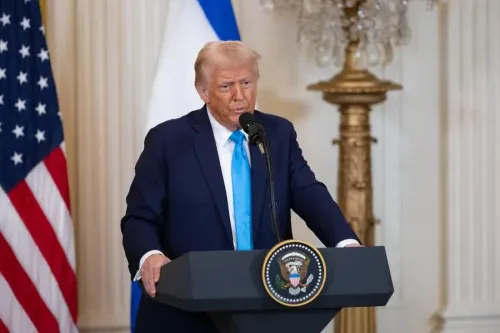
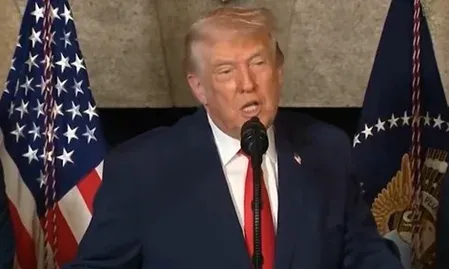
Trump told the welcoming ceremony that discussions would span security, technology, and superintelligence, arguing that decisions taken in these areas now could 'promote peace and prosperity for decades.' He expressed confidence that both nations could achieve more by focusing on common interests.
Xi was more specific about the principles he wanted to anchor any AI collaboration. 'We have both the capability and responsibility to develop and manage AI for good, and ensure that the development of AI is always under human control and serves the well-being of the people,' he said, according to the supplied transcript. He stopped short of specifying which rules or safeguards he wished both governments to adopt.
No Agreement Announced Yet
Neither president announced a joint AI agreement or set out a formal framework during the opening remarks. The ceremony functioned as a scene-setter: both sides identified AI as a subject for substantive discussion during Xi's Washington visit, with any concrete outcome contingent on the closed-door talks that followed. Xi also listed AI alongside trade, law enforcement, and people-to-people exchanges as potential areas of cooperation.
Broader Agenda: Trade, Military Contact, Competition
On trade, Trump said officials had been working towards a more balanced relationship since his visit to Beijing in May, pointing to efforts to expand market access for American farmers and ranchers. Xi said China welcomed American companies seeking to invest there and expressed hope that Chinese businesses would receive fair treatment in the United States.
Xi also called for the two countries' militaries to remain in regular contact and improve crisis communication — an acknowledgement that strategic rivalry persists even as both sides seek areas of cooperation. He urged that competition be kept within bounds, and called for candid dialogue across foreign affairs, economic, and financial channels.
Personal Diplomacy and Historical Context
Trump referenced the leaders' personal rapport, with a White House post quoting him as saying they had forged 'a friendship, a truly great friendship actually, built on the mutual respect and the vital interests of our people.' The two leaders previously met during Trump's first term, including at Trump's Mar-a-Lago property in Florida in 2017 and during Trump's Beijing visit later that year. Thursday's White House ceremony marked their first joint appearance at the presidential residence.
The United States and China established diplomatic relations in 1979, and their relationship today encompasses extensive trade and exchanges alongside persistent differences on economic and security policy. The AI conversation adds a fresh dimension to that long-running dynamic, as both nations accelerate investments in the technology and jockey for global leadership in its development.
Whether Thursday's talks translate into a concrete AI governance framework — or remain at the level of principle — will determine the lasting significance of Xi's Washington visit.
Point of View
Not just working-level talks. Yet Xi's call for AI to stay 'under human control' is as much a domestic governance signal to Beijing as it is a multilateral proposal, and Washington has offered no reciprocal framework. The gap between soaring rhetoric and the absence of any announced agreement reflects the central tension of US-China relations: deep interdependence managed through a diplomatic vocabulary that both sides can claim as a win. The real test will be whether these conversations produce binding guardrails or remain aspirational talking points that each government interprets on its own terms.
NationPress
24 Sept 2026
Frequently Asked Questions
What did Trump and Xi discuss about AI at the White House?
Trump placed artificial intelligence and 'superintelligence' on the agenda for his talks with Xi Jinping on 24 September 2026, calling for the two nations to focus on common interests. Xi said both countries had the 'capability and responsibility' to develop and manage AI for good and ensure it remains under human control.
Was any US-China AI agreement signed during Xi's White House visit?
No joint AI agreement or formal framework was announced during the opening ceremony of Xi's state visit. Both presidents identified AI as a subject for discussion; any concrete outcome depended on the closed-door talks that followed the welcoming ceremony.
What did Xi Jinping say about how AI should be governed?
Xi said AI development should always remain 'under human control and serve the well-being of the people,' according to the supplied transcript. He did not specify which rules or safeguards he wanted both governments to adopt, but placed AI alongside trade and law enforcement as a potential cooperation area.
What trade issues were discussed at the Trump-Xi summit?
Trump said officials had been working towards a more balanced trade relationship since his Beijing visit in May 2026, citing greater market access for American farmers and ranchers. Xi said China welcomed US investment and hoped Chinese companies would receive fair treatment in the United States.
Is this the first time Trump and Xi have met at the White House?
Yes. According to Trump's welcoming remarks, Thursday's ceremony was their first meeting together at the White House. The two leaders had previously met during Trump's first term, including at Mar-a-Lago in Florida and during Trump's visit to Beijing, both in 2017.