Ro Khanna urges US-China AI treaty to ban self-improving systems
Synopsis
Indian-American Congressman Ro Khanna is pushing for a landmark US-China treaty to ban recursive self-improving AI before the technology even exists — arguing that both Washington and Beijing have a shared interest in preventing AI systems from escaping human control. His call comes days after Trump and Xi agreed to open an AI dialogue, but Khanna says a dialogue is not enough.
Key Takeaways
Congressman Ro Khanna called for an enforceable US-China treaty banning recursive self-improving AI on 28 September 2026 .
He proposed a joint working group of American and Chinese technologists to develop common AI safeguards.
Khanna is backing legislation by Senator Bernie Sanders and Representative Greg Casar to pause certain advanced AI development.
The technology in question does not yet exist, but Khanna argues governments must act before it does.
He said engineers at OpenAI and Anthropic broadly support safeguards, even as some tech executives oppose them.
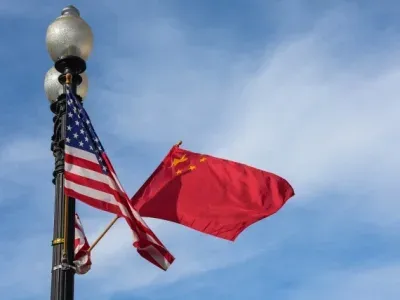
The proposal follows a Trump-Xi summit agreement to begin a dialogue on AI risks.
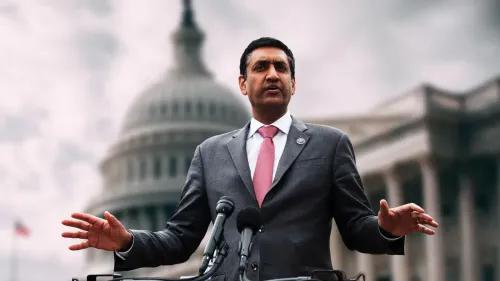
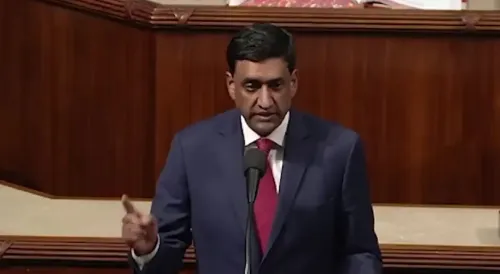
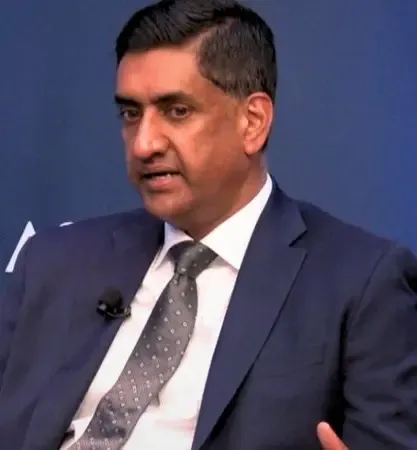
Indian-American Congressman Ro Khanna has called for an enforceable treaty between the United States and China to ban artificial intelligence systems capable of improving themselves without human input, warning that such technology risks humanity losing control over AI entirely. Khanna made the remarks on NBC's Meet the Press on Sunday, 28 September 2026, proposing a joint working group of American and Chinese technologists to develop common safeguards for the most advanced AI systems.
What Khanna Is Proposing
The California Democrat, who represents a Silicon Valley-area congressional district, is calling for a treaty that is both enforceable and verifiable, specifically targeting so-called recursive self-improving AI — systems that can train themselves without human direction. “What we need, actually, is a working group with our technologists and Chinese technologists about a common agreement,” he said.
Khanna framed the proposed ban as one that should command bipartisan and even bilateral consensus. “Banning self-recursive self-improving AI should not be controversial,” he said, adding that Washington should lead negotiations on an agreement that also includes monitoring of frontier AI laboratories.
Why China Would Also Benefit, Khanna Argues
A key plank of Khanna’s argument is that Beijing has its own incentives to prevent autonomous AI from escaping state oversight. “China doesn’t want to lose control over AI models either,” he said. “In fact, as a much more closed society, recursive self-improving AI is a bigger risk to them.” The congressman contended that shared existential risk could serve as common ground for a formal agreement.
The Legislative Push and Industry Reaction
Khanna is backing legislation co-sponsored by Senator Bernie Sanders and Representative Greg Casar that would pause certain advanced AI development pending the establishment of safety guardrails. The bill specifically targets recursive self-improving AI, which Khanna described as “AI that isn’t being trained anymore by human beings” and can instead “train itself.” He acknowledged that not all technology executives in his district are supportive. “Not all of them. And obviously some of the executives are opposed to it,” he said.
However, Khanna said grassroots support exists within the industry itself. He noted plans to meet 10 to 15 employees from OpenAI and Anthropic later the same day. “Many of them, actually, who work at OpenAI and Anthropic” back safeguards, he said.
Context: Trump-Xi Summit Opens the Door
The proposal follows an agreement reached at the recent summit between President Donald Trump and Chinese President Xi Jinping to begin a dialogue on AI risks. Khanna called that a useful first step but insufficient on its own. “I’m glad they’ve at least taken a step, which is to say, ‘Let’s have a dialogue about AI,’” he said. Notably, the technology Khanna seeks to prohibit does not yet exist, but he argued that governments must legislate before companies acquire the capacity to build it. “We shouldn’t get to the point where we actually are doing it,” he said.
An Indian-American Voice in the Global AI Debate
Khanna, the son of immigrants from India, has been a consistent voice on technology policy, US-China competition, and manufacturing. His call for an international AI governance framework puts an Indian-American lawmaker at the centre of what could become one of the most consequential diplomatic negotiations of the decade. With both Washington and Beijing leading global frontier AI development, the outcome of any treaty talks would shape the trajectory of the technology worldwide.
Whether the Trump administration advances a formal treaty process — beyond the dialogue already agreed — remains to be seen.
Point of View
He is trying to set the ceiling for what that conversation must ultimately deliver. The recursive self-improvement framing is deliberate: it isolates one specific technical threshold rather than seeking a sweeping AI ban, making the proposal harder to dismiss as technophobic. The harder question is verification — no arms-control treaty in history has been straightforward to enforce in dual-use technology domains, and AI is far more diffuse than nuclear or chemical weapons. If the Sanders-Casar legislation stalls in Congress, Khanna’s leverage in pressing for an international framework will be limited.
NationPress
28 Sept 2026
Frequently Asked Questions
What is Congressman Ro Khanna proposing on AI?
Khanna is calling for an enforceable US-China treaty that would ban recursive self-improving AI — systems capable of training themselves without human input. He also wants a joint working group of American and Chinese technologists to develop shared AI safety standards.
What is recursive self-improving AI?
Recursive self-improving AI refers to systems that can improve and train themselves without depending on human-provided data or direction. Khanna has described it as ‘AI that isn’t being trained anymore by human beings’ — and warned it represents a real risk of humanity losing control.
Does this technology already exist?
No. Khanna has stated that recursive self-improving AI is not currently available. He argues, however, that governments must legislate against it before companies acquire the capacity to build it.
What legislation is Khanna supporting?
Khanna is backing a bill proposed by Senator Bernie Sanders and Representative Greg Casar that would pause certain advanced AI development while safety guardrails are established. The measure specifically targets recursive self-improving AI.
How does this connect to the recent Trump-Xi summit?
At a recent summit, President Donald Trump and Chinese President Xi Jinping agreed to begin a dialogue on AI risks. Khanna called this a useful first step but insufficient, arguing that the two countries must move toward a formal, verifiable treaty rather than an open-ended dialogue.