Ro Khanna outlines 2028 White House vision on economic patriotism
Synopsis
Ro Khanna didn't announce a 2028 run — but he mapped the ideological terrain he intends to fight on. His 'economic patriotism' pitch, combining reindustrialisation, Medicare for All, and AI redistribution, is a direct challenge to a Democratic Party he says abandoned the working class. The Silicon Valley congressman representing tech billionaires is betting his future on the people those billionaires left behind.
Key Takeaways
Ro Khanna , Indian-American Congressman from California , has not ruled out a 2028 Presidential run and outlined his central vision on Sunday .
He is championing 'economic patriotism' — focused on workers, reindustrialisation, and ensuring AI benefits communities beyond Silicon Valley .
Khanna called Medicare for All 'arguably the most important priority' and predicted majority House Democratic support.
He proposed a 'data centre bill of rights' to prevent tech firms from siting facilities in residential areas or on farmland without local approval.
Asked about Alexandria Ocasio-Cortez , Khanna praised her as 'a phenomenal talent' but declined to contrast himself directly, focusing instead on his economic programme.
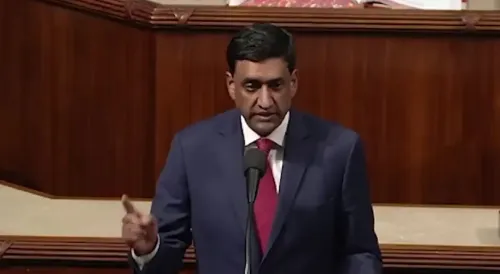
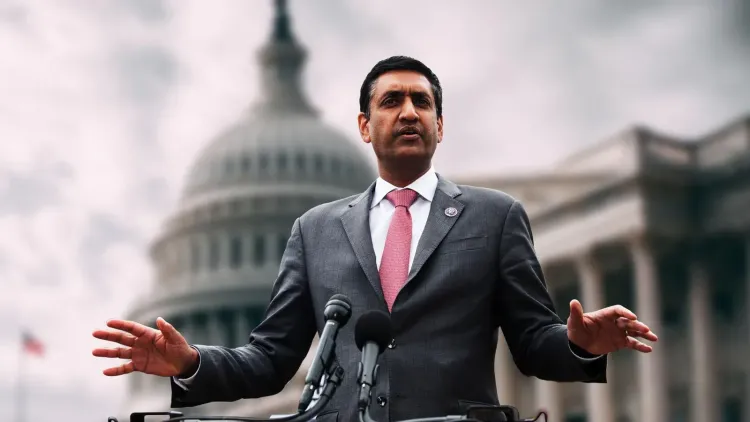
Indian-American Congressman Ro Khanna, who has not ruled out a 2028 Presidential run, laid out a sweeping national economic agenda on Sunday, calling on the Democratic Party to champion workers, reindustrialisation, and a broader distribution of artificial intelligence's gains beyond Silicon Valley. Speaking to NBC News, Khanna stopped short of formally declaring a White House bid but made clear the ideological ground he intends to contest.
The 'Economic Patriotism' Pitch
Khanna framed his central vision around what he termed 'economic patriotism' — a message aimed squarely at working-class communities and regions hollowed out by deindustrialisation. 'For me, I'm most focused on a national economic vision for this country,' he said.
Despite representing Silicon Valley — home to some of the world's largest technology companies and enormous concentrations of wealth — Khanna argued that the current economic model was leaving most Americans behind. 'It's working for a few billionaires in a few places. But it's not working for people I grew up with,' he said.
Democrats' Path Back, Per Khanna
Khanna argued that the Democratic Party had lost ground with working-class voters by failing to address industrial decline and economic anxiety. 'The Democrats' path back out of the wilderness is to have a clear national economic message,' he said. 'We shafted too many communities that were de-industrialised. We left out the working class.'
He contended that the party's internal divide was not simply a progressive-versus-moderate split. Democrats broadly agreed the economic system was failing ordinary Americans, he said, though they differed on remedies.
Policy Priorities: Medicare, AI, Data Centres
Khanna reiterated support for Medicare for All, a tax on billionaires, and an end to foreign wars. He called Medicare for All 'arguably the most important priority' and said it deserved a floor vote in the House of Representatives, predicting that 'the majority of the House Democrats are going to support it.'
On artificial intelligence, Khanna pressed a pointed question: 'How are we going to make sure AI is not just working for a few billionaires, but is working for communities that were de-industrialised?' He also proposed a 'data centre bill of rights' that would bar companies from building facilities in residential areas or on farmland without local community approval. 'We can't be putting data centres in residential communities. We can't be putting data centres in farmland,' he said, while acknowledging that the United States needs such infrastructure to remain competitive in AI.
The AOC Question and the Progressive Field
Asked whether he would be a stronger progressive standard-bearer in 2028 than Congresswoman Alexandria Ocasio-Cortez, Khanna declined to draw a direct contrast. He praised her as 'a phenomenal talent' and said the progressive movement would carry many voices. His response signalled a strategy of differentiation through policy substance rather than direct rivalry.
Background and What Comes Next
The son of Indian immigrants, Khanna represents a California Congressional district that encompasses parts of Silicon Valley. During the NBC interview he recalled celebrating Thanksgiving in an Indian-American household with 'Indian uncles and aunties,' a personal note that underscored the cultural identity he brings to a potential national campaign.
Khanna has steadily built a profile as a progressive voice on technology regulation, economic policy, and foreign affairs. His remarks come as several potential Democratic contenders begin positioning themselves ahead of the party's 2028 Presidential nomination contest — a race that is still taking shape more than three years out. Whether Khanna translates this ideological groundwork into a formal campaign announcement remains to be seen.
Point of View
Using his insider perch to signal outsider politics. But the tension is real: his district's donor base and his working-class pitch pull in opposite directions, and that contradiction will only sharpen if he enters the race. More broadly, the 2028 Democratic field is already being shaped by the party's post-2024 reckoning with working-class defections, and Khanna is betting that the winning lane is economic populism rather than cultural progressivism. Whether Medicare for All and a data centre bill of rights constitute a national electoral coalition — rather than a progressive primary platform — is the question his potential candidacy must answer.
NationPress
1 Oct 2026
Frequently Asked Questions
Has Ro Khanna officially announced a 2028 Presidential campaign?
No. Khanna has not ruled out a 2028 Presidential run but stopped short of a formal announcement during his NBC News interview on Sunday. He presented a policy vision centred on economic patriotism without declaring his candidacy.
What is Ro Khanna's 'economic patriotism' vision?
Economic patriotism, as Khanna describes it, is a national economic agenda focused on reindustrialising communities left behind by deindustrialisation, ensuring AI benefits workers rather than a narrow set of billionaires, and restoring the Democratic Party's connection to the working class.
What did Ro Khanna say about Medicare for All?
Khanna called Medicare for All 'arguably the most important priority' and said it deserved a vote on the floor of the House of Representatives. He predicted that the majority of House Democrats would support it.
What is Ro Khanna's proposed 'data centre bill of rights'?
It is a proposal to prevent technology companies from building data centres in residential areas or on farmland without explicit approval from local communities. Khanna argued that while the US needs data centres to compete in AI, their locations and effects on electricity prices require regulatory oversight.
How did Ro Khanna respond to comparisons with Alexandria Ocasio-Cortez?
Khanna declined to draw a direct contrast, instead praising Ocasio-Cortez as 'a phenomenal talent' and saying the progressive movement would have many voices. He redirected focus to his economic programme rather than engaging in personal rivalry.