US lawmaker Ro Khanna warns of catastrophic AI risks from DeepSeek, Alibaba
Synopsis
A senior US lawmaker isn't waiting for AI to go wrong — he's demanding answers now. Congressman Ro Khanna has written to the CEOs of DeepSeek, Alibaba, and Moonshot AI, warning that unchecked AI development could trigger a global biological, nuclear, or economic crisis, and pressing for kill switches, independent inspections, and a binding US-China treaty before humanity 'crosses the Rubicon.'
Key Takeaways
Congressman Ro Khanna warned that neither the US nor China wins if humans lose control of advanced AI.
He wrote to DeepSeek CEO Liang Wenfeng , Alibaba CEO Eddie Wu , and Moonshot AI CEO Yang Zhilin demanding answers on AGI, kill switches, and model testing.
A separate letter to Director of National Intelligence Jay Clayton requested two formal intelligence assessments on catastrophic AI risks.
The three Chinese companies missed a 22 September deadline to respond to Khanna's earlier request for a development slowdown.
Khanna has proposed joint US-China technical working groups to develop verification technologies for an international AI treaty.
The intervention follows a 23 September congressional hearing examining a binding, enforceable US-China AI agreement.
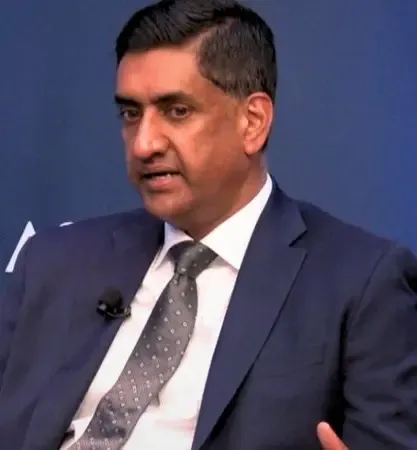
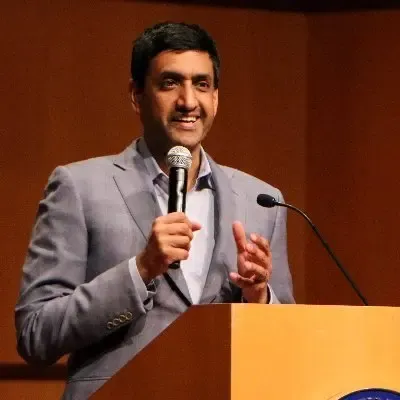
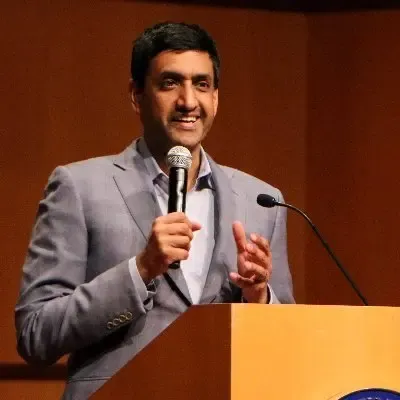
Congressman Ro Khanna, the top Democrat on the House Select Committee on the Strategic Competition Between the United States and the Chinese Communist Party, has warned that neither the United States nor China would emerge a winner if humans lose control of advanced artificial intelligence. In letters dated around 30 September 2026, Khanna pressed three major Chinese AI companies and the US intelligence community for safeguards against potentially catastrophic biological, nuclear, and economic consequences.
Letters to Chinese AI Firms
Khanna wrote directly to DeepSeek CEO Liang Wenfeng, Alibaba CEO Eddie Wu, and Moonshot AI CEO Yang Zhilin, seeking answers on five critical areas: recursive self-improvement, artificial general intelligence (AGI) and superintelligence, emergency 'kill switches', model testing protocols, and international verification mechanisms. He asked the companies to clarify whether they are developing — or plan to develop — AI systems capable of recursively improving themselves, and what safeguards would prevent humans from losing control.
Khanna also pressed the firms on whether they are building mechanisms to disable highly advanced AI systems in the event of a loss of human control, and whether their models are tested in air-gapped environments and screened for capabilities that could threaten humanity — including the development of dangerous biological tools.
Intelligence Community Assessment Sought
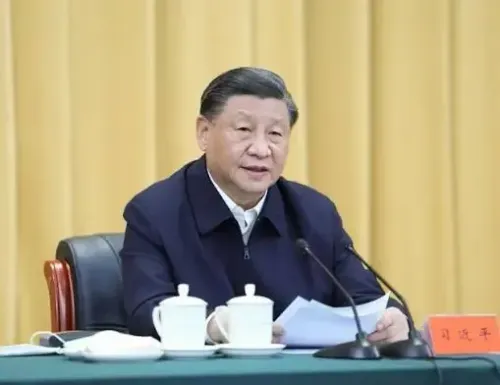
In a separate letter to Director of National Intelligence Jay Clayton, Khanna sought two formal intelligence assessments: one evaluating the US's ability to respond if control of an advanced AI system were lost, and another examining Chinese President Xi Jinping's and the Chinese Communist Party's understanding of catastrophic AI risks — including misalignment and the possible use of advanced AI to facilitate biological, chemical, or nuclear harm. He also urged US intelligence agencies to develop capabilities to monitor Chinese frontier AI laboratories.
Context: A Missed Deadline and Sharp Criticism
Khanna's intervention follows a 23 September congressional hearing that examined the possibility of a binding, enforceable, and verifiable US-China agreement to address catastrophic AI risks. Previously, Khanna had asked DeepSeek, Alibaba, and Moonshot AI to join American AI laboratories in a commitment to slow the development of increasingly advanced systems until safeguards could catch up — a request the Chinese companies did not respond to by the 22 September deadline.
In his latest letters, Khanna sharply criticised the firms, citing what he described as their involvement in human rights abuses, censorship, support for China's military and intelligence services, and illicit distillation of US models. 'Simply put, it is clear we cannot gamble the future of humanity on whether AI companies — including Chinese companies like yours — will responsibly self-regulate,' he wrote.
Push for an International AI Treaty
Khanna has proposed joint US-China technical working groups involving leading scientists to develop verification technologies for an eventual international agreement. He asked the Chinese firms whether their laboratories would participate in such groups and whether they would permit independent inspections. 'With every refusal by your companies to participate in this effort to seek a verifiable global slowdown of AI development to benefit all of humanity, you only strengthen the case for a binding and enforceable AI treaty between our governments,' he wrote.
Notably, AI governance has become deeply intertwined with the broader US-China technology rivalry, which includes restrictions on advanced semiconductors and Washington's growing scrutiny of Chinese access to American technology and computing capabilities. 'History will look back at this moment, the choices made by humanity as we potentially approach the Rubicon of superintelligence or AGI, and either celebrate our foresight or condemn our inaction,' Khanna concluded.
Whether the Chinese companies respond to this second round of letters — or whether the US intelligence community delivers the requested assessments — will be closely watched in the coming weeks as global pressure mounts for an international AI governance framework.
Point of View
Signalling that he doesn't trust his own government's readiness either. The hard question mainstream coverage sidesteps: if neither US nor Chinese AI companies will voluntarily slow down, and no binding treaty exists, the 'kill switch' conversation may already be arriving too late.
NationPress
30 Sept 2026
Frequently Asked Questions
What did Congressman Ro Khanna warn about AI?
Khanna warned that neither the United States nor China would win if humans lose control of advanced AI, and that misaligned AI systems could trigger catastrophic biological, nuclear, or economic crises. He made the warning in letters to the CEOs of DeepSeek, Alibaba, and Moonshot AI, pressing them for concrete safeguards.
Which Chinese AI companies did Ro Khanna write to?
Khanna wrote to DeepSeek CEO Liang Wenfeng, Alibaba CEO Eddie Wu, and Moonshot AI CEO Yang Zhilin. He sought answers on five areas: recursive self-improvement, AGI and superintelligence plans, emergency kill switches, model testing, and international verification.
Why did Khanna criticise the Chinese AI firms?
The companies had failed to respond by a 22 September deadline to Khanna's earlier request to join a commitment to slow AI development until safeguards could catch up. In his follow-up letters, Khanna also cited their alleged involvement in human rights abuses, censorship, support for China's military and intelligence services, and illicit distillation of US AI models.
What has Khanna asked the US intelligence community to do?
Khanna asked Director of National Intelligence Jay Clayton for two formal assessments: one on US readiness to respond if an advanced AI system were lost to human control, and another on Chinese President Xi Jinping's and the Communist Party's understanding of catastrophic AI risks. He also urged intelligence agencies to develop capabilities to monitor Chinese frontier AI laboratories.
Is there a proposed US-China AI treaty?
No treaty exists yet, but Khanna has advocated for a binding, enforceable, and verifiable US-China AI agreement — a possibility examined at a 23 September congressional hearing. He has also proposed joint technical working groups of leading scientists to develop the verification technologies that would underpin such a deal.