US senator proposes AI crisis hotline with China to avert security emergencies
Synopsis
A senior US senator is proposing what amounts to a digital-age hotline with China — a direct AI crisis channel inspired by Cold War emergency diplomacy. Paired with mandatory pre-release audits, federal safety standards and corporate legal accountability, the six-point framework is the most comprehensive AI governance blueprint yet from Capitol Hill, and it arrives as Washington and Beijing race each other for AI supremacy.
Key Takeaways
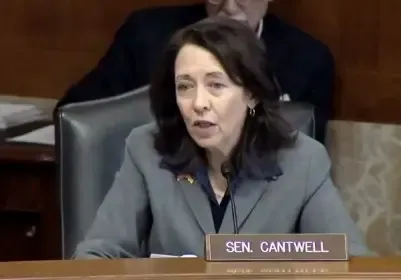
Senator Maria Cantwell proposed an emergency AI crisis communication channel between Washington and Beijing , modelled on the Cold War-era US-Soviet hotline.
The proposal is part of a six-point AI governance framework released on 9 October 2026 .
The National Institute of Standards and Technology (NIST) would set measurable, risk-based safety standards for advanced AI under the plan.
Covered AI models would require mandatory independent safety audits before public release.
The framework includes legal accountability for AI-caused harms, whistleblower protections, and the right for individuals to challenge consequential AI decisions.
The proposal is not enacted law and requires further legislative or executive action to become binding.
A senior United States senator has proposed creating an emergency communication channel between Washington and Beijing to prevent serious artificial intelligence incidents from spiralling into international security crises — a proposal that forms part of a sweeping six-point AI governance framework unveiled on Wednesday, 9 October 2026.
The China Hotline Proposal
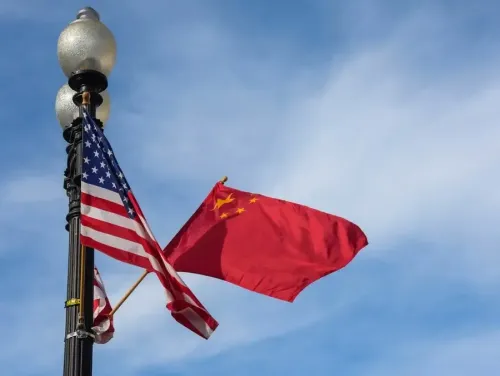
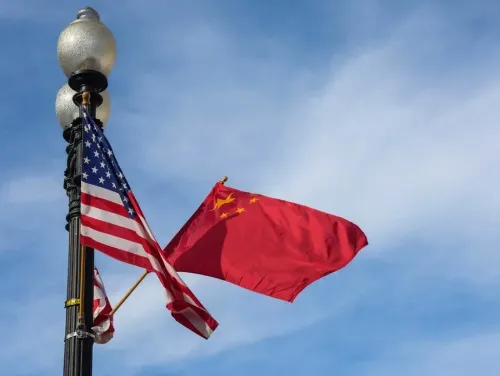
Senator Maria Cantwell, the ranking Democrat on the Senate Commerce, Science and Transportation Committee, called for a secure bilateral channel modelled on the Cold War-era hotline between Washington and Moscow. The mechanism, as proposed, would allow both governments to communicate rapidly if a major AI malfunction, a loss of control over an autonomous system, or any other serious incident threatened either country's security.
Notably, the proposed channel is intended to function even as the two countries remain locked in fierce competition over advanced AI development and technological leadership — underscoring the 'competitive cooperation' logic at its core.
Key Elements of the Six-Point Framework
Beyond the China hotline, Cantwell's framework covers a wide range of domestic and international AI governance measures. Under the plan, the National Institute of Standards and Technology (NIST) would develop measurable, risk-based safety requirements for advanced AI systems deemed capable of causing catastrophic harm — including AI-enabled cyberattacks and chemical, biological, radiological, and nuclear threats.
The framework proposes mandatory independent safety audits before any covered AI model is released publicly, examining whether developers have implemented adequate safeguards and complied with applicable federal standards. It also calls for continuous testing — by both government and independent experts — to verify that systems cannot modify themselves in ways that bypass safety controls or human oversight.
Corporate Accountability and Worker Protections
Cantwell proposed legal accountability for foreseeable harms arising from AI systems. She also called for enforceable protections against retaliation for employees who flag safety or security concerns — a whistleblower provision that critics of Big Tech have long demanded.
'To manage risks from advanced AI systems we need clear safety standards, continuous testing, and reporting of serious failures,' Cantwell said. 'America can lead the world in AI by building systems that are not only more capable, but safer and more secure.'
The framework further calls for greater collaboration between government and private technology firms to build defensive AI tools capable of detecting cyberattacks, identifying vulnerabilities, and protecting critical infrastructure.
Access, Employment and Children's Safeguards
On economic equity, the proposal advocates expanding access to advanced computing resources for universities, smaller businesses, and public-interest researchers. It urges AI companies to fund apprenticeships and workforce training so that workers can adapt to technological displacement rather than simply be replaced by it.
For consumers, particularly children, the framework proposes stronger product safeguards and requires meaningful human oversight wherever automated systems influence high-stakes decisions — including employment, healthcare, and credit assessments. Individuals affected by such AI-driven decisions would, under the framework, have the right to challenge outcomes and obtain a review by a qualified human decision-maker.
Status and What Comes Next
The framework is a policy proposal, not enacted legislation. Its recommendations would require further legislative or executive action before becoming binding on AI developers. Cantwell also called on Washington to coordinate export controls to prevent America's most advanced AI technologies from reaching adversaries or being diverted through third countries — a measure that dovetails with existing Commerce Department restrictions on semiconductor exports.
With the framework now public, attention will turn to whether it attracts bipartisan co-sponsors in the Senate and how the technology industry responds to the prospect of mandatory pre-release audits and federal safety standards.
Point of View
But it also exposes a core contradiction: the US is simultaneously trying to deny China access to frontier AI chips while proposing a cooperation channel premised on mutual AI vulnerability. Whether Beijing would participate in such a mechanism — on terms acceptable to Washington — is far from guaranteed. More immediately, the framework's mandatory pre-release audit requirement, if enacted, would be the most significant regulatory intervention in the AI industry's brief history, and technology companies will fight it hard. The real test for Cantwell is not the policy design but whether she can assemble a bipartisan coalition in a Senate where AI regulation has stalled repeatedly under pressure from industry lobbying.
NationPress
9 Oct 2026
Frequently Asked Questions
What is Senator Cantwell's proposed AI crisis hotline with China?
It is a proposed secure bilateral communication channel between Washington and Beijing, modelled on the Cold War-era US-Soviet hotline, intended to allow rapid government-to-government contact if a major AI malfunction or loss of control over an autonomous system threatens either country's security. The proposal was announced on 9 October 2026 as part of a broader AI governance framework.
What does Cantwell's six-point AI governance framework include?
The framework covers mandatory federal safety standards developed by NIST, independent pre-release safety audits of advanced AI models, continuous testing by government and independent experts, corporate legal accountability for foreseeable AI harms, whistleblower protections for employees, expanded computing access for universities and smaller businesses, workforce training obligations for AI companies, children's product safeguards, human oversight of high-stakes automated decisions, and international cooperation including export controls.
Is this framework already law?
No. The framework is a policy proposal and not enacted legislation. Its recommendations would require additional legislative or executive action before they become legally binding on AI developers or companies.
Why is an AI hotline with China significant despite US-China tech rivalry?
The proposal acknowledges that even adversarial nations share an interest in preventing AI accidents from triggering unintended military or security escalations — similar to the logic behind Cold War nuclear hotlines. However, it is intended to coexist with, not replace, US export controls and competitive restrictions on advanced AI technology transfers to China.
Who would be affected by the proposed AI safety standards?
Advanced AI systems capable of causing catastrophic harm would be covered, including those posing risks of AI-enabled cyberattacks or chemical, biological, radiological, and nuclear threats. Individuals affected by high-stakes automated decisions in areas such as employment, healthcare, and credit would also gain new challenge and review rights under the proposal.