People's Daily rejects US AI distillation claims, threatens countermeasures
Synopsis
China's official Communist Party newspaper has threatened 'countermeasures' against the US over AI distillation allegations — just one week before Presidents Xi Jinping and Donald Trump are scheduled to meet, turning a technical dispute into a high-stakes diplomatic flashpoint.
Key Takeaways
People's Daily published a commentary on Wednesday, September 16, 2026 rejecting US claims of 'industrial-scale' AI model distillation by Chinese companies as 'without factual or legal basis.' Beijing warned it would take 'countermeasures' if Washington uses the distillation allegations as a pretext to suppress China's AI industry.
The commentary arrives one week before an anticipated Xi Jinping – Donald Trump summit on September 24 , where AI is expected to be a key agenda item.
Chinese AI firms including DeepSeek , Alibaba Group Holding , Moonshot AI , and Z.ai have been linked by US officials to distillation concerns involving models from companies such as Anthropic .
People's Daily called for both sides to 'manage risks through dialogue and communication,' signalling Beijing prefers negotiation but is prepared to escalate.
China's People's Daily has flatly rejected United States allegations that Chinese artificial intelligence companies engaged in 'industrial-scale' distillation of American frontier models, warning that Beijing will deploy 'countermeasures' if Washington uses the accusations to suppress China's AI sector. The commentary, published on Wednesday, September 16, 2026, marks one of the most direct official responses yet to escalating US pressure over AI knowledge transfer.
The Accusation and Beijing's Rebuttal
The Communist Party mouthpiece declared the US claims were 'without factual or legal basis,' characterising Washington's position as 'politicising' what it described as a routine technical and commercial practice. The editorial stopped short of naming specific companies, though US officials have previously pointed to firms including DeepSeek, Alibaba Group Holding, Moonshot AI, and Z.ai in relation to distillation concerns. American AI developers such as Anthropic have separately raised alarms about their models being used without authorisation to train competing systems.Why It Matters: Xi-Trump Summit on the Horizon
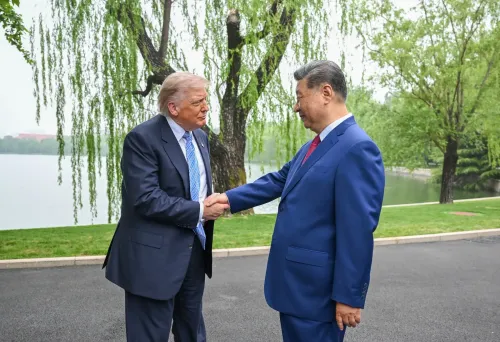
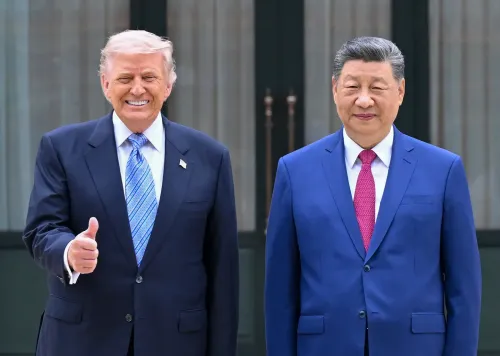
The timing is significant. The commentary arrives just one week before an anticipated summit between President Xi Jinping and US President Donald Trump on September 24, where artificial intelligence is expected to feature as a central point of dialogue. The fact that People's Daily — the official organ of the Chinese Communist Party — chose this moment to publish a pointed rebuttal signals that Beijing intends to frame AI distillation as a negotiating issue rather than a concession point. Treasury Secretary Scott Bessent and AI entrepreneur Mira Murati are among the figures whose positions on AI governance could shape the contours of any bilateral agreement.The Competitive Backdrop
Model distillation — the process of training a smaller, efficient model using outputs from a larger frontier model — sits at the heart of the dispute. Chinese AI labs have made rapid gains in model capability at a fraction of the compute cost associated with US counterparts, prompting allegations that distillation of models from companies like Anthropic and others provided an unfair shortcut. Beijing has consistently maintained that such techniques are standard industry practice and not subject to export-control restrictions. The standoff reflects a broader pattern in the ongoing technology decoupling between the world's two largest economies, where definitional disputes over 'normal' versus 'malicious' use of AI outputs are increasingly weaponised in trade and diplomatic contexts.What's Next
The People's Daily commentary explicitly called on both sides to 'work towards a common goal, and manage risks through dialogue and communication' — language that leaves a diplomatic off-ramp open ahead of the September 24 meeting. However, the parallel threat of 'countermeasures' introduces fresh uncertainty for Chinese AI firms already navigating US chip export controls. Whether the Xi-Trump summit produces any binding framework on AI governance — or deepens the impasse — will be the critical variable to watch in the weeks ahead.Point of View
Effectively telling Washington that every new technology restriction invites a symmetric response. What mainstream coverage underplays is that the definitional ambiguity around 'malicious' distillation gives both sides enormous room to manoeuvre — or to entrench. The proximity to the September 24 Xi-Trump summit suggests this commentary is partly a pre-negotiation posture, designed to prevent AI governance from becoming a one-sided concession. For Chinese AI startups already squeezed by semiconductor access restrictions, the threat of countermeasures offers rhetorical cover but little operational relief.
NationPress
16 Sept 2026
Frequently Asked Questions
What is the US-China AI distillation dispute about?
The dispute centres on US allegations that Chinese AI companies conducted 'industrial-scale' distillation — using outputs from advanced American AI models to train competing Chinese systems — without authorisation. China's People's Daily has rejected these claims as 'without factual or legal basis,' calling the practice a normal technical and commercial activity.
Which Chinese AI companies are involved in the distillation allegations?
US officials have previously referenced firms including DeepSeek , Alibaba Group Holding , Moonshot AI , and Z.ai in connection with distillation concerns. American developer Anthropic is among the companies that have raised alarms about unauthorised use of their models.
What countermeasures is China threatening?
People's Daily warned that Beijing would take 'countermeasures' if Washington used the distillation allegations as a pretext to contain Chinese AI companies, though the commentary did not specify what those measures would entail. The warning mirrors language Beijing has previously used ahead of trade and technology escalations.
How does this relate to the Xi-Trump summit on September 24?
The editorial was published exactly one week before the anticipated meeting between President Xi Jinping and US President Donald Trump on September 24, 2026 . Analysts see the timing as deliberate, with Beijing staking out a firm position on AI governance before bilateral talks begin.
What is model distillation and why is it controversial?
Model distillation is a widely used AI technique where a smaller, more efficient model is trained using the outputs of a larger frontier model, allowing developers to replicate high-level capabilities at lower computational cost. It becomes controversial when the source model's outputs are used without the original developer's permission, raising questions about intellectual property and export-control compliance.