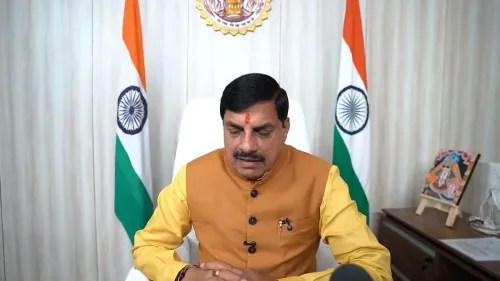
CM Mohan Yadav launches Phase 2 of Gwalior Telecom Zone
Synopsis
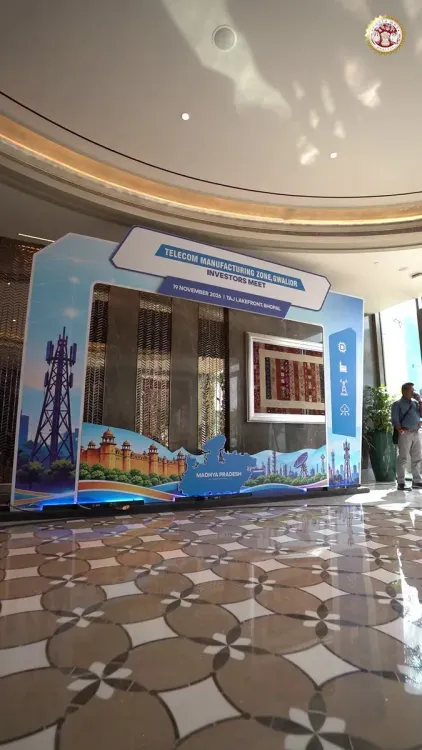
Chief Minister Dr. Mohan Yadav launched the second phase of the Gwalior Telecom Manufacturing Zone on 19 November 2026, with Department of Telecommunications backing, advancing Madhya Pradesh's bid to become a key node in India's domestic telecom supply chain.
Key Takeaways
Mohan Yadav inaugurated the second phase of the Gwalior Telecom Manufacturing Zone on 19 November 2026 .
The launch was backed by the Department of Telecommunications (DoT) , the central government's telecom policy body.
The zone aligns with India's PLI scheme for telecom and networking products , notified in 2021 , to reduce import dependence.
Madhya Pradesh is positioning itself alongside Tamil Nadu and Uttar Pradesh as an emerging electronics and telecom manufacturing hub.
Mohan Yadav has served as Chief Minister since December 2023 and has prioritised investment-driven industrial expansion.
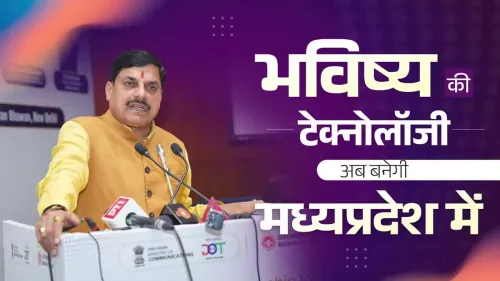
Madhya Pradesh is stepping on the accelerator. Chief Minister Dr. Mohan Yadav on Thursday, 19 November 2026, inaugurated the second phase of the Gwalior Telecom Manufacturing Zone, signalling the state's intent to claim a serious seat at India's domestic electronics and telecom production table.
The Chief Minister's Office of Madhya Pradesh announced the launch with the declaration 'स्पीड और स्केल के साथ आगे बढ़ता मध्यप्रदेश' — 'Madhya Pradesh advancing with speed and scale' — a phrase that doubles as both a headline and a governing philosophy. The event was held with the participation of the Department of Telecommunications (DoT), the central government body that has been the backbone of India's push to build a homegrown telecom supply chain.
Gwalior's bet on the telecom supply chain
The Gwalior Telecom Manufacturing Zone is a designated industrial cluster in Gwalior designed specifically for telecom equipment production. The launch of its second phase signals that the first phase has reached sufficient maturity to justify expansion — a milestone in itself for a state that has historically been seen as an agricultural and resource economy rather than a manufacturing one.
The zone is part of a broader national architecture built around India's Production Linked Incentive (PLI) scheme for telecom and networking products, notified in 2021, which aimed to slash import dependence and seed a domestic manufacturing ecosystem. State-level clusters like Gwalior's are the physical expression of that ambition.
MP's place in India's manufacturing race
Dr. Mohan Yadav, who assumed office as Chief Minister in December 2023, has pushed Madhya Pradesh as an emerging investment destination. The telecom zone positions the state alongside Tamil Nadu and Uttar Pradesh — two states that have moved aggressively to attract electronics and telecom manufacturers under the Atmanirbhar Bharat framework.
Gwalior's geographic advantage — its connectivity to Delhi and proximity to central India's industrial belt — makes it a credible candidate to anchor supply chains for the northern and central markets. Phase two of the zone, if it attracts committed investment and generates measurable employment, could sharpen that case considerably.
The numbers, the companies, and the jobs that follow will be the real scorecard — but the launch itself marks the moment Madhya Pradesh moved from intent to execution, twice over.
Point of View
Industrial launches with central government co-branding serve a dual purpose: signalling governance competence and locking in central scheme benefits. The convergence of state ambition and the PLI framework suggests MP is strategically timing these milestones to attract the next wave of manufacturers already operating under PLI in Phase 1 clusters. Whether Gwalior can sustain the 'speed and scale' rhetoric beyond inauguration day will depend heavily on employment numbers and anchor-company commitments that are yet to surface publicly.
NationPress
19 Nov 2026
Frequently Asked Questions
What is the Gwalior Telecom Manufacturing Zone?
The Gwalior Telecom Manufacturing Zone is a dedicated industrial cluster in Gwalior, Madhya Pradesh, focused on the production of telecom equipment and networking products to support India's domestic manufacturing goals.
Who inaugurated Phase 2 of the Gwalior Telecom Zone?
Chief Minister Dr. Mohan Yadav of Madhya Pradesh inaugurated the second phase on 19 November 2026, with the Department of Telecommunications also participating in the event.
How does the Gwalior Telecom Zone connect to the PLI scheme?
The zone is part of India's broader ecosystem built around the Production Linked Incentive (PLI) scheme for telecom and networking products, notified in 2021, which incentivises domestic manufacturing and reduces reliance on imports.
When did Dr. Mohan Yadav become Chief Minister of Madhya Pradesh?
Dr. Mohan Yadav assumed office as Chief Minister of Madhya Pradesh in December 2023.
Which states is Madhya Pradesh competing with for telecom manufacturing investment?
Madhya Pradesh is positioning itself alongside Tamil Nadu and Uttar Pradesh, both of which have moved aggressively to attract electronics and telecom manufacturers under the Atmanirbhar Bharat framework.