Rajnath Singh Holds Bilateral Talks with Japan's Defence Minister in Tokyo
Synopsis
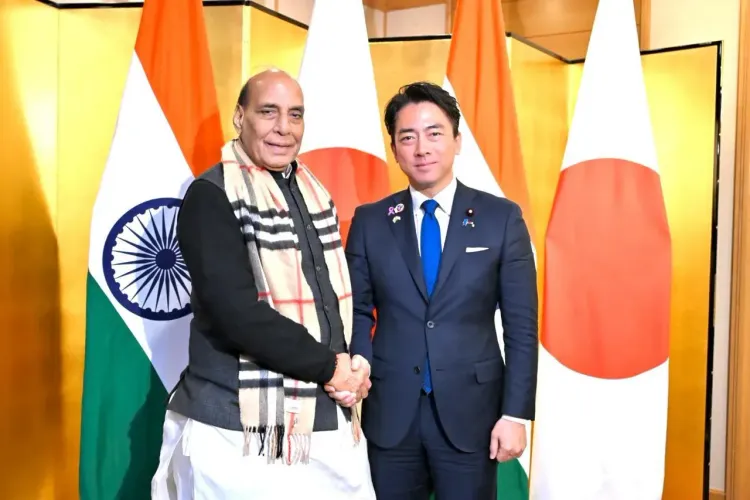
Union Defence Minister Rajnath Singh held bilateral talks with Japan's Defence Minister Shinjiro Koizumi in Tokyo on 19 November 2026 on the sidelines of the 4th India-Japan 2+2 Ministerial Dialogue, focusing on defence cooperation, maritime security, and technology collaboration for a rules-based Indo-Pacific.
Key Takeaways
Rajnath Singh met Japan's Defence Minister Shinjiro Koizumi in Tokyo on 19 November 2026 .
The meeting occurred on the sidelines of the 4th India-Japan 2+2 Ministerial Dialogue , a format launched in 2019 .
Discussions covered defence cooperation, maritime security , and technology collaboration in the Indo-Pacific .
India and Japan signed the Acquisition and Cross-Servicing Agreement (ACSA) in 2020 , enabling mutual logistical support.
Both nations are members of the Quadrilateral Security Dialogue (Quad) alongside the United States and Australia .
Progress on defence technology transfers and new agreements from the full 2+2 dialogue will be closely monitored.
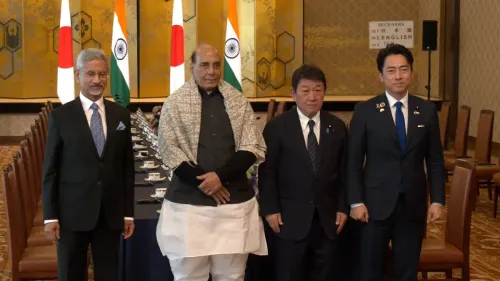
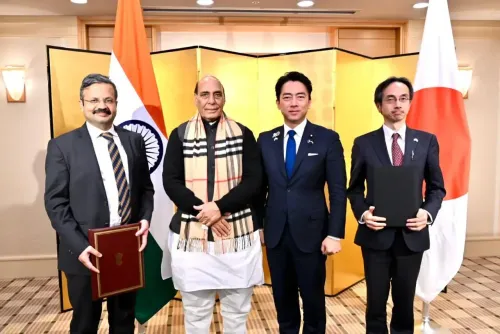
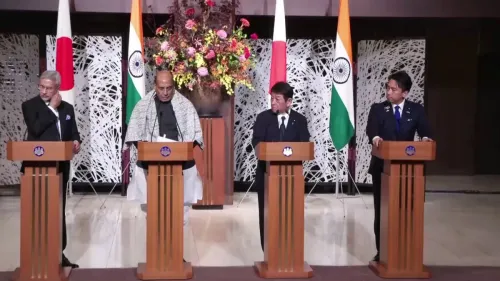
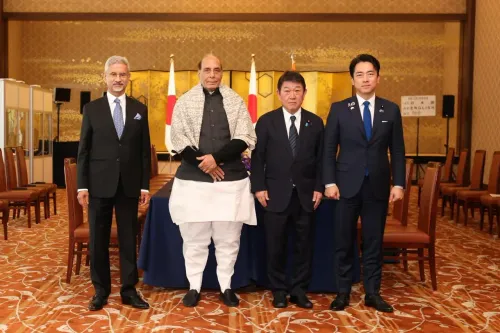
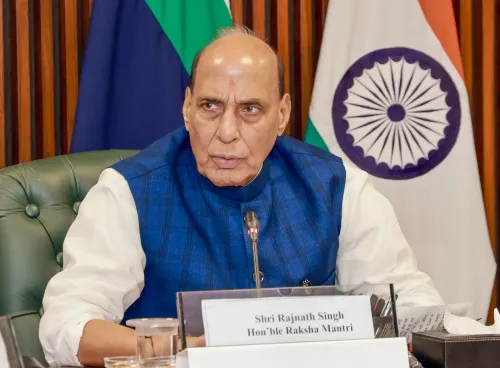
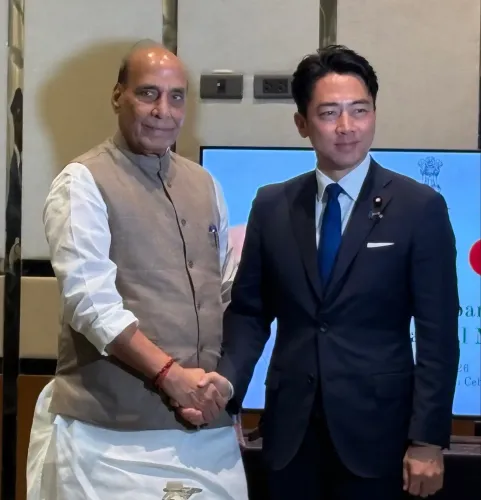
In the corridors of Tokyo, two of Asia's most consequential defence partnerships are sharpening their edge. Union Defence Minister Rajnath Singh held bilateral discussions with Japan's Defence Minister Shinjiro Koizumi on the sidelines of the 4th India-Japan 2+2 Ministerial Dialogue on Thursday, 19 November 2026 — a meeting that placed maritime security and technology cooperation at the centre of an already deep strategic bond.
What the 2+2 Framework Means for India and Japan
The 2+2 Ministerial Dialogue — a format involving the foreign and defence ministers of both countries — was first convened in New Delhi in 2019 and has since become the flagship architecture of the India-Japan Special Strategic and Global Partnership. Reaching its fourth edition in Tokyo marks a consistent, unhurried deepening of ties across successive governments on both sides. Singh described the discussions as 'fruitful', covering 'growing defence cooperation, maritime security, and tech collaboration to ensure a free, open, and rules-based Indo-Pacific.'
That phrase — 'free, open, and rules-based Indo-Pacific' — is not diplomatic boilerplate. It is a carefully chosen signal, one both nations share with the United States and Australia inside the Quadrilateral Security Dialogue (Quad), and it speaks directly to shared anxieties about freedom of navigation and regional stability across the world's most commercially vital waterways.
From ACSA to Co-Production: The Architecture of a Defence Partnership
The meeting builds on a substantial policy foundation. In 2020, India and Japan signed the Acquisition and Cross-Servicing Agreement (ACSA), enabling mutual logistical support between their defence forces — a step that significantly raised operational interoperability. Joint naval exercises, including JIMEX and the trilateral Malabar exercise, have kept both navies in regular, structured contact.
The emphasis on 'tech collaboration' points to an ambition beyond exercises and logistics. Both countries have been exploring frameworks for co-development and co-production of defence systems — a direction that aligns with India's broader push for indigenisation under Aatmanirbhar Bharat and Japan's own relaxed defence-export posture since 2014. Progress on specific technology-transfer agreements from the full 2+2 dialogue will be closely watched.
Indo-Pacific Stakes That Frame Every Handshake
India and Japan's bilateral agenda does not exist in isolation. The Indo-Pacific's contested maritime geography — from the South China Sea to the Indian Ocean — gives every defence ministerial a concrete operational dimension. For Tokyo, deepening ties with New Delhi diversifies its security relationships beyond the US alliance. For New Delhi, Japan represents a technologically advanced, politically aligned partner whose commitment to a rules-based order is built into its post-war constitutional identity.
The 4th 2+2 is therefore both a progress report on what has been built since 2019 and a signalling exercise for what comes next. Any joint statement or new agreements emerging from the full ministerial will indicate how far both sides are prepared to push the partnership in a region where every strategic signal is read carefully.
Asia's two largest democracies outside of China's immediate orbit are, quietly but deliberately, building the scaffolding of a partnership designed to outlast any single administration. The handshake in Tokyo is the latest rivet in that structure.
Point of View
Moving the relationship from symbolic summitry toward operational depth — a trend that has accelerated since the 2020 ACSA signing. For India, Japan represents a unique combination of technological capability and strategic alignment in the Indo-Pacific, complementing New Delhi's Quad commitments without triggering the alliance entanglement concerns that sometimes shadow US partnerships. Singh's emphasis on 'tech collaboration' is the most forward-looking signal in the meeting: it hints at co-production ambitions that could reshape both countries' defence-industrial profiles. Watch the joint statement closely — the specific language around technology transfer will reveal how much political will exists on both sides to move from framework to factory floor.
NationPress
19 Nov 2026
Frequently Asked Questions
What is the India-Japan 2+2 Ministerial Dialogue?
The India-Japan 2+2 Ministerial Dialogue is a high-level annual mechanism involving the foreign and defence ministers of both countries. It was first held in New Delhi in 2019 and serves as the premier forum for reviewing the India-Japan Special Strategic and Global Partnership.
What did Rajnath Singh discuss with Japan's Defence Minister in Tokyo?
Rajnath Singh held bilateral talks with Japan's Defence Minister Shinjiro Koizumi on 19 November 2026 in Tokyo, covering defence cooperation, maritime security, and technology collaboration aimed at maintaining a free, open, and rules-based Indo-Pacific.
What is the Acquisition and Cross-Servicing Agreement between India and Japan?
The Acquisition and Cross-Servicing Agreement (ACSA), signed between India and Japan in 2020, enables mutual logistical support between their defence forces, significantly improving operational interoperability.
Are India and Japan part of the Quad?
Yes. India and Japan are both members of the Quadrilateral Security Dialogue (Quad) alongside the United States and Australia. The grouping promotes a free, open, and rules-based Indo-Pacific.
What joint military exercises do India and Japan conduct?
India and Japan conduct the bilateral naval exercise JIMEX as well as the trilateral Malabar exercise, which also involves the United States, keeping both navies in regular structured contact.