Jaishankar, Rajnath wrap India-Japan 2+2 Dialogue in Tokyo
Synopsis
EAM Dr. S. Jaishankar and Defence Minister Rajnath Singh concluded a productive India-Japan 2+2 Foreign and Defence Ministerial Dialogue in Tokyo, covering strategic convergence, supply-chain resilience, and countering weaponization of connectivity to advance a free and multipolar Indo-Pacific.
Key Takeaways
India-Japan 2+2 Dialogue was held in Tokyo on November 19, 2026 , involving all four foreign and defence ministers from both sides.
The dialogue covered three pillars: strategic and economic-security convergence; supply-chain resilience and anti-weaponization of connectivity; and broader government, business, and people exchanges.
The 2+2 format was first launched in New Delhi in 2019 and operates within the broader Special Strategic and Global Partnership framework established in 2014.
Both nations coordinate under the Quad framework alongside the United States and Australia on Indo-Pacific security.
Jaishankar explicitly framed the partnership's goal as a 'multipolar Asia and a multipolar world,' signalling a shared resistance to regional dominance by any single power.
Potential next steps include the annual India-Japan summit and follow-up agreements on defence technology and critical minerals supply chains.
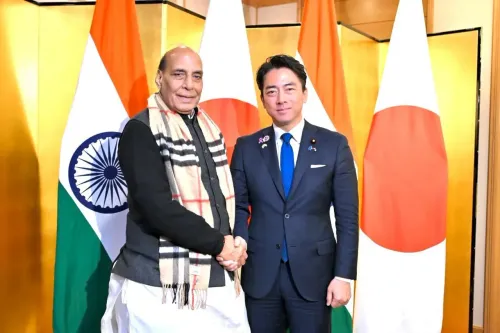
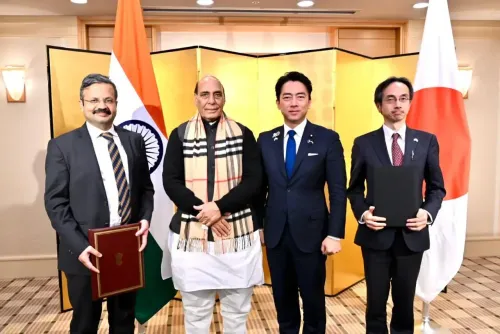
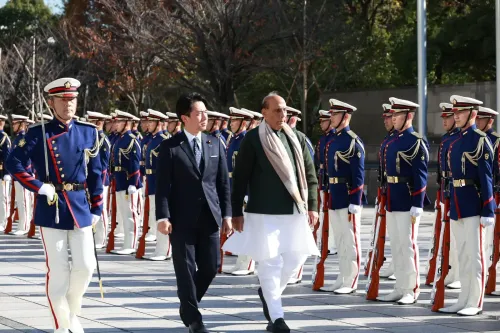
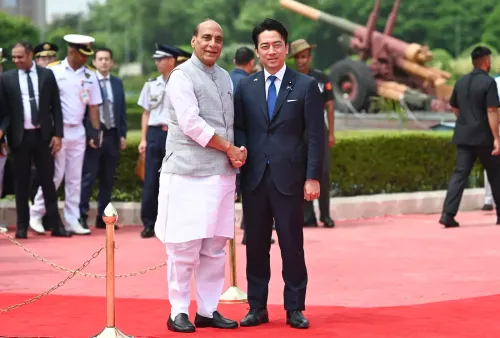
In Tokyo on Thursday, November 19, 2026, Union External Affairs Minister Dr. S. Jaishankar and Defence Minister Rajnath Singh sat across from their Japanese counterparts to sharpen one of Asia's most consequential strategic partnerships — and the agenda went well beyond pleasantries.
What the two sides put on the table in Tokyo
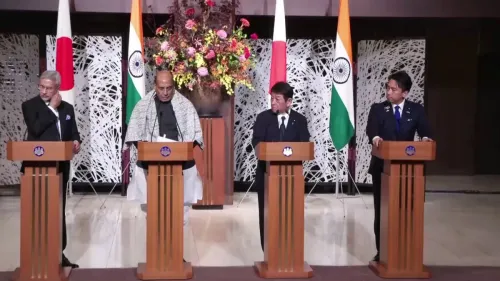
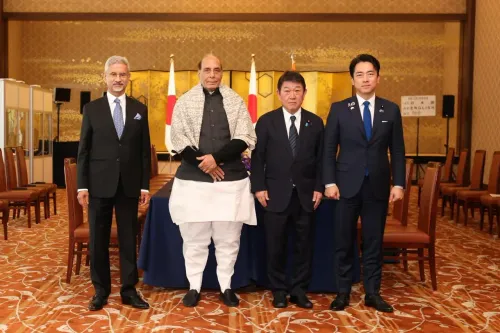
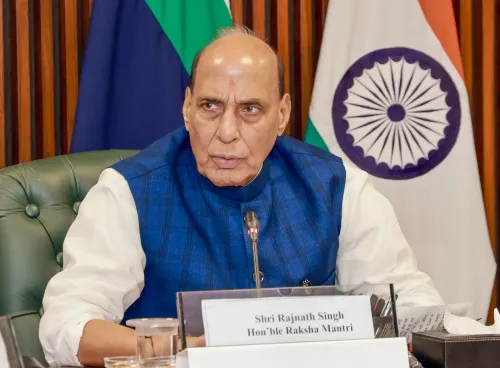
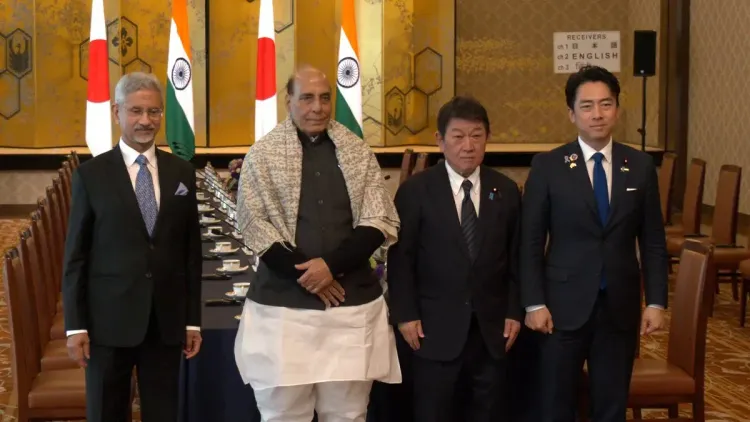
The meeting brought together Dr. Jaishankar, Raksha Mantri Rajnath Singh, Japanese Foreign Minister Taro Motegi, and Japanese Defence Minister Shinjiro Koizumi under the India-Japan 2+2 Foreign and Defence Ministerial Dialogue format. Jaishankar described it as 'productive,' and his post laid out three specific lines of work: greater strategic convergence and economic security; supply-chain resilience and countering 'weaponization' of connectivity; and deepening government-to-government, business-to-business, and people-to-people exchanges.
That word 'weaponization' is doing real work. It is diplomatic shorthand for the growing use of trade, technology access, and infrastructure links as instruments of coercion — a concern that sits at the centre of both India's and Japan's foreign-policy calculus right now. By naming it explicitly, both sides signalled a shared threat perception without pointing fingers publicly.
A mechanism built to endure — and what it has produced
The 2+2 Dialogue format was first launched between India and Japan in New Delhi in 2019, making today's session part of a regular rhythm rather than a one-off. The two countries had already elevated their relationship to a Special Strategic and Global Partnership during the 2014 summit, and have since coordinated inside the Quad framework — alongside the United States and Australia — on Indo-Pacific security and maritime rules.
That architecture matters: the 2+2 is not just a talking shop. It has historically preceded agreements on logistics, defence technology transfers, and critical-supply-chain cooperation. With both governments now focused on diversifying supply chains away from single points of vulnerability, the Tokyo dialogue feeds directly into industrial and economic-security decisions back home.
The 'multipolar Asia' framing — and why it signals something bigger
Jaishankar closed his post with language that is worth pausing on: 'a free and open Indo-Pacific, as well as a multipolar Asia and a multipolar world.' The pairing of 'multipolar Asia' with 'multipolar world' in an India-Japan joint readout is a deliberate signal — it pushes back against any single power's dominance of the region while framing the India-Japan axis as a constructive pole in its own right.
India's Act East Policy and Japan's Free and Open Indo-Pacific strategy have long overlapped on paper. What Tokyo 2026 suggests is that the two countries are increasingly translating that overlap into concrete, interlocking commitments — on supply chains, on maritime security, and on the rules that govern both. Watch the annual India-Japan summit and any follow-on agreements on defence technology or critical minerals for the next chapter.
Point of View
Mirroring Japan's own anxieties about supply-chain dependence. The 'multipolar Asia' formulation, delivered jointly in Tokyo, is a signal to the region that this axis sees itself as a stabilising counterweight — not merely a bilateral arrangement but a building block of a broader regional order. The real test will be whether the commitments made in ministerial dialogue rooms translate into durable industrial and defence agreements before geopolitical windows narrow.
NationPress
19 Nov 2026
Frequently Asked Questions
What is the India-Japan 2+2 Dialogue?
The India-Japan 2+2 Foreign and Defence Ministerial Dialogue is a recurring strategic mechanism that brings together the foreign and defence ministers of both countries to discuss security, defence, and economic cooperation. It was first held in New Delhi in 2019.
Who attended the India-Japan 2+2 Dialogue in Tokyo in November 2026?
India was represented by External Affairs Minister Dr. S. Jaishankar and Defence Minister Rajnath Singh. Japan was represented by Foreign Minister Taro Motegi and Defence Minister Shinjiro Koizumi.
What did India and Japan discuss at the Tokyo 2+2 meeting?
The two sides discussed greater strategic convergence and economic security, supply-chain resilience and countering the weaponization of connectivity, and expanding linkages between governments, businesses, and people.
What is meant by 'weaponization of connectivity' in India-Japan talks?
It refers to the use of trade, technology access, and infrastructure links as tools of economic coercion by powerful states — a shared concern for both India and Japan that shapes their joint approach to supply-chain security and regional order.
What is the India-Japan Special Strategic and Global Partnership?
It is the highest tier of diplomatic relationship between India and Japan, established during the 2014 bilateral summit. It underpins cooperation on defence, economic security, technology, and the broader Indo-Pacific framework including the Quad.