Rajnath Singh, Koizumi hold bilateral talks at 4th India-Japan 2+2 Dialogue in Tokyo
Synopsis
India and Japan used their fourth 2+2 Ministerial Dialogue in Tokyo to sharpen the Indo-Pacific security architecture — affirming opposition to unilateral force, aligning their FOIP, IPOI and MAHASAGAR frameworks, and signalling closer coordination as Japan prepares to revise its own National Security Strategy. The meeting underscores how rapidly the India-Japan strategic partnership is evolving beyond routine diplomacy.
Key Takeaways
Defence Minister Rajnath Singh and EAM S.
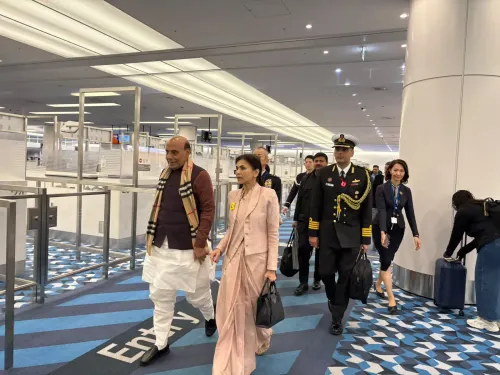
Jaishankar participated in the 4th India-Japan 2+2 Ministerial Dialogue in Tokyo on 19 November 2026 .
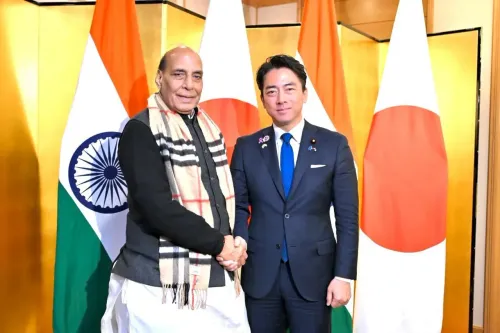
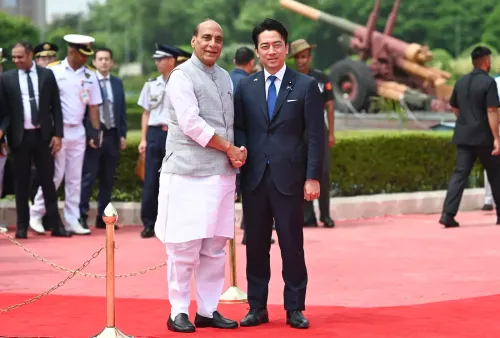
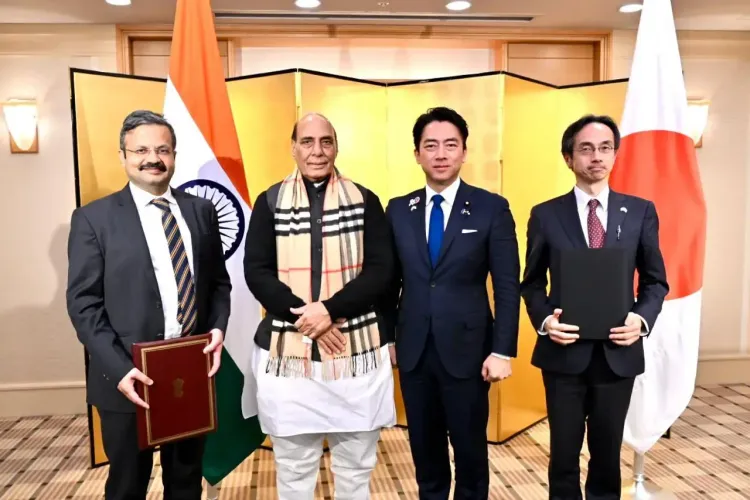
Singh held a bilateral meeting with Japanese Defence Minister Shinjiro Koizumi , covering defence cooperation, maritime security, and technology collaboration.
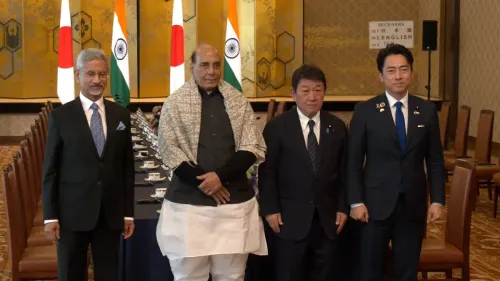
All four ministers — Singh, Jaishankar, Koizumi, and Foreign Minister Toshimitsu Motegi — met for approximately 90 minutes .
India and Japan affirmed opposition to 'unilateral attempts to change the status quo by force or coercion' in the Indo-Pacific.
Japan's Updated FOIP and India's IPOI and MAHASAGAR frameworks were recognised as sharing a common Indo-Pacific vision, with Quad cooperation central to implementation.
Japan signalled intent to revise three security documents, including its National Security Strategy , with both sides pledging close communication.
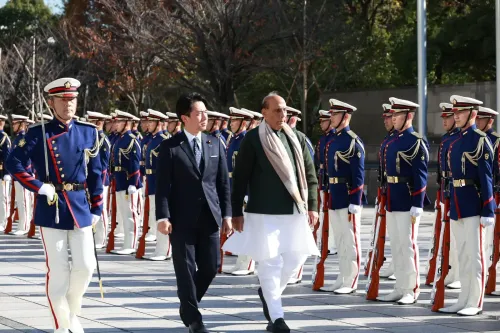
Defence Minister Rajnath Singh met his Japanese counterpart Shinjiro Koizumi on the sidelines of the fourth India-Japan 2+2 Ministerial Dialogue in Tokyo on Thursday, 19 November, with both sides reviewing expanding defence cooperation, maritime security, and technology collaboration aimed at securing a free, open, and rules-based Indo-Pacific.
What Was Discussed at the Bilateral Meeting
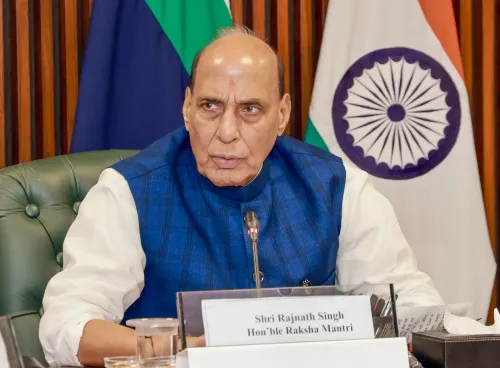
Singh described the encounter as productive, posting on X after the meeting: 'Had fruitful bilateral discussions with Japan's Defence Minister Shinjiro Koizumi on the sidelines of the 4th India-Japan 2+2 Ministerial Dialogue in Tokyo today. We reviewed our growing defence cooperation, maritime security, and tech collaboration to ensure a free, open, and rules-based Indo-Pacific.'
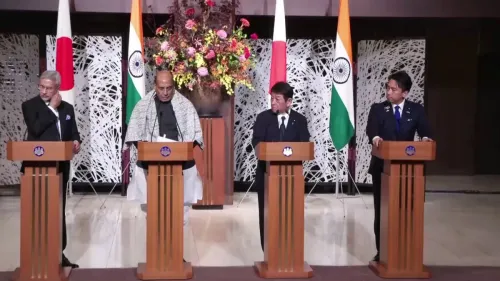
The 2+2 format brought together four senior ministers — Rajnath Singh and External Affairs Minister S. Jaishankar from India, alongside Koizumi and Japanese Foreign Minister Toshimitsu Motegi — for a session that lasted approximately 90 minutes, according to Japan's Ministry of Foreign Affairs.
Free and Open Indo-Pacific: A Shared Framework
The dialogue focused on cooperation toward realising a Free and Open Indo-Pacific (FOIP), along with bilateral security and defence matters, and broader regional and global issues. A statement issued by Tokyo confirmed that the ministers 'concurred to continue to work closely together.'
The joint statement noted that Japan's Updated FOIP — announced in May — and India's Indo-Pacific Oceans Initiative (IPOI) and MAHASAGAR framework share a common vision of building a resilient and prosperous Indo-Pacific. The ministers agreed to work alongside allies and like-minded countries, including through the Quad, to translate this shared vision into tangible outcomes.
Motegi emphasised that Japan and India should serve as 'an anchor for regional stability' in the Indo-Pacific, particularly amid what he described as an increasingly uncertain international security environment.
Opposition to Unilateral Force and Maritime Order
In a pointed signal, the ministers collectively affirmed their opposition to 'unilateral attempts to change the status quo by force or coercion in the Indo-Pacific region.' They agreed to further strengthen bilateral cooperation to maintain the maritime order, including ensuring the stability of sea lanes of communication (SLOCs) — a priority with direct implications for trade routes running through the South China Sea and the Indian Ocean.
The joint statement also noted that Japan and India, as 'Special Strategic and Global Partners', share a 'common responsibility to uphold a free and open international order based on the rule of law,' particularly given what both governments characterised as 'an increasingly severe international security environment.'
Japan's Security Policy Revision on the Table
Notably, Motegi and Koizumi communicated Japan's intention to revise three security-linked documents, including the National Security Strategy. Both sides agreed to maintain close communication on their respective security and defence policies as that revision process unfolds. This signals that the India-Japan security partnership is evolving in step with Japan's own recalibration of its defence posture — a significant shift for a country historically constrained by its pacifist constitution.
What Comes Next
This is the fourth iteration of the India-Japan 2+2 format since it was established, reflecting deepening institutional ties between the two democracies. With Japan accelerating its security policy overhaul and India expanding its Indo-Pacific engagement, both governments are expected to follow up the Tokyo dialogue with specific cooperation initiatives under the Quad and bilateral defence frameworks in the coming months.
Point of View
IPOI, and MAHASAGAR into a single cooperative vision is structurally significant, but the real test is whether it produces joint operational outcomes rather than parallel frameworks with overlapping branding. Japan's decision to revise its National Security Strategy adds urgency: India will need to decide how far it wants to synchronise its own posture with a rearming Japan without triggering the same friction it navigates with China. The Quad provides cover, but bilateral depth will ultimately define the partnership's credibility.
NationPress
19 Nov 2026
Frequently Asked Questions
What is the India-Japan 2+2 Ministerial Dialogue?
The India-Japan 2+2 Ministerial Dialogue is a high-level security forum that brings together the defence and foreign ministers of both countries to discuss strategic, defence, and regional issues. The 19 November 2026 session in Tokyo was the fourth such meeting, lasting approximately 90 minutes.
What did Rajnath Singh and Koizumi discuss at the bilateral meeting?
Defence Minister Rajnath Singh and Japanese Defence Minister Shinjiro Koizumi reviewed growing bilateral defence cooperation, maritime security, and technology collaboration aimed at ensuring a free, open, and rules-based Indo-Pacific, as Singh stated in a post on X after the meeting.
What is the significance of FOIP, IPOI, and MAHASAGAR alignment?
Japan's Updated Free and Open Indo-Pacific (FOIP) framework, India's Indo-Pacific Oceans Initiative (IPOI), and India's MAHASAGAR initiative were recognised as sharing a common vision for a resilient and prosperous Indo-Pacific. The ministers agreed to pursue this shared vision together, including through the Quad.
What did the ministers say about the use of force in the Indo-Pacific?
The ministers jointly affirmed opposition to unilateral attempts to change the status quo by force or coercion in the Indo-Pacific, and agreed to strengthen cooperation to maintain maritime order and ensure the stability of sea lanes of communication (SLOCs).
What is Japan planning with its National Security Strategy?
Japanese Foreign Minister Toshimitsu Motegi and Defence Minister Koizumi communicated Japan's intention to revise three security-linked documents, including the National Security Strategy. India and Japan agreed to maintain close communication as this revision process unfolds.