Sonowal backs Modi's 20-Year Investment Mantra for India Inc.
Synopsis
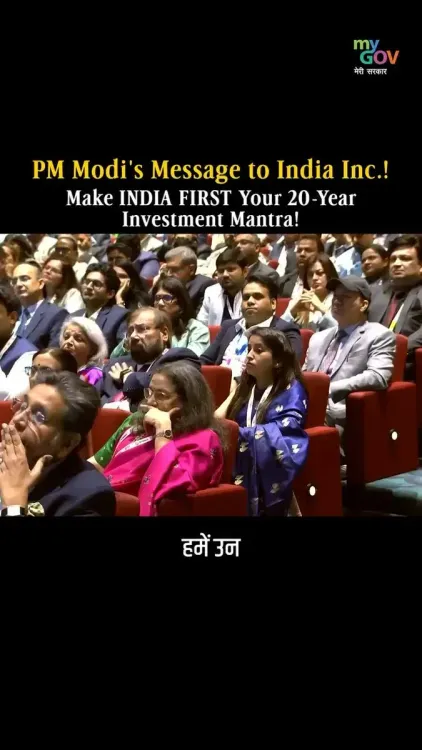
Union Minister Sarbananda Sonowal has shared PM Narendra Modi's message urging India Inc. to adopt a 20-year 'India First' investment philosophy, extending the government's multi-year push to align private capital with national manufacturing and self-reliance goals.
Key Takeaways
PM Modi has called on India Inc. to adopt 'Make India First' as a 20-year investment mantra .
Union Minister Sarbananda Sonowal amplified the message on 19 November 2026 , signalling Cabinet-level alignment.
The appeal builds on Make in India (launched September 2014 ) and Atmanirbhar Bharat (announced May 2020 ).
The ports and waterways sector , under Sonowal, is a key logistics multiplier for any sustained private investment push.
Industry bodies and investors are expected to watch the next Union Budget for concrete incentives backing the long-horizon call.
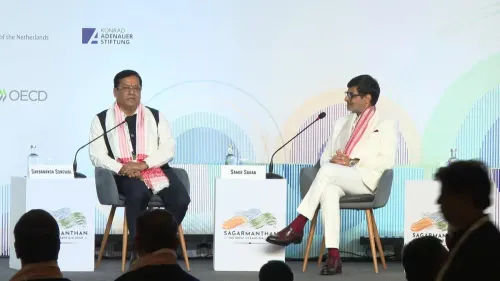
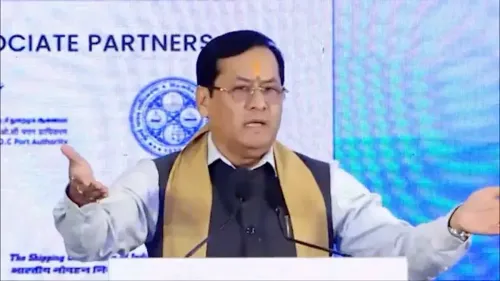
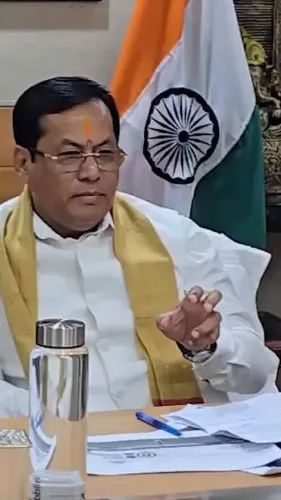
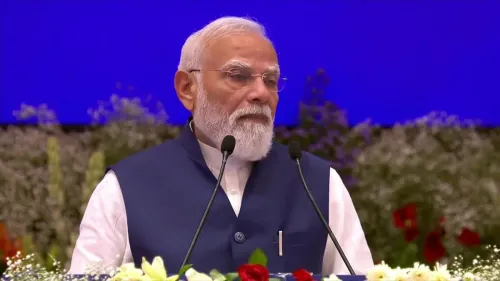
India's private sector has a new long-horizon call to action — and it comes straight from the top. Union Minister of Ports, Shipping and Waterways Sarbananda Sonowal on Thursday, 19 November 2026 amplified Prime Minister Narendra Modi's message to corporate India: make 'India First' your 20-year investment mantra.
A 20-year horizon — why that number matters
The framing is deliberate. A two-decade investment thesis is not a budget cycle or an election pitch — it is the language of infrastructure, of manufacturing ecosystems, of supply-chain anchoring. By urging India Inc. to plant that flag for 20 years, the Prime Minister is essentially asking boardrooms to bet on India the way they once bet on China in the 1990s. Sonowal's amplification of this message signals the Cabinet's unified push to align private capital with long-term national goals.
From Make in India to Atmanirbhar — the policy runway behind the mantra
The appeal does not arrive in a vacuum. Make in India, launched in September 2014, opened the first chapter — an invitation to manufacturers worldwide to set up in India. Atmanirbhar Bharat, announced in May 2020, deepened the ask: not just manufacture here, but build resilient, self-reliant supply chains. The '20-Year Investment Mantra' reads as the latest, most ambitious chapter — moving the conversation from schemes and incentives to civilisational economic confidence.
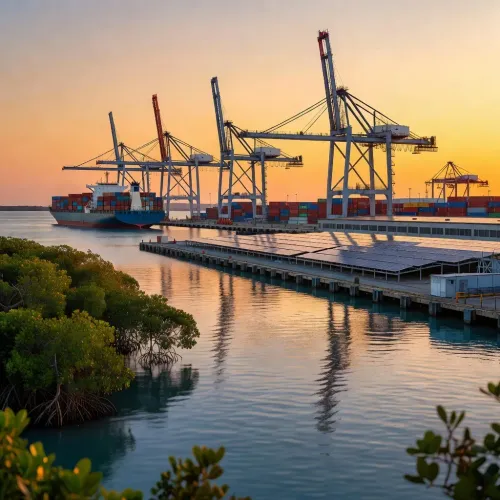
For Sonowal, who oversees the ports and waterways sector — a critical artery for trade and logistics — the message carries particular weight. India's maritime infrastructure is a direct multiplier for any long-term investment commitment, connecting factory floors to global markets.
What India Inc. is being asked to do
The call is to domestic industry as much as foreign capital. Indian conglomerates, mid-cap manufacturers, and emerging startups are all being asked to anchor their capex plans, R&D cycles, and supply-chain decisions around an India-first logic — not quarter by quarter, but across a full generation of business. Global supply-chain realignments, accelerated by post-pandemic disruptions and geopolitical shifts, have already nudged many multinationals toward India. This message pushes Indian firms to seize that moment from the inside.
Industry bodies and investors will now be watching the next Union Budget and upcoming economic policy statements for the tangible incentives — tax structures, production-linked schemes, infrastructure outlays — that give the mantra its financial backbone.
Twenty years is a long bet. But if the runway matches the rhetoric, India's economic story is only in its opening chapters.
Point of View
The BJP is signalling that this is not a campaign slogan but a governing philosophy heading into a critical economic period. The ask aligns with global supply-chain realignments that have already made India a credible manufacturing alternative, but the durability of that confidence will depend on whether the next budget cycle delivers structural incentives to match the ambition.
NationPress
19 Nov 2026
Frequently Asked Questions
What is PM Modi's 20-year investment mantra for India Inc.?
PM Modi has urged India's private sector to adopt 'Make India First' as a 20-year investment philosophy — anchoring capital allocation, supply chains, and business strategy around India's long-term growth potential rather than short-term cycles.
Who is Sarbananda Sonowal and why did he share this message?
Sarbananda Sonowal is the Union Minister of Ports, Shipping and Waterways and a senior BJP leader. As the minister overseeing India's maritime trade infrastructure, he amplified PM Modi's investment message to reinforce the government's unified push for long-term private sector commitment.
How does this relate to Make in India and Atmanirbhar Bharat?
The 20-year mantra is the latest evolution of a policy arc that began with Make in India in September 2014 and deepened with Atmanirbhar Bharat in May 2020 — each stage raising the ambition from attracting investment to building self-reliant, resilient economic ecosystems.
What should India Inc. expect next — budget or policy follow-up?
Industry bodies and investors are closely watching the upcoming Union Budget and economic policy statements for concrete measures — such as production-linked incentives, infrastructure outlays, and tax structures — that would give the 20-year mantra tangible financial backing.
Why is the ports and waterways ministry relevant to India's investment story?
India's ports and inland waterways are the logistical backbone connecting domestic manufacturing to global markets. The sector's development directly multiplies the returns on long-term private investment in manufacturing and supply chains.