Tejashwi Yadav flags Bihar constitutional crisis over MLA disqualification delay

Synopsis
RJD leader Tejashwi Yadav has alleged a 'grave constitutional crisis' in Bihar, citing the state assembly's refusal to disqualify convicted Sahebganj MLA Raju Singh, the defection of two independent MLCs to the BJP without action, and Minister Ashok Chaudhary holding three simultaneous offices despite the Raj Bhavan's formal objection.
Key Takeaways
Tejashwi Yadav alleged on 19 November 2026 that Bihar is facing a 'grave constitutional crisis' under the BJP government.
Sahebganj MLA Raju Singh has been convicted by a lower court and the Delhi High Court , yet the Bihar Assembly has not cancelled his membership; Singh has now approached the Supreme Court .
Yadav drew a pointed comparison with Azam Khan , whose UP Assembly membership was cancelled within one hour of conviction by the Speaker.
Two independent MLCs who joined the BJP have not faced action under the Anti-Defection Law (Tenth Schedule, 52nd Amendment 1985), Yadav alleged.
Minister Ashok Chaudhary is accused of holding benefits from three simultaneous offices ; the Raj Bhavan has formally registered its objection.
The disputes are now moving toward both the Supreme Court and the constitutional oversight of the Bihar Governor.
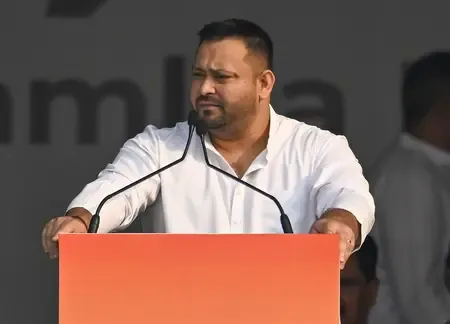
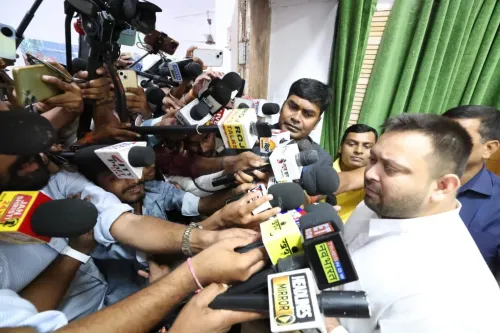
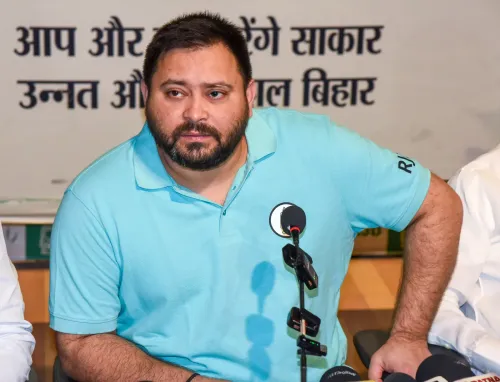
A convicted MLA still holds his seat months after courts ruled against him — and RJD leader Tejashwi Yadav is demanding to know why the Bihar Legislative Assembly has not acted. In a sharp post on X on 19 November 2026, the Leader of the Opposition in the Bihar Assembly accused the BJP government of manufacturing a 'constitutional crisis' by shielding one of its own while constitutional institutions are held 'hostage.'
Posting in Hindi, Yadav wrote: 'Bihar mein gambhir Constitutional Crisis hai isliye anarchic stithi utpann ho chuki hai' — 'There is a grave constitutional crisis in Bihar and an anarchic situation has already emerged.' The trigger, he said, is the case of Sahebganj MLA Raju Singh, who has been convicted and sentenced by both a lower court and the Delhi High Court, yet whose legislative membership the Bihar Assembly has not revoked. Singh has now moved the Supreme Court of India.The Raju Singh case: months of inaction, then a Supreme Court appeal
Under Indian law, a sitting legislator convicted of a criminal offence and sentenced to two or more years in prison stands disqualified from the moment of conviction under the Representation of the People Act. Yet Yadav alleges the Bihar Assembly gave Raju Singh 'months' without cancelling his membership — a grace period he says would never be extended to an opposition member.
To sharpen the contrast, he invoked the case of Samajwadi Party leader Azam Khan and his son, whose memberships were cancelled by the Uttar Pradesh Assembly Speaker within one hour of their conviction. That comparison — a BJP-ruled assembly acting in sixty minutes against an opposition figure, while the Bihar assembly has stalled for months on a ruling-alliance MLA — is the core of Yadav's indictment.
Two independent MLCs, a minister with three hats, and the Raj Bhavan's objection
Yadav's broadside did not stop at Raju Singh. He pointed to two independent MLCs who recently joined the BJP, arguing their memberships should have been cancelled immediately under the Anti-Defection Law — the Tenth Schedule of the Constitution, inserted by the 52nd Amendment Act of 1985 to prevent party switching by elected members.
He also named Minister Ashok Chaudhary, alleging Chaudhary is simultaneously drawing benefits from three offices — a practice widely considered constitutionally impermissible. Significantly, Yadav noted that even the Raj Bhavan (Bihar Governor's office) has formally registered its objection to Chaudhary's multiple positions, lending institutional weight to what might otherwise be dismissed as partisan opposition noise. 'Andher nagari chaupat raja' — 'a kingdom of darkness, a reckless ruler' — was Yadav's summary of the Bihar government's response to these irregularities.
A pattern bigger than Bihar
Opposition leaders across Indian states have long alleged that anti-defection and disqualification provisions are applied swiftly against their members and slowly — or not at all — against those aligned with ruling parties. Bihar's assembly speaker decisions on membership, and the Bihar Governor's periodic friction with the state cabinet, have both featured in earlier constitutional disputes. Judicial oversight of legislative disqualifications, stretching back to high court and Supreme Court rulings since the 1990s, has repeatedly been the last recourse for opposition parties unable to move speakers into action.
With Raju Singh's appeal now before the Supreme Court, and the Governor already on record over Chaudhary's portfolios, Bihar's governance disputes are heading simultaneously toward India's highest judicial and constitutional oversight bodies. Whether the apex court fast-tracks the disqualification question — or whether the assembly acts first to pre-empt it — will define the next chapter of this standoff.
Point of View
Lending cross-institutional credibility to the opposition's charge. The Raju Singh case, now before the Supreme Court, could force the Bihar Assembly Speaker's hand through judicial direction, potentially setting a precedent that constrains speaker discretion across states. At a broader level, the selective and sluggish application of anti-defection and disqualification provisions has become a recurring fault line in Indian federalism, and Bihar is now its sharpest current flashpoint.
NationPress
19 Nov 2026
Frequently Asked Questions
Why has Bihar Assembly not cancelled Raju Singh's MLA membership after his conviction?
Tejashwi Yadav alleges the Bihar BJP government deliberately delayed action to protect the Sahebganj MLA, who has been convicted by both a lower court and the Delhi High Court. Raju Singh has since moved the Supreme Court. The specific procedural reasons given by the assembly have not been publicly stated.
What is the Anti-Defection Law and does it apply to the two MLCs who joined BJP?
The Anti-Defection Law is the Tenth Schedule of the Constitution, added by the 52nd Amendment Act in 1985. It disqualifies legislators who voluntarily give up party membership or vote against party directions. Tejashwi Yadav argues that two independent MLCs who joined the BJP should have been disqualified immediately under this provision.
What did Tejashwi Yadav say about Azam Khan's disqualification?
Yadav cited the case of Samajwadi Party leader Azam Khan and his son, whose memberships were cancelled by the Uttar Pradesh Assembly Speaker within one hour of their conviction — contrasting that speed with the months of inaction in Bihar's ruling-alliance MLA case.
What are the allegations against Bihar minister Ashok Chaudhary?
Tejashwi Yadav has alleged that Minister Ashok Chaudhary is drawing benefits from three simultaneous offices, which is constitutionally impermissible. He noted that even the Raj Bhavan — the Bihar Governor's office — has formally registered an objection to this arrangement.
What happens next in the Raju Singh disqualification case?
Raju Singh has filed an appeal before the Supreme Court of India. The apex court's proceedings on the matter, and any formal response from the Bihar Governor on Minister Ashok Chaudhary's multiple positions, are the key developments to watch.