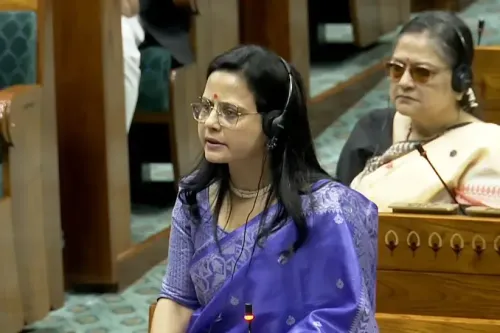
Mahua Moitra blasts Lok Sabha Speaker over privilege notice silence

Synopsis
TMC MP Mahua Moitra has publicly accused Lok Sabha Speaker Om Birla of ignoring two formal Notices of Privilege she filed in July and August 2026 after an attack on her — and of failing to respond even after nine opposition parties wrote to him jointly.
Key Takeaways
Mahua Moitra filed a Notice of Privilege in July 2026 and again in August 2026 , both linked to a reported attack on her.
Nine opposition parties collectively wrote to Lok Sabha Speaker Om Birla in support — and received no reply.
Moitra says the Speaker has 'done NOTHING' for her protection and publicly called him 'a disgrace to your chair'.
Under Lok Sabha rules, the Speaker is obligated to examine a Privilege Notice and either admit it or rule on it — not ignore it.
The incident reflects a broader pattern of opposition complaints about the Speaker's office being unresponsive to procedural motions from non-ruling-bench MPs.
Any formal reply from the Speaker's office or tabling of the notice in the next session will be a key development to watch.
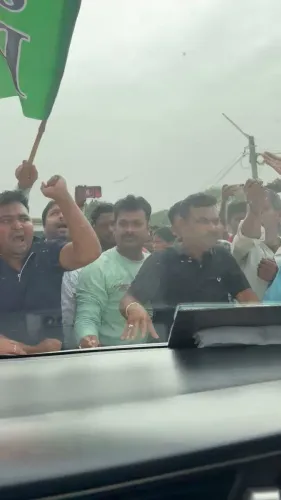
A sitting MP says she was physically attacked, filed two formal privilege notices with the Lok Sabha Speaker — and received nothing in return. Not a reply. Not an acknowledgement. Not a step toward protection. TMC MP Mahua Moitra went public on Thursday, 19 November 2026, with a blistering indictment of Lok Sabha Speaker Om Birla, accusing him of dereliction of his most basic constitutional duty toward an elected member of the House.
Two notices filed, nine parties wrote in — and total silence from the Chair
Moitra's post lays out a precise timeline. She filed a Notice of Privilege in July, then filed a second one in August — both triggered, she says, by a physical attack on her. The notices are a formal parliamentary mechanism under Lok Sabha rules that compel the Speaker to examine whether a member's rights and immunities have been breached. Nine opposition parties collectively wrote to Speaker Om Birla in support, adding institutional weight to what began as a personal security concern.
The Speaker did not reply to any of them. That silence, in Moitra's framing, is not a procedural delay — it is a deliberate act of abdication. 'You have done NOTHING for my protection,' she wrote, addressing Birla directly. 'You are a disgrace to your chair.'
What a privilege notice actually demands — and why the Speaker's inaction matters
Under Lok Sabha procedural rules, a Notice of Privilege is not a suggestion. It is a formal petition to the Speaker, who is constitutionally obligated to examine it and either admit it for consideration by the Privileges Committee or rule on it. The mechanism has been used by opposition MPs across multiple Lok Sabha terms to seek redress for threats, contempt, and personal safety failures. It exists precisely because MPs operate in an environment where their independence — and sometimes their physical safety — is at stake.
When a Speaker sits on two notices filed months apart, with a multi-party letter piling up alongside them, it does more than leave one MP unprotected. It signals, to every opposition member, that the Chair's protective role is conditional — and that signal has consequences for the House as an institution.
A pattern bigger than one MP
Moitra has been one of the more procedurally aggressive opposition voices in the Lok Sabha, and her clashes with the Chair are not new. But this accusation cuts deeper than a partisan skirmish. The complaint is structural: that the Speaker's office has become unresponsive to opposition MPs on matters of personal security. Nine parties lending their signatures to a letter is a rare show of cross-bench solidarity — and the fact that it was met with no reply at all will likely harden opposition resolve heading into the next session.
The question now is whether Speaker Birla's office responds — formally, in writing, in the House — or whether the silence holds. Every day it holds, Moitra's charge that the chair has become a disgrace to itself grows harder to dismiss.
Point of View
Regardless of party, is non-negotiable. The fact that nine opposition parties co-signed a letter and still got no response suggests this is no longer one MP's complaint — it is a collective opposition indictment of how the Speaker exercises his gatekeeping role over parliamentary privilege. The silence from the Chair's office will now be weaponised as evidence of partisan asymmetry in Lok Sabha proceedings, sharpening the already brittle relationship between the ruling dispensation and an emboldened opposition bloc ahead of the next session.
NationPress
19 Nov 2026
Frequently Asked Questions
What is a Notice of Privilege in the Lok Sabha?
A Notice of Privilege is a formal petition filed by an MP with the Lok Sabha Speaker alleging that their parliamentary rights or personal immunity have been breached. The Speaker is obligated to examine it and decide whether to admit it for the Privileges Committee or rule on it.
Why did Mahua Moitra file a privilege notice against the Lok Sabha Speaker?
Moitra says she filed two Notices of Privilege — in July and August 2026 — after she was attacked, seeking formal protection and action from Speaker Om Birla. She alleges the Speaker did not reply to either notice or to a joint letter from nine opposition parties.
Who is Om Birla and what is the Lok Sabha Speaker's role?
Om Birla has served as Lok Sabha Speaker since 2019. The Speaker presides over the lower house of Parliament, rules on notices of privilege, maintains order, and is constitutionally required to protect the rights and safety of all elected members.
Which opposition parties wrote to the Lok Sabha Speaker in support of Mahua Moitra?
Moitra's post states that nine opposition parties collectively wrote to Speaker Om Birla. The specific parties named in that letter have not been individually identified in this post.
What can happen if a Lok Sabha Speaker ignores a privilege notice?
If the Speaker does not act on a formally filed privilege notice, the MP can escalate through parliamentary rules, raise the matter during session, or — as Moitra has done — take the dispute to the public domain, increasing political and institutional pressure on the Chair.