Shekhawat Outlines India's Tourism Transformation Drive

Synopsis
Union Tourism Minister Gajendra Singh Shekhawat details India's decade-long infrastructure push — airports doubled, highways expanded, 170 projects completed — and previews a National Digital Tourism Stack and 50 world-class destination developments ahead.
Key Takeaways
India's airport count has grown from 74 to 165 over the past decade, more than doubling air-access for tourists.
National highways have expanded from 91,000 km to 1.47 lakh km ; expressways from 93 km to over 3,000 km .
170 tourism infrastructure projects have been completed under central schemes including Swadesh Darshan.
The government plans to develop 50 globally competitive tourism destinations as the next phase of investment.
A National Digital Tourism Stack is in the pipeline to unify services, data, and international promotion.
The #IncredibleIndia campaign is being backed by expanded digital outreach to convert global interest into arrivals.
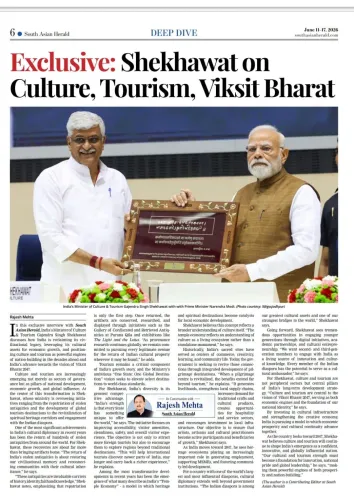
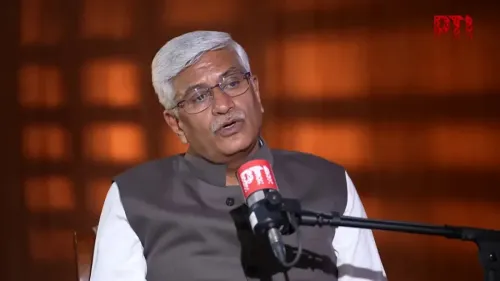
India's tourism infrastructure has undergone its most dramatic expansion in decades — and Union Culture and Tourism Minister Gajendra Singh Shekhawat wants the world to know the country is ready to receive the visitors that come with it. On Thursday, 19 November 2026, Shekhawat posted a detailed account on X of the strides made under Prime Minister Narendra Modi's government, framing the moment as a generational opportunity India is fully prepared to seize.
From 74 to 165: The airport story reshaping Indian travel
The headline numbers are striking. India's airport count has climbed from 74 to 165 over the past decade — more than doubling the country's air-access footprint, in large part through the UDAN regional connectivity scheme launched in 2016, which systematically brought underserved cities onto the national aviation map. The knock-on effect for tourism is direct: pilgrimage towns, heritage circuits, and hill stations that once demanded gruelling road journeys are now reachable by air.
The road story is just as consequential. National highways have expanded from 91,000 km to 1.47 lakh km, while expressways have surged from a mere 93 km to over 3,000 km — the spine of the Bharatmala Pariyojana programme that has been systematically stitching India's geography together since 2015. Railway modernisation and last-mile connectivity improvements complete the picture, making destinations that were technically on the map but practically unreachable far more viable for both domestic and international travellers.
170 projects done, 50 world-class destinations in the pipeline
Beyond the transport arteries, Shekhawat flagged that 170 tourism infrastructure projects have been completed under various central schemes, including the Swadesh Darshan programme — launched in 2014-15 — which funded theme-based tourism circuits ranging from Buddhist trails to coastal routes. These completed projects represent the physical layer of India's tourism ambition: better-managed sites, improved visitor facilities, and more coherent destination experiences.
Looking forward, the minister outlined a twin-track strategy. The first track is physical — the development of 50 globally competitive tourism destinations that would put Indian sites on par with the world's top draws. The second is digital — a National Digital Tourism Stack that would unify tourism services, integrate data, and power targeted international promotion. Together, they signal a shift from building access to building experience.
Why 'Incredible India' is being rebuilt for a new era
The #IncredibleIndia tag Shekhawat used is not merely branding nostalgia — it is the government's longest-running international tourism pitch, now being reloaded with serious digital infrastructure behind it. The ministry's push for 'strengthened international market outreach and digital promotion' reflects the global reality that destination choice is increasingly won or lost on social platforms, booking algorithms, and traveller review ecosystems before a visa is ever stamped.
The minister's framing — 'The world is looking towards India. We are working to ensure that India is ready to welcome it' — captures the government's bet that rising global curiosity about India, from its spiritual circuits to its natural landscapes, represents a tourism dividend that physical and digital investment can now convert into arrivals and economic contribution.
The critical test will come in budget allocations and rollout timelines for the 50-destination programme and the National Digital Tourism Stack. Infrastructure laid is potential; infrastructure activated is growth.
Point of View
Rails, and airports before you can sell the destination. The pivot to a National Digital Tourism Stack signals that the ministry recognises physical connectivity alone is no longer enough in an era where travellers research and book digitally before they ever arrive. The '50 globally competitive destinations' target is the most ambitious stated goal and will face close scrutiny: without clear timelines and budgetary backing in the next Union Budget, it risks becoming an aspirational headline rather than a deliverable. If the digital stack and destination programme are executed with the same momentum as Bharatmala and UDAN, India could meaningfully shift its share of global tourist arrivals — a metric the government has long cited as underperforming relative to India's heritage and scale.
NationPress
19 Nov 2026
Frequently Asked Questions
How many airports does India have now compared to 2014?
India's airport count has grown from 74 to 165 over the past decade, according to Union Tourism Minister Gajendra Singh Shekhawat, largely driven by the UDAN regional connectivity scheme.
What is the National Digital Tourism Stack?
The National Digital Tourism Stack is a planned government platform that will unify tourism services, integrate data, and power digital promotion of Indian destinations to international travellers.
How much have India's national highways expanded under the Modi government?
National highways have grown from 91,000 km to 1.47 lakh km , while expressways have expanded from just 93 km to over 3,000 km, according to Minister Shekhawat's post.
What is the Swadesh Darshan scheme?
The Swadesh Darshan scheme , launched in 2014-15, funds the development of theme-based tourism circuits across India, covering routes such as Buddhist heritage trails, coastal circuits, and tribal tourism paths.
What are India's upcoming tourism targets?
The government plans to develop 50 globally competitive tourism destinations and roll out the National Digital Tourism Stack, alongside strengthened international marketing, as the next phase of its tourism growth strategy.