Giriraj Singh fires back on EVM debate, tells Opposition to introspect
Synopsis
Union Textiles Minister Giriraj Singh hit back at opposition EVM complaints on 28 October 2026, saying voters have delivered zero scores whether elections use electronic machines or paper ballots, and urged opposition leaders to introspect on their 'directionless politics' instead.
Key Takeaways
Giriraj Singh posted a sharp Hindi-language riposte on 28 October 2026 targeting opposition parties over recurring EVM manipulation allegations.
He argued that the public delivers the same verdict — 'zero' — regardless of whether voting is done via EVM or paper ballot.
He called on the opposition to introspect on what he termed 'directionless politics' rather than blaming electoral machinery for losses.
EVMs were rolled out nationwide in 2004 ; the Supreme Court of India upheld their use in 2019 while mandating enhanced VVPAT verification.
The BJP has consistently used this framing after opposition parties — notably Congress — raised EVM concerns following defeats since 2014 .
With state elections due in 2026-27 , the EVM debate is expected to intensify and may prompt fresh parliamentary questions or petitions on electoral reforms.
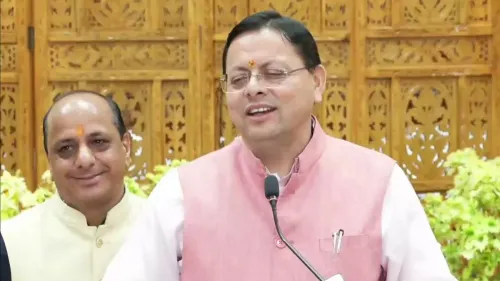
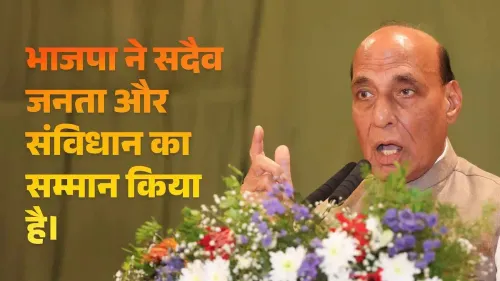
Every time votes are counted — whether on electronic machines or paper ballots — the result is the same: a duck. That is the blunt political arithmetic Union Textiles Minister Giriraj Singh threw at the Opposition on Wednesday, 28 October 2026, in a sharp post on X that cut straight to the heart of India's most recycled electoral argument.
Singh's post, written in Hindi, reads: 'EVM ho ya ballot, janta har chunaav mein aapko shunya par out kar rahi hai.' ('Be it EVM or ballot, the public is bowling you out for zero in every election.') He added that rather than blaming others for their own failures, the Opposition would do better to introspect on what he called their 'directionless politics.'
The EVM complaint — and why it keeps returning
The Electronic Voting Machine has been a fixture of Indian elections since its nationwide rollout in 2004, replacing paper ballots that were vulnerable to booth capturing and invalid votes. The Election Commission of India has consistently maintained that EVMs are tamper-proof, a position the Supreme Court of India reinforced in 2019 while also directing enhanced VVPAT slip verification to boost voter confidence.
Despite that legal and institutional consensus, the EVM-versus-ballot argument has resurfaced after almost every major election defeat since 2014 — primarily from opposition parties including the Indian National Congress. The pattern is familiar: a loss triggers doubt about the machine, which triggers a BJP counter-attack about the loser's politics, which triggers another news cycle. Singh's post fits squarely into that arc.
A recurring BJP riposte — with a cricketing sting
What makes Singh's formulation pointed is its deliberate symmetry: he concedes the hypothetical ('even if it were ballot paper') and still arrives at the same verdict. The cricketing metaphor — 'shunya par out' (out for zero) — lands hard in a country where a duck carries its own particular humiliation. It is not a defence of EVMs so much as a dismissal of the entire premise.
Senior BJP leaders have deployed similar language after multiple state assembly and general elections since 2014, framing opposition EVM complaints as a deflection from organisational weakness and ideological drift. Singh, a two-term MP from Begusarai, Bihar known for combative political communication, has been among the most consistent voices on this front.
What the exchange signals ahead of the electoral calendar
With a clutch of state assembly elections scheduled across 2026-27, the EVM debate is unlikely to go quiet. Fresh petitions and parliamentary questions on electoral reforms remain a live possibility as opposition parties look for hooks in the run-up to polling. The Election Commission's response — or silence — will itself become part of the story.
For now, Singh's message is unambiguous: fix the politics before blaming the machine. Whether the Opposition accepts the diagnosis or doubles down on the complaint will set the tenor of a debate India has been having, in some form, for over a decade.
Point of View
He neutralises the machine-blame argument without engaging its technical merits. The cricketing metaphor is calibrated for mass resonance, and its timing ahead of a busy state-election season suggests the BJP is pre-empting a grievance narrative before results are even declared. The exchange underscores a deepening pattern: opposition EVM complaints have become a predictable political reflex, and the BJP's equally predictable counter-attack has made the debate itself the story, diverting attention from any substantive electoral-reform conversation.
NationPress
28 Oct 2026
Frequently Asked Questions
What did Giriraj Singh say about EVMs on 28 October 2026?
Giriraj Singh said that whether elections use EVMs or paper ballots, the public has been consistently bowling the opposition out for zero, and urged them to introspect on their 'directionless politics' rather than blaming the machines.
Why do opposition parties in India keep questioning EVMs?
Opposition parties, particularly Congress, have periodically raised concerns about EVM reliability after major electoral defeats, alleging the possibility of tampering — claims the Election Commission and the Supreme Court of India have consistently rejected.
Are EVMs legal and tamper-proof in India?
Yes. The Supreme Court of India upheld EVM use in 2019 and earlier orders, while directing enhanced VVPAT slip verification. The Election Commission maintains EVMs are fully tamper-proof.
When were EVMs introduced in Indian elections?
EVMs were introduced in phases from 1998 and rolled out nationwide in 2004, replacing paper ballots to reduce booth capturing and counting of invalid votes.
Who is Giriraj Singh and which constituency does he represent?
Giriraj Singh is a senior BJP leader, Union Minister of Textiles in the central government, and a Lok Sabha MP from Begusarai, Bihar.