CM Saini Hails ₹10,000 Cr Aviation Price Stabilisation Fund
Synopsis
Haryana Chief Minister Nayab Singh Saini publicly backed the Union Cabinet's approval of a ₹10,000 crore Price Stabilization Fund for civil aviation, thanking Prime Minister Narendra Modi. He said the move would shield Indian airlines from international oil-price volatility and ensure smoother air services for passengers, framing it as a far-sighted, public-interest decision.
Key Takeaways
Haryana CM Nayab Singh Saini welcomed a ₹10,000 crore Price Stabilization Fund for aviation cleared by the Union Cabinet.
Saini credited PM Narendra Modi and said the fund will buffer airlines from global oil-price swings.
ATF typically makes up 30-40 percent of Indian airlines' operating costs.
The stabilisation-fund template was earlier used for pulses and onions from 2015.
Ministry of Civil Aviation guidelines on disbursement will determine the fund's real impact.
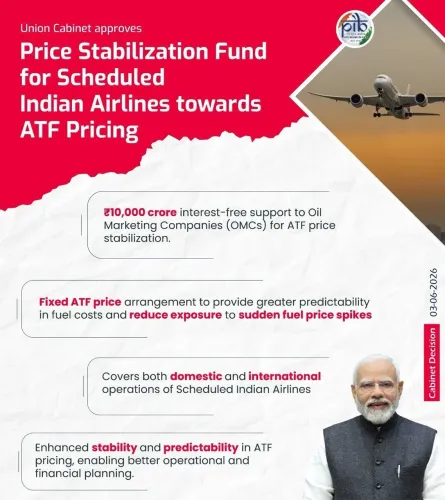
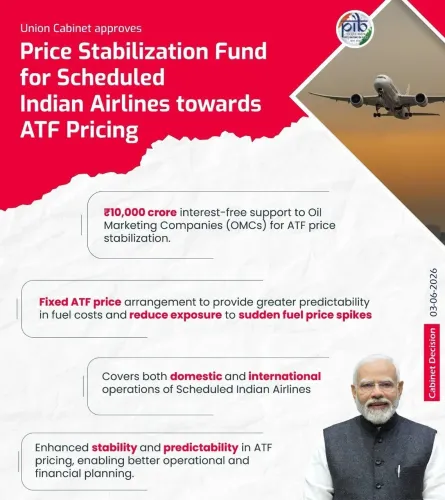
Haryana Chief Minister Nayab Singh Saini on Wednesday welcomed the Union Cabinet's clearance of a ₹10,000 crore 'Price Stabilization Fund' for the civil aviation sector, calling it a step that will cushion Indian carriers from global fuel-price shocks. In a post on X, the BJP leader credited Prime Minister Narendra Modi for the decision and said it would ensure smoother air services for passengers.
'Under the leadership of respected Prime Minister Shri Narendra Modi ji, the Union Cabinet has approved a ₹10,000 crore Price Stabilization Fund to provide stability to the aviation sector,' Saini wrote, adding that the measure would 'reduce the impact of fluctuations in international oil prices and bring relief to the country's airlines.' He thanked the Prime Minister for what he described as a 'doordarshi evam janhitkari nirnay' (a far-sighted and public-interest decision).
Context
The Cabinet's move, as flagged by Saini, is positioned as a buffer against volatility in international crude and aviation turbine fuel (ATF) markets. ATF accounts for roughly 30-40 percent of an Indian airline's operating costs, making global price swings a recurring stress point for carriers' balance sheets.
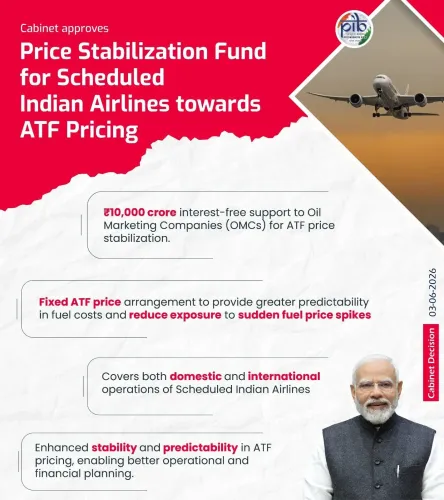
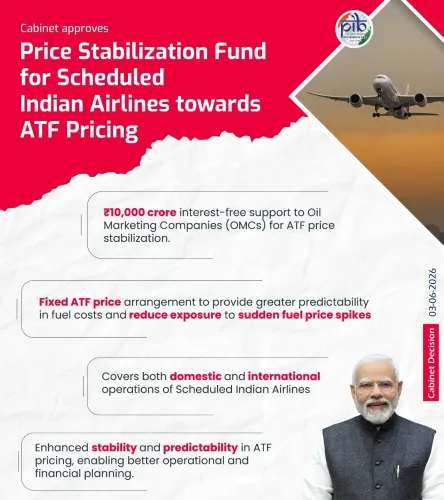
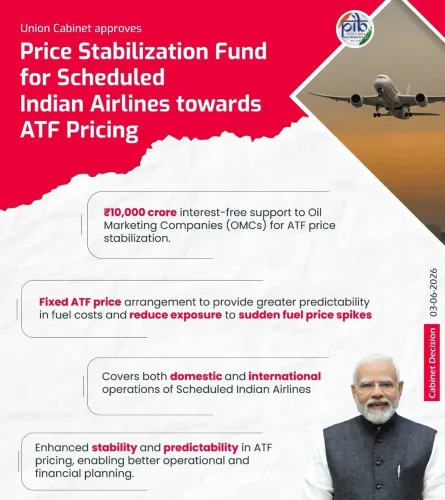
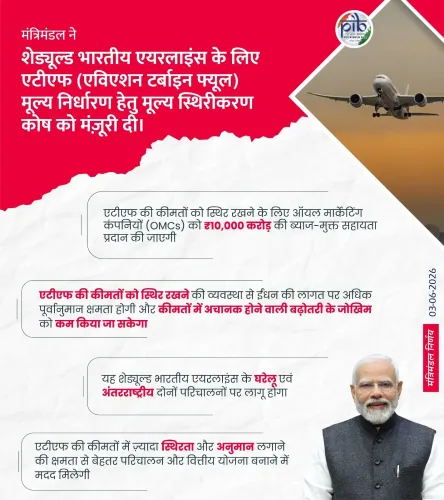
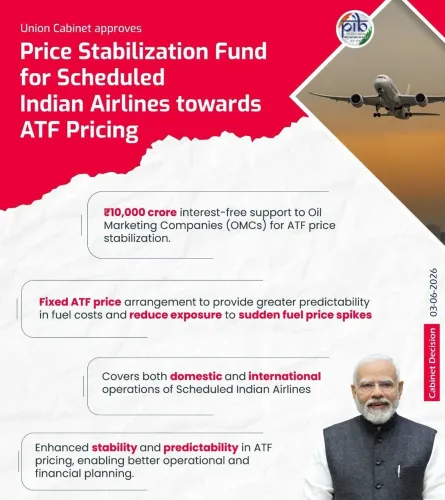
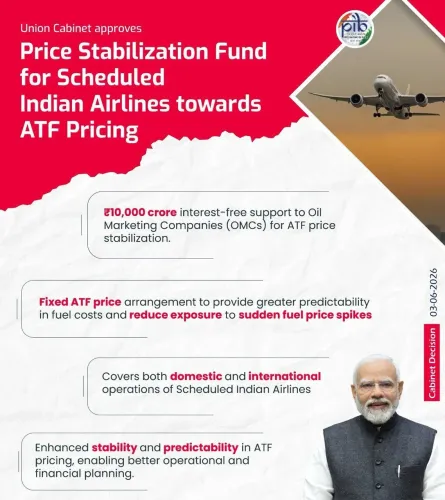
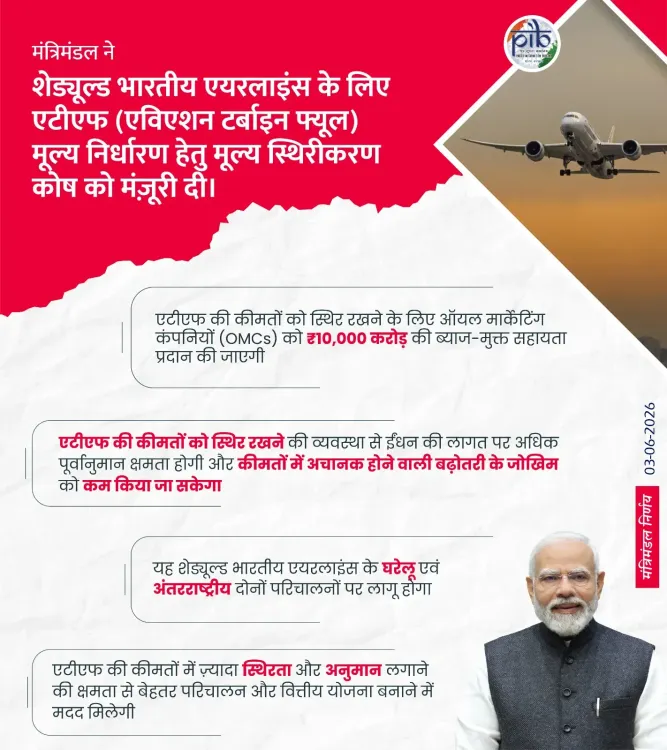
Saini's endorsement places a state Chief Minister squarely behind a central sectoral intervention, a familiar pattern for senior BJP figures amplifying Cabinet announcements from state capitals. His post was accompanied by a graphic referencing the decision under the hashtag #CabinetDecisions.
Policy backdrop
India has previously used stabilisation funds as a policy instrument in other sectors. A Price Stabilisation Fund for pulses and onions was operationalised in 2015 to manage agri-commodity shocks, and the template has now been extended, per Saini's post, to aviation fuel exposure.
The aviation sector itself has been the focus of a sustained policy push since the National Civil Aviation Policy 2016, followed by the regional connectivity scheme UDAN in 2017, which underwrote thinly served routes through viability gap funding. The latest fund continues a trajectory of central support aimed at keeping capacity expansion viable while shielding operators from external cost spikes.
Stakeholders and impact
The most direct beneficiaries, as outlined in the post, are domestic airlines — full-service and low-cost carriers alike — whose margins are tightly linked to ATF prices. A buffer mechanism could ease the pass-through of fuel costs to fares, particularly during periods of sharp global oil movement.
Saini argued that air passengers would also gain through 'smooth operation of air services.' Industry watchers will look closely at whether state governments revisit their own ATF value-added tax rates, which have historically varied widely across states and remain a significant component of jet fuel pricing in India.
What's next
Operational guidelines from the Ministry of Civil Aviation on how the corpus will be disbursed — whether through direct relief, a pooled hedging mechanism, or routed via oil marketing companies — will determine the fund's real-world impact. Eligibility criteria for carriers and triggers for activation are likely to be the next set of details to emerge.
For Saini, the post reinforces his alignment with the central leadership on big-ticket economic decisions, even as Haryana itself is not a primary aviation hub. The broader signal is of a continuing willingness in New Delhi to deploy targeted fiscal instruments to stabilise sectors exposed to global commodity cycles — a pattern that is likely to recur as oil-price uncertainty persists.
Point of View
A recurring feature of BJP messaging where state Chief Ministers reinforce Cabinet decisions from their own platforms. The substance — a sectoral price stabilisation fund — fits a long-running pattern of targeted central support for industries exposed to global commodity cycles, from agri-commodities in 2015 to aviation now. The real test will lie in the fine print: disbursement triggers, eligibility, and whether states align their ATF taxes. Politically, it lets Saini signal economic stewardship beyond Haryana's borders.
NationPress
17 Oct 2026
Frequently Asked Questions
What is the Price Stabilization Fund for aviation?
It is a ₹10,000 crore central fund cleared by the Union Cabinet to cushion Indian airlines from volatility in international aviation turbine fuel prices, as referenced by Haryana CM Nayab Singh Saini.
Why did Nayab Singh Saini thank PM Modi?
Saini thanked Prime Minister Narendra Modi for the Cabinet's approval of the ₹10,000 crore aviation Price Stabilization Fund, calling it a far-sighted and public-interest decision.
How will the aviation fund help passengers?
By reducing the impact of global oil-price swings on Indian airlines, the fund is expected to support smoother operations and steadier service for air travellers, according to Saini's post.
What share of airline costs is fuel in India?
Aviation turbine fuel typically accounts for 30-40 percent of an Indian airline's operating costs, which is why ATF price volatility is a persistent policy concern.
Has India used stabilisation funds before?
Yes. A Price Stabilisation Fund for pulses and onions was operationalised in 2015 to manage agri-commodity shocks, and a similar template has now been extended to aviation fuel exposure.