Amit Shah hails ₹9,585 cr Cabinet push to clean Delhi-NCR air
Synopsis
Union Home Minister Amit Shah said the Union Cabinet has approved ₹9,585 crore to phase out petrol and diesel commercial vehicles in Delhi-NCR, converting nearly 2 lakh trucks and 16,000 buses to BS-IV, electric and CNG fleets to cut air pollution and reduce petroleum import dependence.
Key Takeaways
Union Cabinet has approved ₹9,585 crore for cleaning Delhi-NCR's air, Amit Shah said on X.
Scheme covers nearly 2 lakh trucks and 16,000 buses currently running on petrol and diesel.
Vehicles will be phased into BS-IV , electric and CNG variants in stages.
Shah said the move will also cut India's petroleum import dependence.
Builds on the National Clean Air Programme (2019) and the Commission for Air Quality Management framework.
Implementation timelines and tendering details are awaited from concerned ministries.
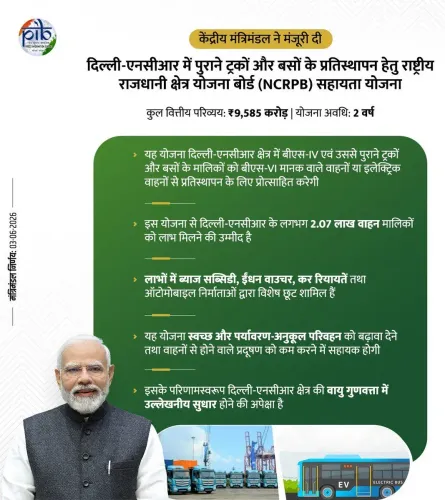
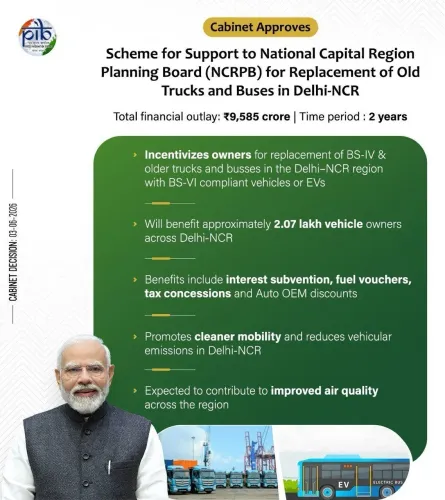
Union Home Minister Amit Shah on Wednesday hailed a Union Cabinet decision to sanction ₹9,585 crore for phasing out polluting petrol- and diesel-run commercial vehicles across Delhi-NCR, calling it a 'historic' step to clean the capital region's air. In a post on X, Shah said the initiative will convert nearly 2 lakh trucks and 16,000 buses to BS-IV, electric and CNG fleets in a phased manner.
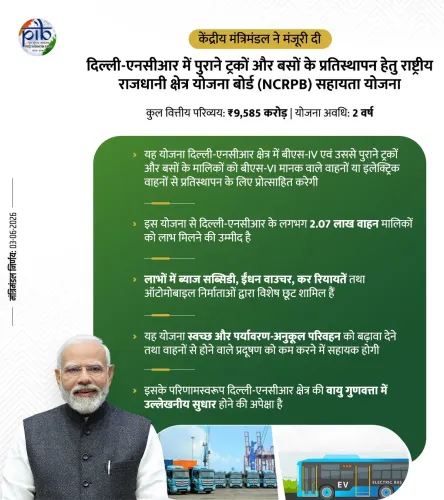
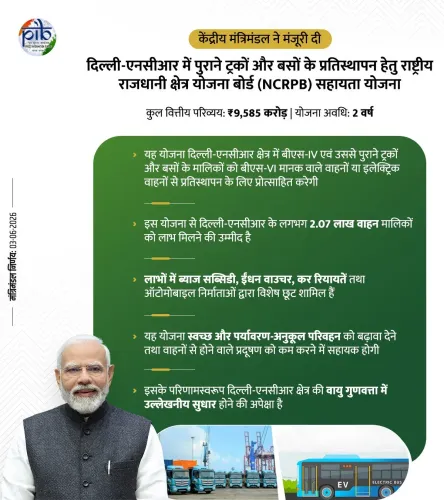
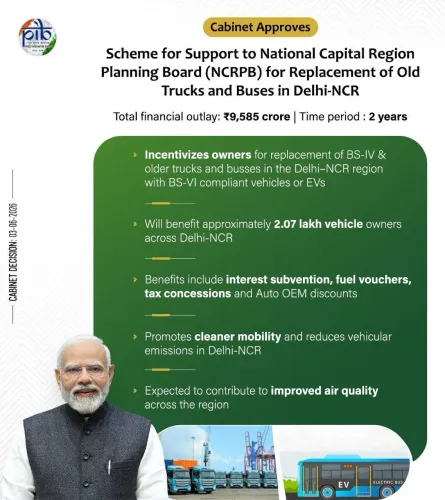
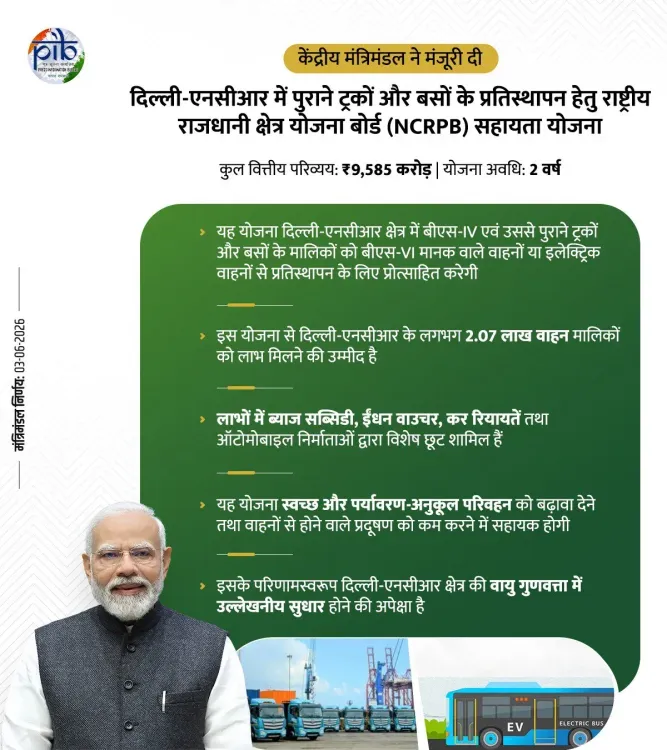
'Under the leadership of Modi ji, the Union Cabinet has taken a historic decision in the direction of making Delhi-NCR pollution-free,' Shah wrote, adding that the move would 'cut dependence on petroleum imports and give momentum to the country's economy.' The post was accompanied by a graphic outlining the scheme's headline numbers.
Context
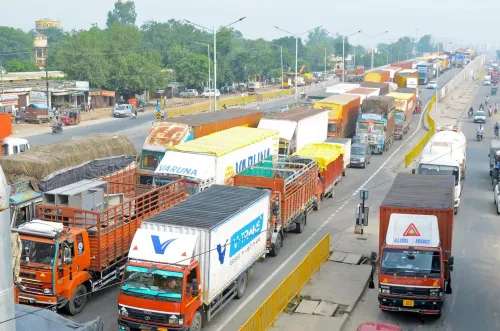
Delhi and its surrounding districts in Haryana, Uttar Pradesh and Rajasthan routinely record some of the world's worst winter air-quality readings, with heavy-duty diesel trucks and ageing buses identified as a major source of nitrogen oxides and particulate matter. The Cabinet's clearance signals a fiscal commitment to a fleet-level transition rather than incremental restrictions.
According to Shah's post, the scheme will retire or upgrade roughly 2 lakh trucks and 16,000 buses presently running on petrol and diesel, replacing them with cleaner BS-IV-compliant, electric or CNG variants. The conversion will be carried out in stages, the Home Minister said, though detailed timelines were not specified in the post.
Policy backdrop
The announcement extends a decade-long arc of tightening vehicular emission norms in India. The country moved directly from BS-IV to BS-VI standards nationwide from April 2020, skipping an intermediate stage to accelerate emission cuts. The National Clean Air Programme, launched in 2019, set city-specific targets for reducing particulate concentrations, with Delhi-NCR a priority airshed.
In 2020, Parliament also established the Commission for Air Quality Management in NCR and Adjoining Areas, a statutory body empowered to coordinate anti-pollution measures across state boundaries. Successive central interventions have layered fuel-quality upgrades, scrappage incentives and electric-mobility subsidies onto that regulatory base.
Shah linked the latest outlay to a second objective: reducing India's crude-oil import bill. Converting large diesel fleets to electric and CNG variants is expected to lower petroleum demand at the margin, dovetailing with the wider Atmanirbhar Bharat (self-reliant India) emphasis on domestic manufacturing of electric vehicles, batteries and CNG infrastructure.
Stakeholders and impact
The decision will most directly affect truck operators and bus operators across the NCR, many of whom run small fleets and will need access to financing, charging or refuelling infrastructure, and predictable scrappage values. State transport undertakings operating intercity buses are also expected to be drawn into the conversion programme.
For Delhi-NCR residents, particularly those living near major freight corridors and bus depots, a successful rollout could translate into measurable reductions in roadside particulate exposure. Vehicle manufacturers and CNG distributors stand to gain demand visibility from a guaranteed fleet pipeline backed by central funding.
What's next
Attention will shift to the operational architecture of the scheme — the sequencing of vehicle categories, eligibility criteria for owners, the tendering process for new electric and CNG units, and the role of NCR state governments in implementation. Periodic air-quality data releases by the Commission for Air Quality Management will offer an early read on whether the fleet transition translates into cleaner air on the ground.
If executed at the stated scale, the ₹9,585-crore package could become one of the largest single commercial-vehicle conversion programmes attempted in any Indian urban region, with implications for clean-mobility policy well beyond the capital.
Point of View
Shah ties Delhi-NCR's pollution problem to the government's broader Atmanirbhar Bharat narrative on cutting crude imports. The real test, however, lies in execution: vehicle scrappage and conversion programmes in India have historically stumbled on financing for small operators and patchy charging or CNG infrastructure. Sustained gains will depend on whether state governments in the NCR move in lockstep with the Centre.
NationPress
15 Sept 2026
Frequently Asked Questions
What did the Union Cabinet approve for Delhi-NCR pollution?
The Union Cabinet has approved ₹9,585 crore to phase out petrol- and diesel-run commercial vehicles in Delhi-NCR, Union Home Minister Amit Shah said in a post on X. The funds will support conversion of nearly 2 lakh trucks and 16,000 buses to BS-IV, electric and CNG variants in stages.
How many trucks and buses will be converted under the scheme?
Nearly 2 lakh trucks and around 16,000 buses currently running on petrol and diesel are proposed to be converted to cleaner BS-IV, electric or CNG vehicles under the scheme announced by Amit Shah. The conversion will be carried out in a phased manner.
How will the scheme help reduce India's oil imports?
By replacing petrol- and diesel-run heavy vehicles with electric and CNG fleets, the scheme is expected to lower commercial-vehicle demand for liquid fuels. Shah said this will reduce India's dependence on petroleum imports and support the wider economy.
What are BS-IV and BS-VI emission norms?
Bharat Stage (BS) norms are India's vehicular emission standards modelled on European Euro norms. BS-IV was implemented in the 2010s, and the country transitioned directly to BS-VI nationwide from April 2020 to accelerate cuts in nitrogen oxides and particulate emissions.
Which body oversees air pollution control in Delhi-NCR?
The Commission for Air Quality Management in NCR and Adjoining Areas, set up by an Act of Parliament in 2020, is the statutory body that coordinates pollution-control measures across Delhi, Haryana, Uttar Pradesh and Rajasthan. It will play a key role in tracking outcomes of the new fleet conversion scheme.