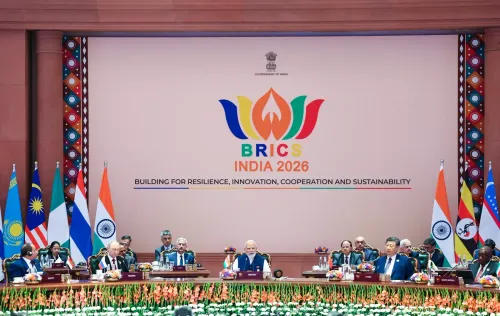
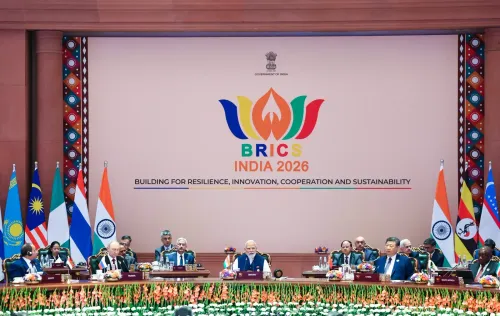
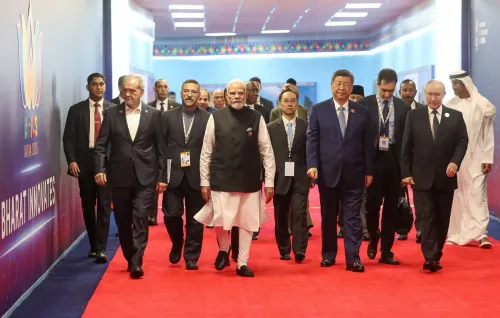
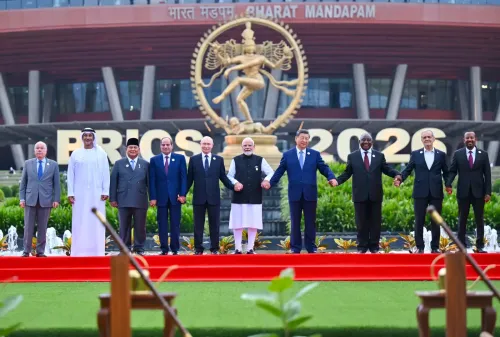
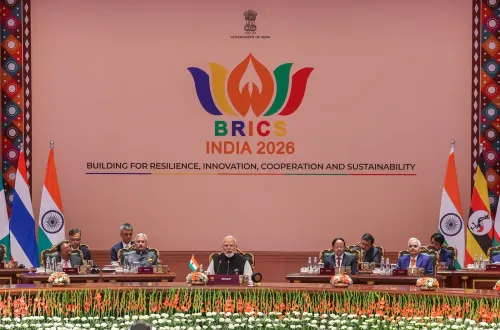
BRICS 2026: India champions multipolar digital economy at New Delhi Summit

Synopsis
The 2026 BRICS Summit didn't just issue a communiqué — it embedded India's DPI model into the bloc's core agenda. The New Delhi Declaration's call for sovereign yet interoperable digital ecosystems, backed by a BRICS DPI repository and pilot projects, positions India's Aadhaar-UPI architecture as a blueprint for how the Global South can absorb foreign technology without surrendering strategic control.
Key Takeaways
The New Delhi Declaration at the 2026 BRICS Summit formally adopted a framework for a multipolar digital economy based on sovereign, interoperable national systems.
The declaration recognised a BRICS DPI repository , pilot projects, the Digital BRICS Forum , and a Focus Group on Digital Public Infrastructure .
India's DPI stack — including Aadhaar , UPI , and DigiLocker — served as the conceptual anchor, with India having signed DPI cooperation agreements with 24 countries .
India first promoted DPI multilaterally during its 2023 G20 presidency ; BRICS extends that effort to a more geopolitically heterogeneous audience.
The interoperability model allows national systems to remain distinct while communicating through common standards — designed to preserve strategic autonomy for all member economies.
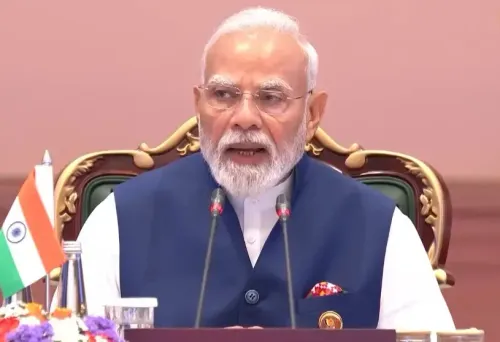
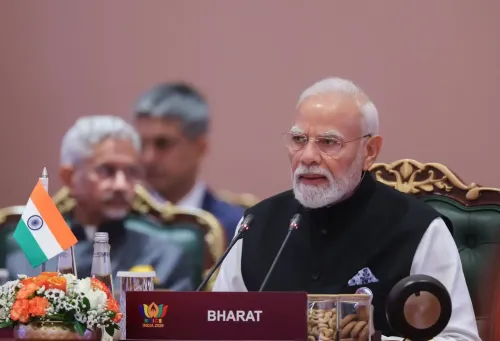
The New Delhi Declaration, adopted at the 2026 BRICS Summit, has placed India's vision of a multipolar digital economy at the heart of the bloc's development agenda — one built on sovereign national systems that remain domestically controlled yet increasingly interoperable across borders. The declaration's digital provisions, analysed in a piece published by Modern Diplomacy authored by Tuhu Nugraha, signal a significant moment in how emerging economies are beginning to frame their technological futures.
What the Declaration Commits To
The declaration formally recognised sovereign digital ecosystems, interoperable Digital Public Infrastructure (DPI), and artificial intelligence (AI) as pillars of the BRICS development framework. It welcomed work on a BRICS DPI repository and pilot projects, while recognising the Digital BRICS Forum and the Focus Group on Digital Public Infrastructure as institutional anchors for future cooperation.
The core principle is coordination without surrender of control. As the analysis notes, national payment rails, digital credentials, and data-sharing systems can be made interoperable through common standards and interfaces — without collapsing into a single supranational database or architecture.
India's DPI Model at the Centre
India's Digital Public Infrastructure is most visibly represented by Aadhaar, the Unified Payments Interface (UPI), DigiLocker, and consent-based data-sharing frameworks. These systems are nationally governed while allowing governments and private firms to build services on top — a layered model that India has increasingly promoted in its diplomacy.
According to reports, India has signed India Stack and DPI cooperation agreements with 24 countries, spanning digital identity, payments, data exchange, and public service delivery. Notably, the stated objective is cooperation on architecture and design principles rather than the export of finished products — a distinction that has won traction among nations wary of technological dependency.
Why BRICS Provides a Unique Platform
India first gave DPI broad multilateral visibility during its 2023 G20 presidency. BRICS presents a different and arguably more complex arena. The grouping brings together economies seeking greater influence for the Global South, yet they differ sharply in political systems, currencies, technological capabilities, and relationships with both Washington and Beijing.
That heterogeneity makes deep harmonisation difficult — but it makes interoperability more valuable. National systems can remain architecturally distinct while common standards allow them to communicate. The analysis points to payments as the clearest illustration, but notes the logic extends further: digital credentials potentially becoming verifiable across jurisdictions, and trusted data flowing through agreed governance arrangements.
India's Strategic Autonomy Gets a Digital Expression
The article argues this architecture fits India's geopolitical position unusually well. China remains simultaneously a neighbour, major economic partner, strategic competitor, and fellow BRICS member. India has, meanwhile, deepened technology and security cooperation with the United States while preserving its longstanding preference for strategic autonomy.
An interoperable digital architecture, the analysis suggests, gives infrastructural expression to that balancing instinct — allowing India to retain control over critical national systems, work across competing technology ecosystems, and maintain optionality as geopolitical conditions shift.
Relevance for the Broader Global South
The model may carry even greater relevance for emerging economies with fewer technological resources. Most Global South nations will continue depending on foreign cloud providers, semiconductors, AI models, and telecom equipment. As the analysis notes, a single economy may simultaneously use American cloud services, Chinese hardware, Japanese or Korean industrial systems, Indian-inspired DPI, European regulatory standards, and locally developed applications. A framework of interoperability without dependence offers a practical path through that reality.
With the New Delhi Declaration now adopted, the focus shifts to implementation — whether the BRICS DPI repository, the pilot projects, and the Digital BRICS Forum can translate a compelling architecture into working infrastructure across some of the world's most consequential economies.
Point of View
Including G20 commitments, still faces scrutiny. Twenty-four bilateral agreements are a start; translating that into BRICS-scale interoperability across economies as divergent as Brazil, Russia, and South Africa is a different order of challenge.
NationPress
15 Sept 2026
Frequently Asked Questions
What did the 2026 BRICS Summit New Delhi Declaration say about digital economy?
The New Delhi Declaration placed sovereign digital ecosystems, interoperable Digital Public Infrastructure, and AI within the BRICS development agenda. It welcomed a BRICS DPI repository and pilot projects, and recognised the Digital BRICS Forum and the Focus Group on Digital Public Infrastructure as institutional mechanisms for cooperation.
What is India's Digital Public Infrastructure (DPI) model?
India's DPI model encompasses Aadhaar (digital identity), UPI (payments), DigiLocker (document storage), and consent-based data-sharing frameworks. These systems are nationally governed while allowing governments and private firms to build services on top, and India has promoted this architecture through cooperation agreements with 24 countries.
Why is interoperability — rather than harmonisation — the key principle at BRICS?
BRICS members differ sharply in political systems, currencies, and technological capabilities, making deep harmonisation impractical. Interoperability sets a lower threshold: national systems remain distinct but can communicate through common standards and interfaces, without creating a supranational database or surrendering sovereign control.
How does the BRICS digital framework connect to India's strategic autonomy?
An interoperable digital architecture allows India to retain control over its critical national systems while working across competing technology ecosystems — American cloud, Chinese hardware, European regulatory standards — as geopolitical conditions shift. Analysts described this as giving 'infrastructural expression' to India's longstanding preference for strategic autonomy.
Why does this BRICS digital agenda matter for Global South economies?
Most Global South nations depend simultaneously on multiple foreign technology providers across cloud, hardware, AI, and telecom. A framework of interoperable, sovereign DPI allows these countries to absorb foreign technology while preserving the freedom to switch suppliers and negotiate from a position of choice, rather than dependency on any single ecosystem.