BRICS New Delhi Declaration backs Traditional Medicine cooperation, expert group proposed
Synopsis
The 18th BRICS Summit's New Delhi Declaration has done more than acknowledge traditional medicine — it has set the stage for a formal multilateral structure around it. With a proposed Expert Working Group under the BRICS Health Track and a shared push on medicinal plant research, India's BRICS Chairship is actively reshaping how Ayurveda and allied systems enter global health diplomacy.
Key Takeaways
The New Delhi Declaration at the 18th BRICS Summit endorsed international cooperation in Traditional, Complementary and Integrative Medicine (TCIM) .
A BRICS Expert Working Group on TCIM has been proposed under the BRICS Health Track as a platform for dialogue and research collaboration.
The Declaration calls for joint research on medicinal plants and herbal preparations and recognises shared traditional pharmacopoeias as a foundation for affordable therapeutics.
Union Minister Prataprao Jadhav and Secretary Vaidya Rajesh Kotecha welcomed the Declaration as a milestone for India's traditional medicine diplomacy.
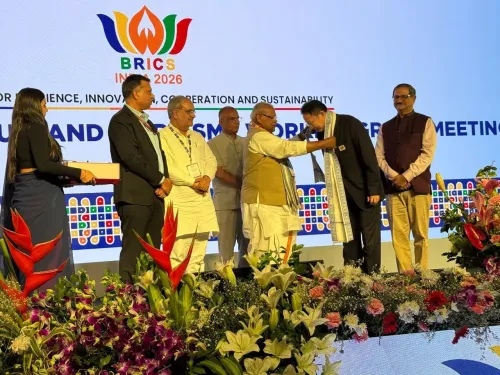
The groundwork was laid at the BRICS TCIM Meeting in Chandigarh on 21 July under India's BRICS Chairship .
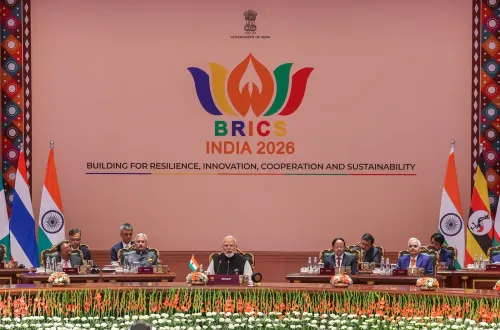
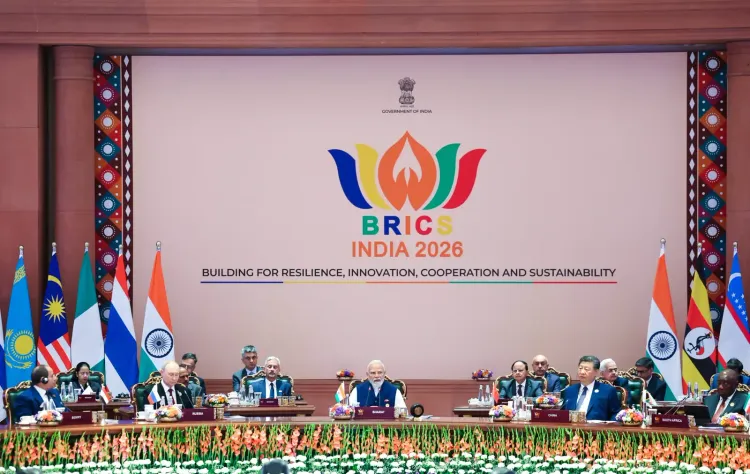
The New Delhi Declaration, adopted at the 18th BRICS Summit, has given a significant push to international cooperation in Traditional, Complementary and Integrative Medicine (TCIM), with member countries welcoming the proposed establishment of a BRICS Expert Working Group on the subject, according to an official statement released on Sunday, 13 September 2026. The move positions India — currently holding the BRICS Chairship — as a central force in shaping a multilateral framework for traditional medicine.
What the Declaration Proposes
The proposed expert working group, to function under the BRICS Health Track, is envisaged as a structured platform for dialogue, collaboration and knowledge exchange among member states on traditional medicine systems. According to the Ministry of AYUSH, the Declaration also calls for greater cooperation in research on medicinal plants and herbal preparations used for therapeutic and preventive purposes.
Notably, the Declaration recognises the shared traditional pharmacopoeias of BRICS countries as a potential foundation for developing safe, effective and affordable therapeutic products — a recognition that could lay the groundwork for jointly developed herbal standards and quality benchmarks across member nations.
What the Government Said
Union Minister Prataprao Jadhav described the inclusion of TCIM in the Declaration as an important step towards strengthening global cooperation in traditional medicine. He said the proposed expert working group would give member states a platform to share knowledge, strengthen research and advance evidence-based approaches.
'India remains committed to taking forward Ayurveda and other traditional systems of medicine through scientific research, quality assurance and international collaboration,' Jadhav said.
Secretary, Ministry of AYUSH, Vaidya Rajesh Kotecha said the Declaration marked a meaningful step towards advancing structured cooperation on TCIM among BRICS countries. He added that the working group could provide a focused forum for sharing evidence, strengthening research collaboration and improving quality and regulatory approaches across member states.
Regulatory and Scientific Dimensions
The Declaration also reaffirmed the importance of ensuring the quality, safety and efficacy of TCIM practices and products through evidence-informed approaches and appropriate regulatory frameworks, in line with national contexts of member states. This signals a move toward harmonised standards rather than uniform mandates — a pragmatic design given the diversity of traditional medicine systems across Brazil, Russia, India, China, South Africa and newer BRICS members.
The Ministry noted that progress on medicinal plants and herbal preparations could open avenues for deeper scientific and technical collaboration, including in documentation, pharmacopoeial standards, quality assurance and development of therapeutic products.
Background and Lead-Up
The development follows the BRICS Meeting on Traditional, Complementary and Integrative Medicine held in Chandigarh on 21 July under India's BRICS Chairship — an event that is widely seen as having laid the groundwork for the Declaration's TCIM provisions. This is part of a broader Indian diplomatic effort to embed Ayurveda and related systems into international health governance frameworks, including earlier moves at the World Health Organization (WHO) and the G20.
As the working group's terms of reference and membership are finalised in the coming months, the pace and depth of actual research collaboration will be closely watched by both health ministries and the traditional medicine industry across BRICS nations.
Point of View
But the real test lies in execution. A working group is a framework, not a deliverable — and BRICS has a mixed record of converting Health Track resolutions into tangible research outputs. India's push to internationalise Ayurveda is consistent and strategic, but the diversity of traditional medicine systems across BRICS members — from Chinese medicine to South African indigenous practices — makes harmonisation genuinely complex. The emphasis on 'national contexts' in the regulatory language is both realistic and a potential escape hatch for countries unwilling to adopt common standards.
NationPress
13 Sept 2026
Frequently Asked Questions
What did the BRICS New Delhi Declaration say about traditional medicine?
The New Delhi Declaration, adopted at the 18th BRICS Summit, endorsed international cooperation in Traditional, Complementary and Integrative Medicine (TCIM) and welcomed the proposed establishment of a BRICS Expert Working Group on the subject. It also called for greater research collaboration on medicinal plants and herbal preparations.
What is the proposed BRICS Expert Working Group on TCIM?
It is a planned multilateral body under the BRICS Health Track designed to serve as a platform for dialogue, knowledge-sharing and research collaboration among BRICS member states on traditional medicine systems. Its exact terms of reference and membership are yet to be finalised.
Why does this matter for India's Ayurveda sector?
India holds the BRICS Chairship and has actively championed the inclusion of Ayurveda and allied systems in international health frameworks. Recognition in the New Delhi Declaration could strengthen India's position in setting pharmacopoeial standards and quality benchmarks for herbal products across BRICS nations.
What was the Chandigarh meeting about?
The BRICS Meeting on Traditional, Complementary and Integrative Medicine was held in Chandigarh on 21 July under India's BRICS Chairship. It is widely regarded as having laid the groundwork for the TCIM-related provisions that appeared in the New Delhi Declaration.
What regulatory commitments did BRICS make on traditional medicine?
The Declaration reaffirmed the importance of ensuring quality, safety and efficacy of TCIM practices and products through evidence-informed approaches and appropriate regulatory frameworks, aligned with the national contexts of each member state. This points toward harmonised rather than uniform standards.