BRICS New Delhi Declaration targets terror financing, drug money laundering
Synopsis
The BRICS New Delhi Declaration isn't just another summit communiqué — it specifically targets terror financing, drug-money laundering, and ICT-enabled virtual asset fraud. With the Guwahati Declaration on anti-drug cooperation also endorsed, the bloc is signalling a shift from rhetoric to operational frameworks on financial crime.
Key Takeaways
BRICS adopted the New Delhi Declaration , flagging serious concerns over terror financing , drug-related money laundering, and illegal virtual asset flows.
The declaration calls for enhanced cooperation among customs, financial intelligence, law enforcement, and tax authorities across member states.
It highlights the misuse of invoicing practices , professional services, and emerging payment methods for large-scale financial fraud.
The bloc endorsed the Guwahati Declaration for operational cooperation among BRICS anti-drug agencies.
BRICS reaffirmed its commitment to the UN Convention against Corruption and called for coordinated global action against illicit drug production and trafficking.
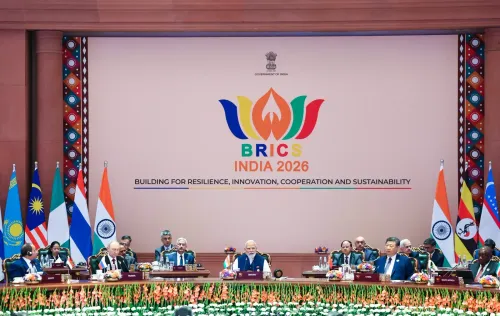
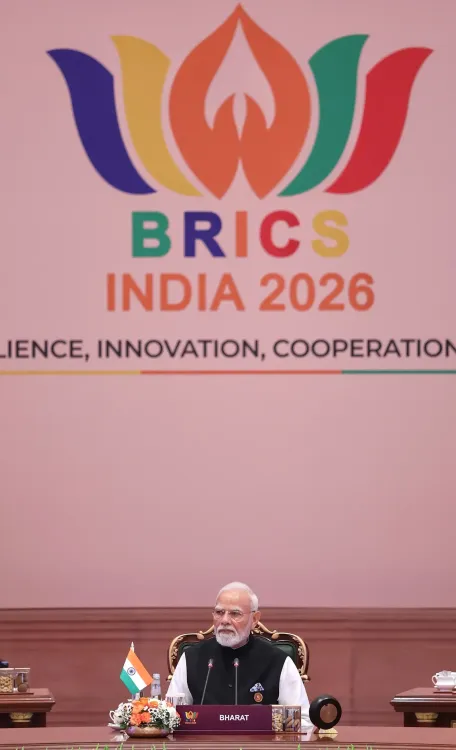
The BRICS bloc on Saturday adopted the New Delhi Declaration, raising serious concerns over illicit financial flows — including the financing of terrorism, laundering of drug-related crime proceeds, and the exploitation of information and communications technologies (ICTs) for illegal virtual asset transfers. The declaration, endorsed at the grouping's summit in New Delhi, marks a concerted push by the five-nation alliance to tighten cross-border financial surveillance.
Key concerns flagged in the declaration
The document underscores that drug-related money laundering, financial fraud perpetrated through organised crime networks, and the circumvention of domestic regulatory frameworks pose a direct threat to economic stability, sustainable development, and the integrity of the international financial system. The declaration calls the misuse of emerging payment methods and financial institutions for large-scale fraud a growing systemic risk.
Coordinated cross-border action
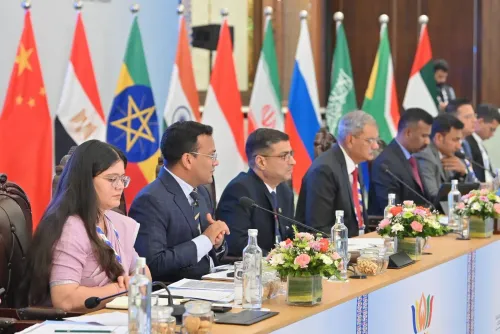
BRICS leaders stressed the importance of coordinated international action to dismantle illegal financial networks, trace and recover criminal proceeds, protect victims, and prevent the misuse of new-age payment channels. The declaration specifically calls for enhanced cooperation among customs authorities, financial intelligence units, law enforcement agencies, tax authorities, and supervisory bodies — leveraging existing BRICS Working Groups and relevant international legal instruments to which member states are parties.
Key mechanisms highlighted include improved information-sharing, a risk-based approach to financial oversight, the deployment of data analytics, and capacity-building initiatives. The aim, according to the declaration, is to effectively identify, detect, and disrupt money laundering schemes involving both goods and services — including those exploiting invoice manipulation, professional services, and cross-border contractual arrangements.
Anti-corruption and anti-drug commitments
The declaration reaffirms the bloc's commitment to preventing and combating corruption, supporting the continued implementation of relevant international agreements, particularly the United Nations Convention against Corruption.
BRICS nations also expressed concern over the rising scale of illicit drug production, trafficking, and abuse worldwide, recognising that these activities seriously threaten public security, health, safety, and the well-being of populations while undermining sustainable development. This comes amid a broader global spike in synthetic drug trafficking, which has prompted multilateral bodies to seek tighter operational frameworks.
Guwahati Declaration welcomed
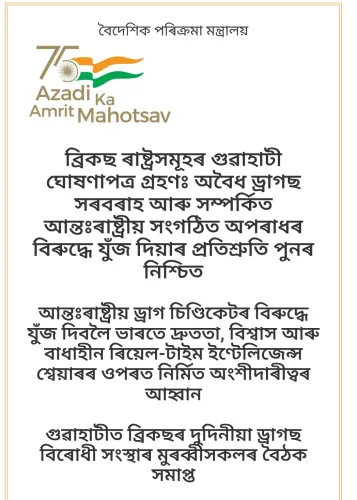
In a related development, the bloc welcomed the Guwahati Declaration issued by the BRICS Heads of Anti-Drug Agencies, which is designed to facilitate operational and technical cooperation among the member nations' anti-drug bodies. The Guwahati framework is expected to serve as a practical blueprint for intelligence-sharing and joint operations against transnational narcotics networks.
What lies ahead
The New Delhi Declaration signals that BRICS — which collectively represents roughly 40% of the world's population and over a quarter of global GDP — intends to deepen its institutional response to financial crime. Whether these commitments translate into enforceable protocols or remain aspirational will depend on follow-through at the working-group level and the political will of individual member states in subsequent summits.
Point of View
Synthetic drug money, ICT-enabled laundering — but the real question is whether member states, several of whom resist external financial transparency norms, will operationalise the information-sharing commitments. The Guwahati Declaration on anti-drug cooperation is a step forward, yet BRICS still lacks the institutional teeth of bodies like the Financial Action Task Force. Without enforceable compliance benchmarks, this risks remaining a diplomatic signal rather than a structural deterrent.
NationPress
28 Oct 2026
Frequently Asked Questions
What is the BRICS New Delhi Declaration?
It is a joint declaration adopted by BRICS member nations at their New Delhi summit, expressing serious concern over illicit financial flows including terror financing, drug-money laundering, and ICT-enabled virtual asset fraud. It calls for coordinated cross-border action to dismantle illegal financial networks.
Why does the BRICS declaration matter for terror financing?
The declaration signals a collective commitment by nations representing roughly 40% of the world's population to tighten financial surveillance, share intelligence among customs and law enforcement bodies, and deploy data analytics to detect terror-financing channels — including those exploiting emerging payment methods.
What is the Guwahati Declaration mentioned in the document?
The Guwahati Declaration was issued by the BRICS Heads of Anti-Drug Agencies to facilitate operational and technical cooperation among member nations' anti-drug bodies. It is designed to enable intelligence-sharing and joint operations against transnational narcotics networks.
How will BRICS countries combat drug-related money laundering?
The bloc has committed to enhanced information-sharing, risk-based financial oversight, data analytics, and capacity-building to identify, detect, and disrupt money laundering schemes — including those exploiting invoice manipulation, professional services, and cross-border contractual arrangements.
Does the declaration address corruption?
Yes. The New Delhi Declaration reaffirms BRICS' commitment to preventing and combating corruption, specifically supporting the continued implementation of the United Nations Convention against Corruption.