BRICS Anti-Corruption Working Group backs India's fugitive-tracking network
Synopsis
At a two-day meeting in Hyderabad, BRICS members gave in-principle approval to India's proposed law-enforcement network for tracking fugitive offenders and supporting extradition — a move that could reshape how the bloc coordinates on cross-border corruption cases. The shift from dialogue to practical action is the defining signal from this year's Indian BRICS Presidency.
Key Takeaways
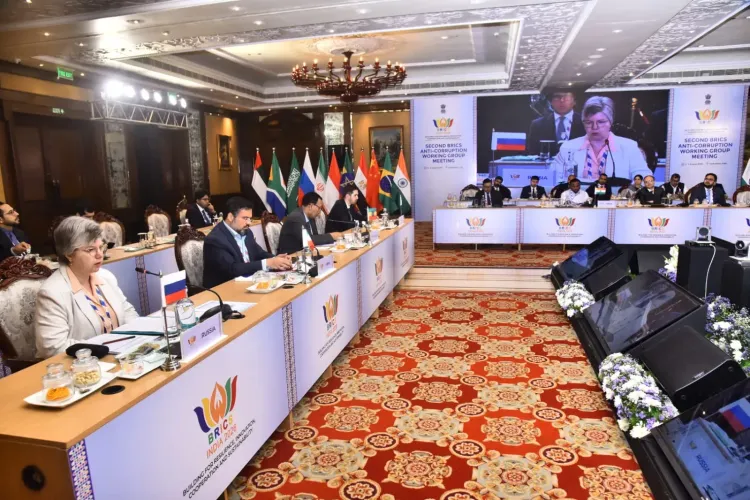
The BRICS Anti-Corruption Working Group concluded its second meeting in Hyderabad on 5 August , reaching in-principle agreement on India's proposed fugitive-tracking network.
The proposed BRICS Network of Law-Enforcement Practitioners aims to facilitate informal cooperation, trace fugitive offenders, and support extradition across member states.
Members also welcomed a new BRICS Repository on Informal Cooperation consolidating national practices on tracing fugitive offenders.
The BRICS Expert Network on Asset Recovery agreed on standardised formats for practitioner-level information exchange during early investigation stages.
Meetings were hosted by DoPT and inaugurated by Rachna Shah , Secretary, DoPT, under India's BRICS Presidency theme of resilience, innovation, cooperation, and sustainability.
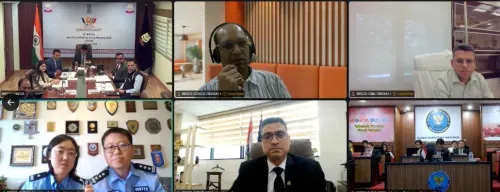
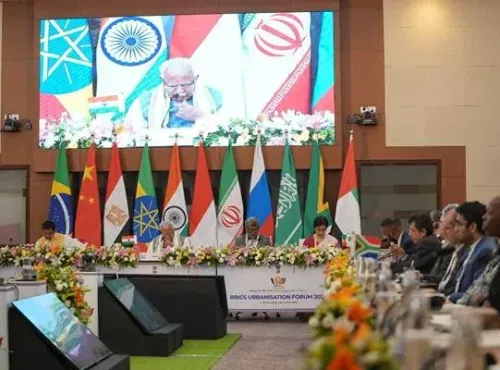
The BRICS Anti-Corruption Working Group and the BRICS Expert Network on Asset Recovery concluded their second meeting in Hyderabad on Wednesday, 5 August, reaching an in-principle agreement on India's proposed BRICS Network of Law-Enforcement Practitioners for Enhancing International Cooperation on Fugitive Offenders Sought for Corruption and Supporting Extradition. The two-day deliberations marked a significant step forward under India's BRICS Presidency.
What the Proposed Network Entails
The initiative, championed by the Indian Presidency, is designed to facilitate informal cooperation among member states, support the tracing of fugitive offenders, and complement existing formal mechanisms for extradition and international legal assistance. Members agreed to continue deliberations on establishing a dedicated practitioner-level platform, focusing on objectives, scope, and operational modalities.
Alongside this, members welcomed the BRICS Repository on Informal Cooperation for Tracing Fugitive Offenders Sought for Corruption and Supporting Extradition — a practitioner-oriented resource consolidating information on national practices and existing channels of informal cooperation across member nations.
Progress on Asset Recovery
The second meeting of the BRICS Expert Network on Asset Recovery made substantive headway on practical deliverables. Members reached consensus on standardised formats to enable timely, practitioner-level information exchange during the preliminary stages of investigations — designed to work alongside, not replace, formal mutual legal assistance mechanisms.
This marks a shift in how the group operates: from building shared understanding to delivering actionable, on-the-ground cooperation tools.
India's Role and the Presidency Theme
The meetings were hosted by the Centre's Department of Personnel and Training (DoPT), consistent with the theme of India's BRICS Presidency — 'Building for Resilience, Innovation, Cooperation and Sustainability'. Senior policymakers, financial intelligence officials, anti-corruption experts, and law-enforcement representatives from all BRICS member countries participated.
The sessions were inaugurated by Rachna Shah, Secretary, Department of Personnel and Training, who underscored India's policy of zero tolerance against corruption. Shah emphasised that integrity is 'fundamental to good governance, sustainable development and public trust,' and highlighted the role of strong institutions, technology-driven governance, transparency, and accountability in combating transnational corruption.
Significance and What Comes Next
Shah noted that the BRICS Anti-Corruption Working Group is 'increasingly evolving from a platform for developing common understanding into a platform for practical action' — a framing that signals growing pressure within the bloc to move beyond declarations. Effective international cooperation, she stressed, requires timely information exchange and trusted practitioner-level channels capable of complementing formal extradition mechanisms.
The in-principle agreement sets the stage for formal adoption of the network framework at a subsequent BRICS meeting. With fugitive economic offenders remaining a persistent challenge for several member states — including India — the network's operationalisation will be closely watched.
Point of View
But the real test is whether BRICS members with divergent legal systems and political priorities can operationalise a platform that moves faster than formal mutual legal assistance treaties, which are notoriously slow. The addition of standardised asset-recovery formats is the more immediately actionable win. What the group still lacks is a binding enforcement mechanism — without one, the network risks becoming another well-intentioned declaration rather than a functional extradition accelerator.
NationPress
20 Sept 2026
Frequently Asked Questions
What is the BRICS Network of Law-Enforcement Practitioners proposed by India?
It is an India-proposed platform under BRICS aimed at facilitating informal cooperation among member states to trace fugitive offenders sought for corruption and support extradition. BRICS members reached an in-principle agreement on the initiative at the second meeting of the Anti-Corruption Working Group in Hyderabad on 5 August.
What was agreed at the BRICS Anti-Corruption Working Group meeting in Hyderabad?
Members reached in-principle agreement on India's proposed law-enforcement network for tracking fugitive offenders and supporting extradition. They also welcomed a new BRICS Repository on Informal Cooperation and agreed on standardised formats for information exchange during early-stage investigations.
What is the BRICS Repository on Informal Cooperation?
It is a practitioner-oriented resource consolidating information on national practices and existing channels of informal cooperation across BRICS member states for tracing fugitive offenders sought for corruption. It is intended to complement, not replace, formal mutual legal assistance mechanisms.
Who hosted the BRICS Anti-Corruption Working Group meeting?
The meetings were hosted by India's Department of Personnel and Training (DoPT) in Hyderabad, in line with India's BRICS Presidency theme. They were inaugurated by Rachna Shah, Secretary, DoPT.
Why does this BRICS agreement matter for India?
India has long pursued fugitive economic offenders who have fled abroad, making an informal international cooperation network a strategic priority. The agreement signals a shift within BRICS from policy dialogue to practical, action-oriented anti-corruption mechanisms — a key goal of India's current BRICS Presidency.