BRICS anti-drug agencies meet in Guwahati from July 6 to tackle synthetic drugs
Synopsis
India is using its BRICS chairship to push narcotics cooperation beyond talk — the Guwahati meeting targets synthetic drugs, darknet trafficking, and precursor chemical diversion with a concrete joint declaration on the table. Backed by a fresh Vision Document on Narcotics Control (2026–2029), New Delhi is positioning itself as the operational hub of BRICS drug enforcement.
Key Takeaways
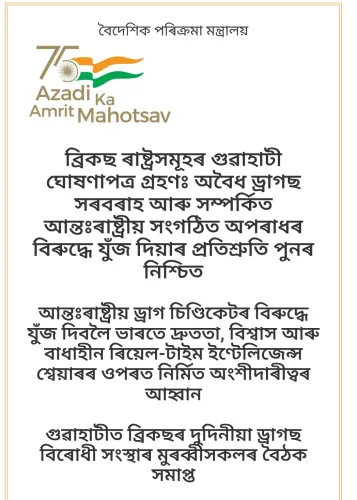
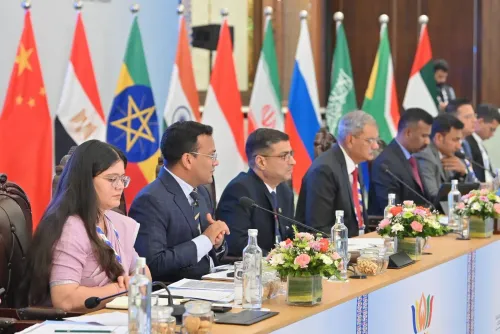
India is hosting the BRICS Heads of Anti-Drug Agencies Meeting in Guwahati, Assam on 6–7 July .
The meeting is convened by the Narcotics Control Bureau (NCB) under the Ministry of Home Affairs .
Six thematic sessions will cover darknet trafficking , New Psychoactive Substances (NPS) , precursor chemical diversion, and digital interdiction tools.
The conclave will conclude with the adoption of a joint declaration by BRICS member countries.
India recently released the Vision Document on Narcotics Control (2026–2029) as part of its whole-of-government anti-drug strategy.
India's BRICS chairship is guided by the theme 'Building for Resilience, Innovation, Cooperation and Sustainability' , articulated by PM Modi at the 2025 Rio Summit .
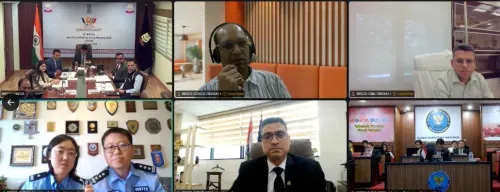
India is hosting the BRICS Heads of Anti-Drug Agencies Meeting in Guwahati, Assam, on 6–7 July, bringing together senior drug-control officials from member countries to deepen operational cooperation against narcotics trafficking. The two-day conclave, convened by the Narcotics Control Bureau (NCB) under the Ministry of Home Affairs, marks a significant step in India's BRICS chairship agenda.
Key Agenda and Thematic Sessions
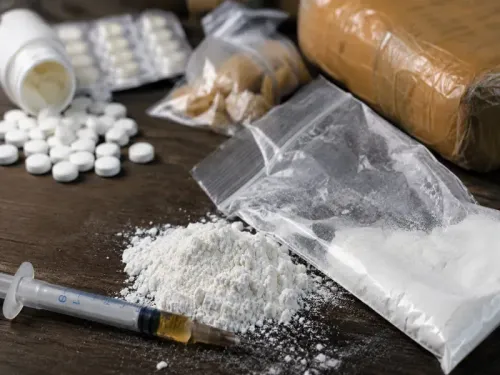
Delegates from BRICS member countries will deliberate on the drug situation in their respective nations across six thematic sessions. The sessions will address leveraging digital technology for real-time drug interdiction, neutralising trafficking over the darknet, tackling New Psychoactive Substances (NPS), reinforcing global supply chains against precursor chemical diversion, advancing drug demand reduction initiatives, and strengthening institutional mechanisms.
The meeting is set to conclude with the adoption of a joint declaration, signalling a shift from dialogue to structured, action-oriented collaboration among member states.
Why India Is Hosting This Meeting
The Ministry of Home Affairs described the global drug trafficking landscape as having 'evolved significantly', with synthetic drugs, NPS, darknet-enabled trafficking, and cryptocurrency-based financial flows posing 'complex transnational challenges.' At the same time, it noted that advances in interdiction technologies, data analytics, and financial intelligence present 'significant opportunities for enhanced international cooperation.'
India envisions the meeting as a 'pivotal step in transforming BRICS cooperation from dialogue-centric engagement to structured and action-oriented collaboration,' according to the ministry's statement. As chair, New Delhi will push for information sharing on clandestine laboratories, enhanced monitoring of precursor chemicals, intelligence exchange, joint training programmes, and expert exchanges.
India's Domestic Anti-Drug Framework
The Indian government has been intensifying action against illicit drug trafficking and organised criminal networks, while simultaneously emphasising awareness generation, community participation, and treatment for those affected by addiction. India recently released its Vision Document on Narcotics Control (2026–2029), outlining a roadmap to further strengthen institutional capacity through a whole-of-government and network-centric approach.
Notably, the Guwahati meeting offers India a platform to showcase these domestic efforts on a multilateral stage, particularly as the abuse of narcotic drugs and psychotropic substances is acknowledged as a serious threat to public safety, health, and the country's youth.
India's BRICS Chairship Theme
India's BRICS chairship is guided by the theme 'Building for Resilience, Innovation, Cooperation and Sustainability' — a people-centric framework articulated by Prime Minister Narendra Modi at the 2025 Rio Summit. The anti-drug agencies meeting in Guwahati sits within this broader vision of leveraging BRICS for concrete, institution-level outcomes rather than declaratory diplomacy.
The outcomes of the meeting, including the joint declaration, are expected to shape the BRICS anti-drug cooperation agenda for the coming year.
Point of View
Not just diplomatic optics. The push for a joint declaration and six structured thematic sessions suggests India is trying to institutionalise what has historically been a loose exchange of information. The real test will be whether the declaration produces binding commitments on intelligence sharing, or remains another well-worded communiqué that member states quietly shelve.
NationPress
5 Oct 2026
Frequently Asked Questions
What is the BRICS Heads of Anti-Drug Agencies Meeting in Guwahati?
It is a two-day multilateral meeting hosted by India on 6–7 July in Guwahati, Assam, bringing together the heads of anti-drug agencies from BRICS member countries. The meeting is convened by India's Narcotics Control Bureau under the Ministry of Home Affairs to strengthen operational cooperation against narcotics trafficking.
What issues will the Guwahati BRICS anti-drug meeting address?
The meeting will cover six thematic areas: digital technology for drug interdiction, darknet-enabled trafficking, New Psychoactive Substances (NPS), precursor chemical diversion, drug demand reduction, and strengthening institutional mechanisms. Delegates will also deliberate on the drug situation in each member country.
What is the expected outcome of the BRICS anti-drug meeting?
The meeting is expected to conclude with the adoption of a joint declaration by BRICS member countries. India aims for the declaration to move cooperation from dialogue toward structured, action-oriented coordination on intelligence sharing, joint training, and enforcement.
What is India's Vision Document on Narcotics Control (2026–2029)?
It is a policy roadmap released by the Indian government to strengthen institutional capacity in combating drug trafficking and abuse through a whole-of-government and network-centric approach. The document underpins India's broader anti-drug strategy, which combines enforcement with awareness, community participation, and addiction treatment.
Why is India chairing the BRICS anti-drug meeting in 2025?
India currently holds the BRICS chairship under the theme 'Building for Resilience, Innovation, Cooperation and Sustainability,' a framework articulated by Prime Minister Narendra Modi at the 2025 Rio Summit. Hosting the anti-drug agencies meeting is part of India's agenda to translate BRICS cooperation into concrete institutional outcomes.