NCB hosts India-US Counter-Narcotics meet to deepen drug control ties
Synopsis
India and the US convened a structured multi-agency counter-narcotics session on 6 August 2026, with the NCB at the helm. With bilateral drug agreements now spanning 27 countries and a new three-year Vision Document in place, this meeting signals India's push to move from bilateral MoUs to real-time, operational intelligence-sharing with Washington against transnational drug cartels.
Key Takeaways
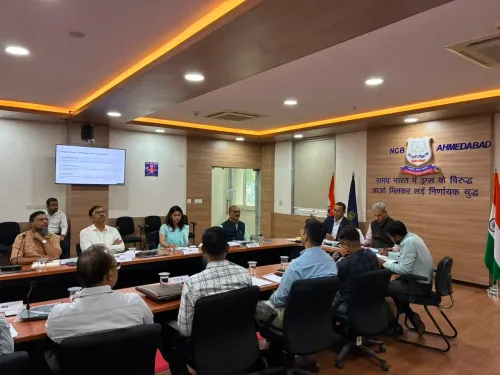
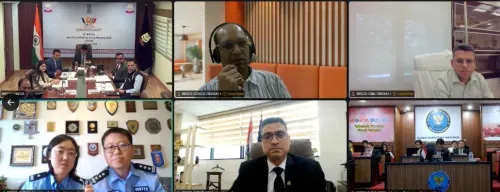
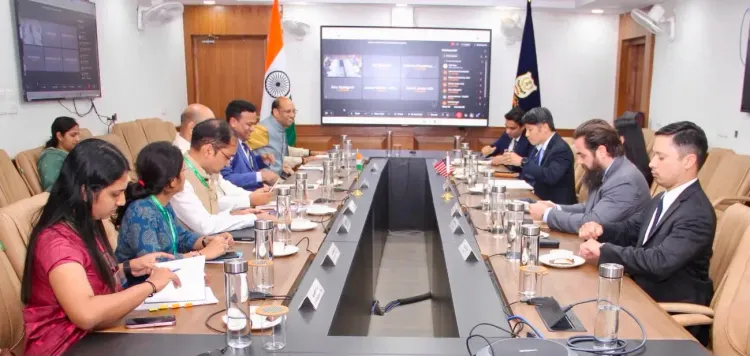
The NCB hosted the India-US CNWG Pillar I Working Group Meeting on 6 August 2026 in a hybrid format in New Delhi .
Talks focused on operational cooperation, precursor chemical diversion prevention, policy coordination, and capacity building.
The session follows bilateral discussions at the UN Commission on Narcotic Drugs in Vienna in March 2026 , where real-time intelligence-sharing was proposed.
India has bilateral drug-control agreements with 27 countries and MoUs with 19 countries , according to a Lok Sabha disclosure.
The Vision Document on Narcotics Control (2026-2029) was released on 26 June 2026 , outlining a three-year 'Whole-of-Government' roadmap.
The NCB's four-tier NCORD mechanism coordinates drug enforcement across central and state agencies.
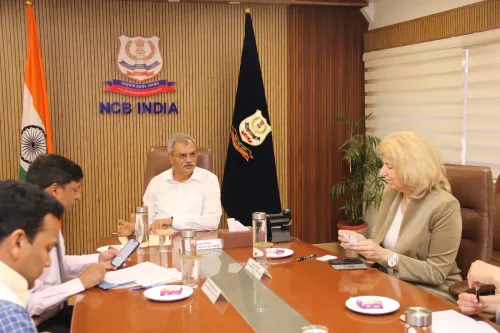
The Narcotics Control Bureau (NCB) on 6 August 2026 hosted the India-US Counter Narcotics Working Group (CNWG) Pillar I Working Group Meeting in a hybrid format in New Delhi, bringing together senior officials from both nations to advance bilateral cooperation against narcotics trafficking and the diversion of precursor chemicals. The session marks a significant step in a structured, multi-agency counter-drug dialogue between the two countries.
Agencies at the Table
The Indian delegation comprised representatives from the NCB, Central Bureau of Narcotics (CBN), Directorate of Revenue Intelligence (DRI), Central Drugs Standard Control Organisation (CDSCO), Ministry of External Affairs (MEA), Department of Revenue, and the Department of Chemicals and Petrochemicals. The US side fielded officials from the Drug Enforcement Administration (DEA), LEGAT, Office of National Drug Control Policy (ONDCP), and the US Department of State.
Key Areas of Discussion
Talks centred on strengthening operational cooperation, tightening controls to prevent the diversion of precursor chemicals, improving policy coordination, and advancing capacity-building initiatives. India highlighted its existing precursor control framework and outlined ongoing steps to reinforce regulatory and enforcement mechanisms in this space.
Building on Earlier Engagement
The meeting follows bilateral discussions held in March 2026 on the sidelines of the 69th Session of the United Nations Commission on Narcotic Drugs in Vienna, Austria. At that forum, NCB Director General Anurag Garg and Sara Carter, Director of the US Office of National Drug Control Policy, discussed sharing actionable intelligence and explored real-time information-sharing mechanisms to enable parallel investigations against transnational drug cartels operating across multiple jurisdictions.
India's Wider International Drug Control Network
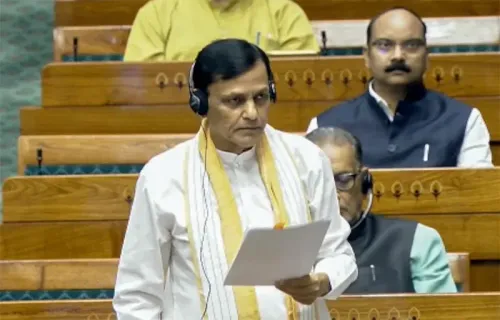
The Central government informed the Lok Sabha this week that the NCB has formalised international cooperation through bilateral agreements with 27 countries and Memoranda of Understanding (MoUs) with 19 countries. Minister of State for Home Affairs Nityanand Rai stated that India holds regular Director General-level bilateral talks on drug-related matters with countries including Myanmar, Nepal, Thailand, Sri Lanka, Indonesia, Singapore, and the US.
Vision Document and NCORD Framework
Rai also noted that India released its Vision Document on Narcotics Control (2026-2029) on 26 June 2026, laying out a three-year roadmap with clear priorities and time-bound targets for various stakeholders, anchored in a 'Whole-of-Government' and 'Whole-of-Society' approach. Separately, the NCB has established a four-tier Narco-Coordination Centre (NCORD) mechanism to improve coordination between central and state drug law enforcement agencies. The next phase of India-US counter-narcotics engagement is expected to build on the intelligence-sharing and precursor-control commitments made at this meeting.
Point of View
But the real test will be whether joint investigations against transnational cartels actually materialise. Bilateral agreements with 27 countries look impressive on paper; what matters is how many have yielded actionable drug seizures or prosecutions.
NationPress
21 Sept 2026
Frequently Asked Questions
What is the India-US Counter Narcotics Working Group (CNWG)?
The India-US Counter Narcotics Working Group is a bilateral platform for coordinating counter-drug policy, enforcement, and intelligence sharing between India and the United States. The Pillar I Working Group, hosted by the NCB on 6 August 2026, focuses on operational cooperation and precursor chemical controls.
What was discussed at the NCB-hosted CNWG meeting on 6 August 2026?
The meeting covered strengthening operational cooperation, preventing precursor chemical diversion, enhancing policy coordination, and advancing capacity building. India also highlighted its existing precursor control framework and ongoing regulatory reinforcement efforts.
How many countries does India have drug-control agreements with?
According to a Lok Sabha disclosure this week, the NCB has bilateral agreements with 27 countries and MoUs with 19 countries. India also holds regular Director General-level talks with Myanmar, Nepal, Thailand, Sri Lanka, Indonesia, Singapore, and the US.
What is India's Vision Document on Narcotics Control (2026-2029)?
Released on 26 June 2026, the Vision Document is a three-year roadmap with clear priorities and time-bound targets for controlling drug trafficking and abuse, guided by a 'Whole-of-Government' and 'Whole-of-Society' approach.
What is the NCORD mechanism?
The Narco-Coordination Centre (NCORD) is a four-tier mechanism established by the NCB to ensure better coordination between central and state drug law enforcement agencies and other stakeholders in combating drug trafficking and abuse across India.