NCB signs pacts with 46 nations to combat global drug trafficking
Synopsis
India's Narcotics Control Bureau now has drug-control agreements with 46 nations — including the US, Myanmar, and Thailand — backed by a new three-year vision document, a four-tier NCORD coordination body, and fresh guidelines targeting synthetic drugs like Mephedrone. It is the most structured counter-narcotics framework India has assembled, with 2029 as the accountability horizon.
Key Takeaways
The NCB has bilateral agreements with 27 countries and MoUs with 19 countries , covering 46 nations in total.
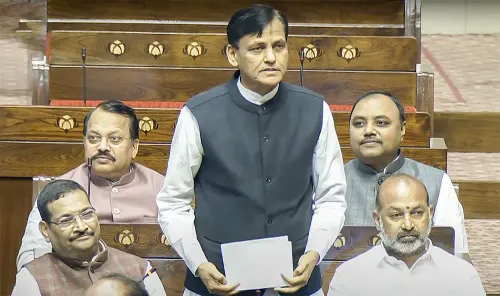
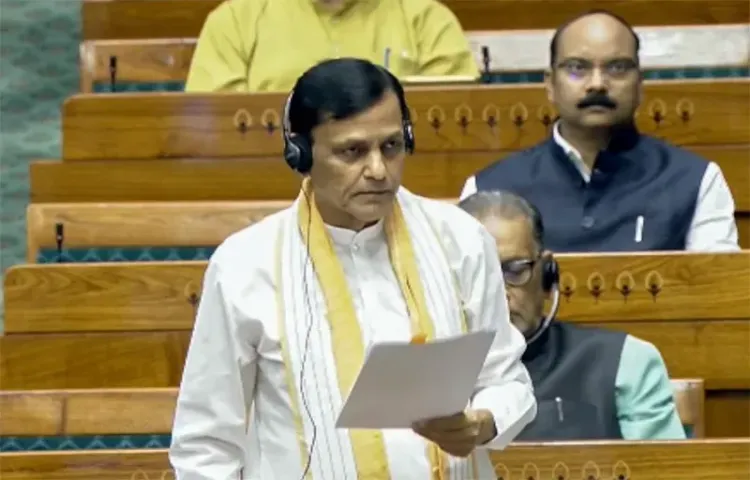
MoS for Home Affairs Nityanand Rai disclosed this in the Lok Sabha on 4 August .
The Vision Document on Narcotics Control (2026–2029) was released on 26 June , providing a three-year, time-bound roadmap.
A four-tier NCORD mechanism and a Joint Coordination Committee (JCC) under NCB DG Anurag Garg have been set up; 86 JCC meetings held so far (11 central, 75 state-level).
All state DGPs have been asked to sensitise ground-level officers on synthetic drug threats, particularly Mephedrone and Amphetamine-type Stimulants .
Financial investigation guidelines have been issued to trace and attach proceeds of crime from drug networks.
The Narcotics Control Bureau (NCB) has significantly expanded its international anti-narcotics footprint, forging bilateral agreements with 27 countries and Memoranda of Understanding (MoUs) with 19 countries — a combined network of 46 nations — the Centre informed the Lok Sabha on Tuesday, 4 August. Minister of State for Home Affairs Nityanand Rai made the disclosure in response to parliamentary questions, underscoring India's push to internationalise its counter-narcotics strategy.
Key International Partnerships
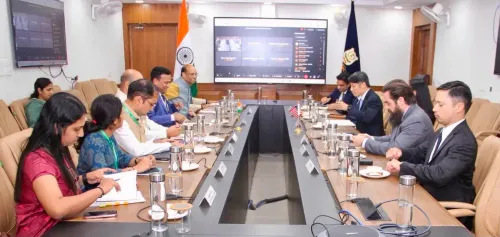
India holds regular Director General (DG)-level bilateral talks on drug-related matters with several countries, including Myanmar, Nepal, Thailand, Sri Lanka, Indonesia, Singapore, and the United States, according to MoS Rai. These high-level dialogues are designed to facilitate intelligence sharing, coordinated enforcement, and joint operations against transnational drug networks. This comes amid persistent concerns about India's vulnerability as both a transit route and a consumption market for illicit narcotics.
Vision Document and Three-Year Roadmap
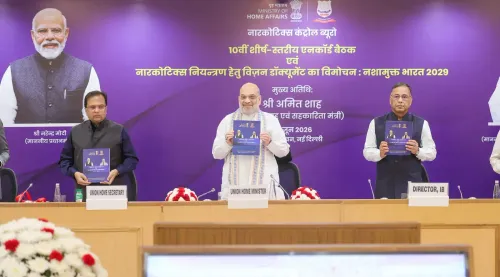
To address the dual challenge of drug trafficking and abuse, the government released the Vision Document on Narcotics Control (2026–2029) on 26 June. The document lays out a three-year roadmap with time-bound targets for various stakeholders, guided by a 'Whole-of-Government' and 'Whole-of-Society' approach. Notably, this is the first such structured roadmap the NCB has released with explicit timelines, signalling a shift from reactive enforcement to planned, outcome-driven policy.
NCORD Mechanism and Coordination Architecture
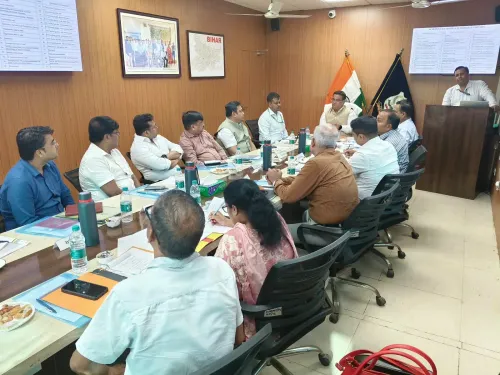
The NCB has established a four-tier Narco-Coordination Centre (NCORD) mechanism to improve coordination between central and state drug law enforcement agencies. The NCORD portal serves as a centralised platform covering training and capacity building, narco-offender data, legal information, and exemplary state-level initiatives. To monitor significant drug cases — including those linked to narco-terrorism — a Joint Coordination Committee (JCC) has been constituted under NCB Director General Anurag Garg as chairman. So far, 11 JCC meetings at the central level and 75 JCC meetings at the state level have been conducted.
Synthetic Drugs and Financial Investigations
All Director Generals of Police (DGPs) across states and Union Territories have been asked to sensitise beat constables, field officers, and Station House Officers about red flag indicators and emerging threats related to clandestine manufacturing of synthetic drugs — particularly Mephedrone and Amphetamine-type Stimulants (ATS). Comprehensive guidelines on financial investigation have also been issued to enable systematic identification, tracing, and attachment of proceeds of crime, adding an economic disruption layer to the enforcement strategy.
What This Means Going Forward
The convergence of international pacts, a structured vision document, a multi-tier coordination body, and financial investigation guidelines represents the most comprehensive counter-narcotics framework India has assembled to date. Execution across 46 bilateral partnerships and coordination between central and state agencies will be the critical test of whether this architecture delivers on its stated targets by 2029.
Point of View
But the harder question is operational depth: how many of these agreements have produced actual joint seizures or extraditions? India's synthetic drug problem, particularly Mephedrone and ATS, is accelerating precisely in states where state-centre coordination has historically been weakest. The NCORD portal and JCC architecture are sound on paper, but 75 state-level JCC meetings without publicly reported outcomes tells us little about efficacy. The 2026–2029 Vision Document's value will hinge on whether its 'time-bound targets' are independently verifiable — or remain another set of headline commitments.
NationPress
18 Sept 2026
Frequently Asked Questions
How many countries does India have drug-control agreements with?
India's Narcotics Control Bureau has bilateral agreements with 27 countries and MoUs with 19 countries, bringing the total to 46 nations. These include the US, Myanmar, Nepal, Thailand, Sri Lanka, Indonesia, and Singapore, with whom India holds regular DG-level talks.
What is the Vision Document on Narcotics Control 2026–2029?
It is a three-year roadmap released on 26 June that sets time-bound targets for various stakeholders to combat drug trafficking and abuse. It operates on a 'Whole-of-Government' and 'Whole-of-Society' approach, making it the NCB's most structured policy framework to date.
What is the NCORD mechanism?
The Narco-Coordination Centre (NCORD) is a four-tier mechanism set up by the NCB to improve coordination between central and state drug law enforcement agencies. Its portal covers training, narco-offender data, legal information, and best practices from states.
What is the Joint Coordination Committee (JCC) and who leads it?
The JCC is a body set up to monitor investigation of significant drug cases, including narco-terrorism cases. It is chaired by NCB Director General Anurag Garg, and has held 11 central-level and 75 state-level meetings so far.
What synthetic drugs is India particularly targeting?
The government has flagged Mephedrone and Amphetamine-type Stimulants (ATS) as priority threats linked to clandestine manufacturing. All state DGPs have been asked to sensitise ground-level officers on red flag indicators for these substances.