BRICS anti-drug meet in Guwahati: India proposes virtual intel network
Synopsis
India has used its BRICS Chairship to push for something more durable than a communiqué — a Virtual Working Group for real-time drug intelligence sharing across member nations. The Guwahati meeting signals New Delhi's intent to convert multilateral anti-narcotics rhetoric into operational architecture, backed by a concrete three-year enforcement roadmap for 2026-29.
Key Takeaways
The BRICS Heads of Anti-Drug Agencies Meeting opened in Guwahati on 6 July 2026 under India's BRICS Chairship 2026 .
India proposed a BRICS Virtual Working Group for real-time intelligence sharing and coordinated enforcement against transnational drug syndicates.
NCB Director General Anurag Garg led the Indian delegation and outlined a three-year anti-drug roadmap for 2026-29 .
India's strategy focuses on dismantling entire criminal networks, large-scale awareness campaigns, and strengthening de-addiction and rehabilitation.
Deliberations will cover synthetic drug trends, cross-border trafficking routes, and technology-enabled narcotics networks over two days.
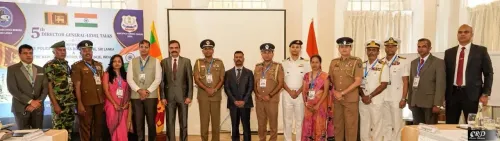
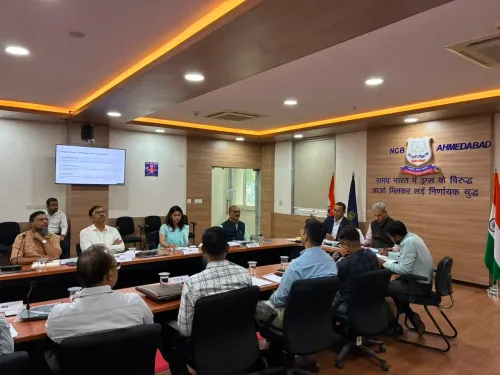
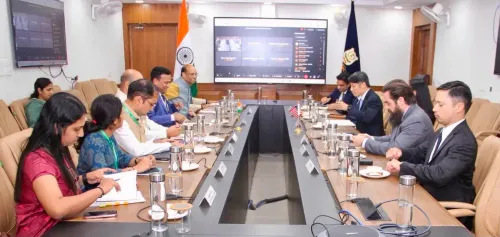
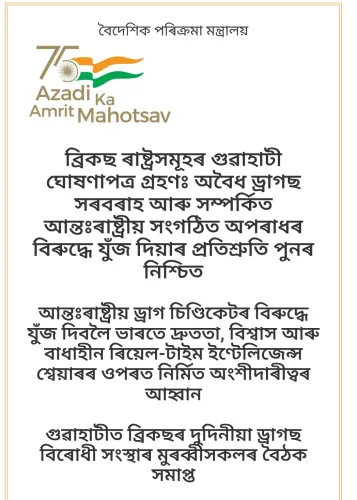
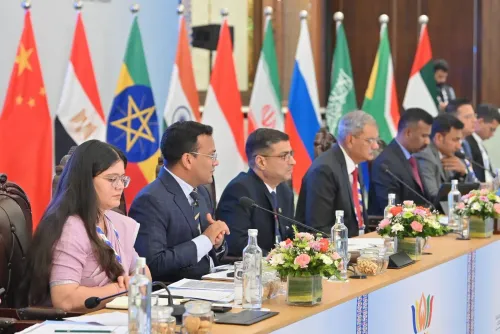
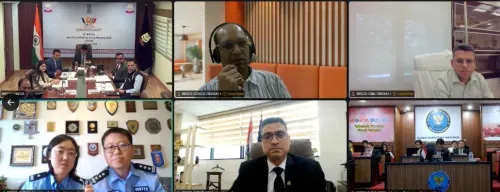
India on Monday, 6 July 2026 proposed the creation of a BRICS Virtual Working Group for real-time intelligence sharing and coordinated enforcement against transnational drug syndicates, as the two-day BRICS Heads of Anti-Drug Agencies Meeting opened in Guwahati under India's BRICS Chairship 2026. The high-level gathering has brought together heads of anti-drug agencies and senior officials from across BRICS member nations to confront the growing global challenge of drug trafficking and substance abuse.
India's Proposal at the Summit
Anurag Garg, Director General of the Narcotics Control Bureau (NCB) and head of the Indian delegation, urged BRICS drug law enforcement agencies to build a partnership grounded in speed, trust, and seamless real-time intelligence sharing that cuts across national borders. He stressed that such a framework would enable swift, coordinated action against organised international drug trafficking networks.
Garg underlined that the increasing sophistication of transnational drug syndicates demands greater coordination, faster information exchange, and stronger operational collaboration among BRICS nations. India's formal proposal calls for institutionalising real-time intelligence exchange, jointly analysing emerging trafficking trends, coordinating enforcement operations, and developing a future-ready collaborative framework to combat evolving drug-related threats.
India's Three-Year Anti-Drug Roadmap
Highlighting India's anti-drug strategy under Prime Minister Narendra Modi and Union Home Minister Amit Shah, Garg reiterated the country's zero-tolerance policy against narcotics. He outlined a three-year roadmap for 2026-29 built on a network-centric enforcement approach.
The strategy focuses on dismantling entire criminal networks rather than targeting isolated offenders, preventing drug abuse through large-scale awareness campaigns, and strengthening treatment, de-addiction, and rehabilitation mechanisms — a shift from reactive policing to systemic disruption.
Key Deliberations Over Two Days
Over the course of the meeting, participating countries are expected to deliberate on emerging trends in synthetic drugs, cross-border trafficking routes, technology-enabled narcotics networks, and measures to bolster collective enforcement capabilities. This comes amid growing global concern over the proliferation of synthetic opioids and the use of encrypted digital platforms by trafficking networks.
Notably, the Guwahati meeting marks one of the first major multilateral anti-narcotics forums held under India's BRICS presidency, signalling New Delhi's intent to use the chairship to push for concrete enforcement architecture rather than declaratory commitments.
Expected Outcomes
The meeting is expected to conclude with a renewed commitment to enhancing cooperation among BRICS countries through intelligence-led operations, capacity building, and coordinated action against international drug trafficking networks. If adopted, the proposed Virtual Working Group would represent a structural step toward operationalising BRICS anti-drug cooperation beyond periodic summits.
Point of View
Not a pledge. The real test is whether BRICS members with divergent law-enforcement traditions and political sensitivities, particularly around data sovereignty, will agree to genuine real-time intelligence sharing. India's three-year roadmap is ambitious, but the shift from targeting isolated offenders to dismantling entire networks requires not just bilateral goodwill but shared legal frameworks that BRICS has not yet built. Guwahati may be the right venue to propose it; the harder work begins when delegations return home.
NationPress
5 Oct 2026
Frequently Asked Questions
What is the BRICS Heads of Anti-Drug Agencies Meeting in Guwahati?
It is a two-day high-level meeting that opened on 6 July 2026 in Guwahati, bringing together heads of anti-drug agencies and senior officials from BRICS member nations to strengthen cooperation against drug trafficking and substance abuse. The meeting is being held under India's BRICS Chairship 2026.
What has India proposed at the Guwahati BRICS anti-drug meeting?
India has proposed the creation of a BRICS Virtual Working Group to institutionalise real-time intelligence exchange, jointly analyse emerging trafficking trends, and coordinate enforcement operations against transnational drug syndicates. The proposal was presented by NCB Director General Anurag Garg at the inaugural session.
What is India's three-year anti-drug roadmap for 2026-29?
India's roadmap is built on a network-centric enforcement approach that focuses on dismantling entire criminal networks rather than isolated offenders, running large-scale drug abuse awareness campaigns, and strengthening treatment, de-addiction, and rehabilitation mechanisms. It was outlined at the Guwahati meeting under the direction of Prime Minister Narendra Modi and Home Minister Amit Shah.
What topics will BRICS nations deliberate on at the Guwahati meeting?
Participating countries are expected to discuss emerging trends in synthetic drugs, cross-border trafficking routes, technology-enabled narcotics networks, and measures to strengthen collective enforcement capabilities over the two-day meeting.
What outcome is expected from the BRICS anti-drug meeting?
The meeting is expected to conclude with a renewed commitment to intelligence-led operations, capacity building, and coordinated action against international drug trafficking. If India's proposal is adopted, a BRICS Virtual Working Group would be established to operationalise ongoing anti-drug cooperation among member nations.